


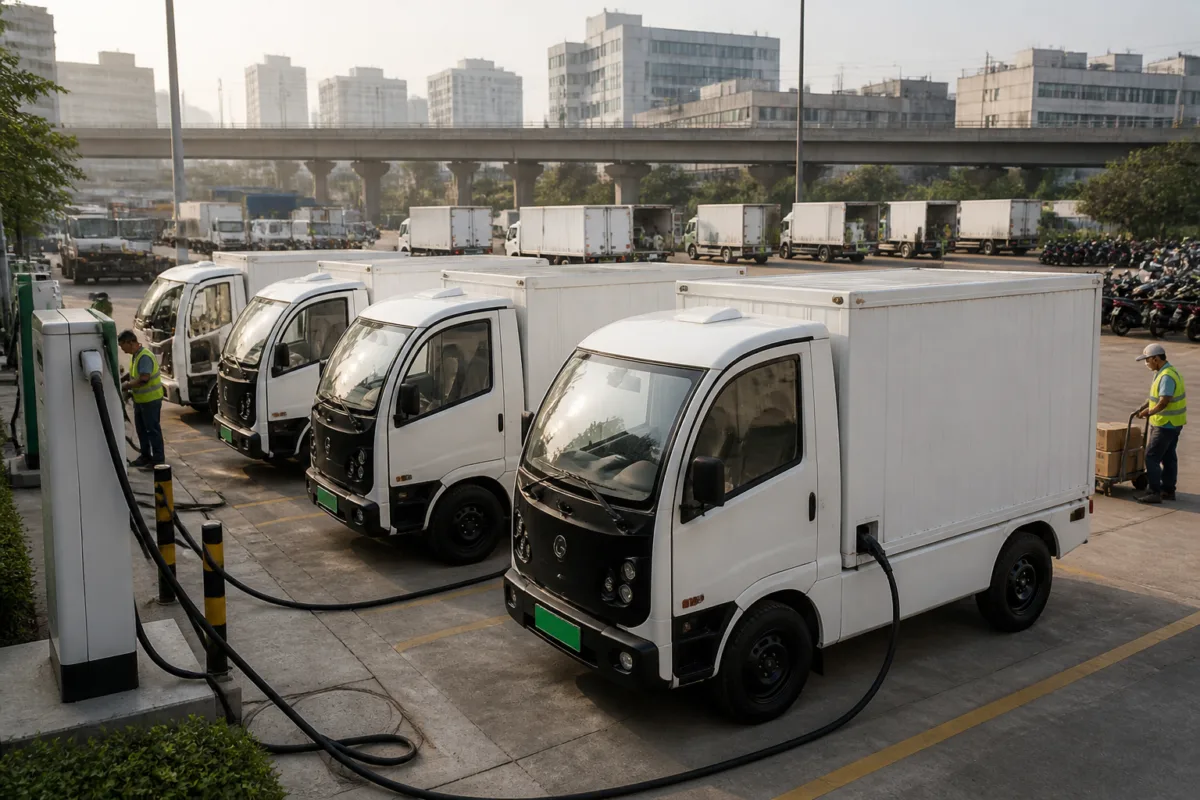
Delhivery has signed memoranda of understanding with Tata Motors, Euler Motors and Montra Electric to deploy 1,500-2,000 electric commercial vehicles across its intra-city logistics network over the next 12-18 months, marking a significant expansion of electric freight operations in Indian cities.
The logistics company plans to scale its electric commercial vehicle fleet to nearly 5,000 units within three years. The initial deployment will focus on vehicles operating below 200 km a day, a segment where Delhivery said electric vehicles are becoming increasingly competitive with diesel vehicles on total cost of ownership.
Electric vehicles currently account for about 12-13 per cent of Delhivery’s eligible intra-city fleet. The company aims to increase that share to more than 50 per cent over the next two to three years and fully electrify its sub-200-km fleet within four to five years.
The deployment will cover multiple small commercial vehicle categories. Vehicles suited to urban deliveries will be introduced first, followed by higher-capacity electric commercial vehicles for operations requiring larger payloads. The company said it would combine fleet electrification with network planning and vehicle utilisation measures to reduce unnecessary kilometres travelled.
Under the agreement with Tata Motors, Delhivery will deploy the Tata Intra EV. Euler Motors’ Turbo City Plus will be the first vehicle introduced through its partnership and will serve smaller commercial applications. Larger electric vehicles are expected to be added later for heavier-payload operations. The arrangement with Montra Electric will support the expansion of EVIATOR deployments across the country, building on the vehicle’s existing use in Delhivery’s network.
The plan also includes investment in charging and parking infrastructure. Delhivery is piloting charging facilities at its sites, beginning with Delhi-NCR, and plans to offer low-cost charging and free parking to vendor partners. The measures are intended to reduce some of the operational and infrastructure barriers faced by delivery operators switching from internal-combustion vehicles.
“Scaling fleet electrification means finding solutions that work across the diverse needs of our network without compromising operational efficiency,” Prashant Gazipur, chief operating officer for In City Operations at Delhivery, said. He added that the charging facilities being piloted would make electric vehicle adoption easier and more affordable for vendor partners.
The company’s announcement places charging access and fleet economics at the centre of urban freight electrification. Unlike passenger vehicles, commercial delivery fleets depend on predictable utilisation, payload capacity, turnaround times and dependable access to charging and parking locations. Delhivery’s focus on vehicles travelling less than 200 km daily provides a defined operating segment for the initial transition.
Delhivery said the initiative would support its effort to lower the environmental impact of logistics operations while maintaining network efficiency and reliability. The company’s immediate deployment target is expected to be implemented over the next 12-18 months, with the broader fleet expansion planned over three years.

