


Pune has failed to secure a place in the national or state award lists of the Swachh Survekshan 2025-26, a setback for the city’s cleanliness campaign after it ranked eighth among India’s cleanest cities in the previous survey. The result was announced at an awards ceremony held at Vigyan Bhavan in New Delhi and presented by President Droupadi Murmu.
The tenth edition of the cleanliness survey was conducted under the theme ‘Swachhata Ki Nayi Pehal—Badhaen Haath, Karein Safai Saath’. While Pune was absent from the declared award lists, neighbouring Pimpri-Chinchwad and Navi Mumbai municipal corporations were recognised for their performance, according to the report by Pudhari.
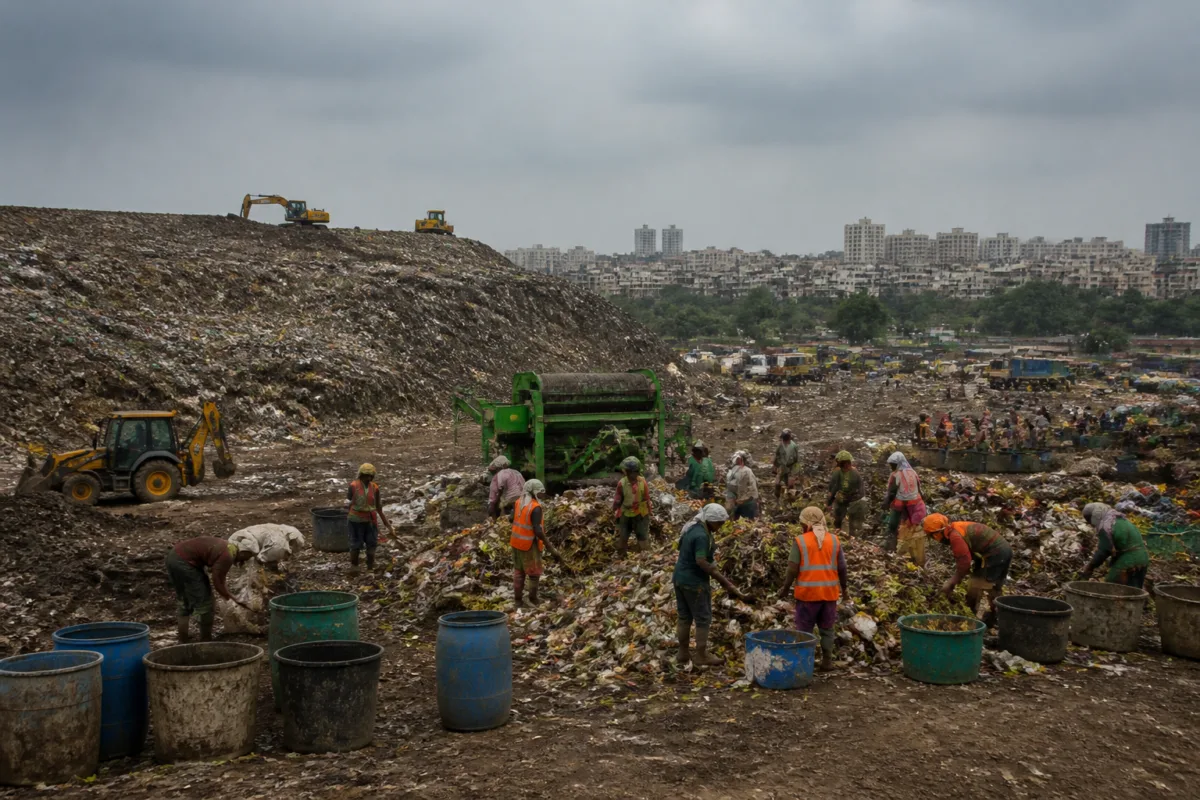
The report identifies the unresolved legacy waste at Uruli Devachi and Pune’s failure to achieve 100% treatment of the city’s sewage as key issues being discussed in connection with the setback. It does not, however, cite an official statement from the survey authorities confirming these as the reasons for Pune’s exclusion. The municipal administration has also not publicly clarified why the city did not receive an invitation to the awards ceremony.
The survey process itself has raised questions within the civic administration. Three assessment teams were expected to visit Pune to examine ground conditions. Administrative sources cited in the report said the first team visited the city in June-July, but the arrival of the second team was subsequently awaited. The report said there was discussion within the administration that delays in the assessment process may have affected the city’s ranking, though this has not been officially established.
Pune’s solid-waste system is under additional scrutiny because of the large quantity of old waste at Uruli Devachi. The report also carries criticism from Congress group leader in the municipal corporation, Chandu Sheth Kadam, who questioned the administration’s waste-management performance despite spending crores of rupees on cleanliness-related work. Kadam alleged that the civic administration had focused on paper-based and virtual initiatives instead of maintaining attention on ground-level cleanliness throughout the year.
Kadam has submitted a proposal to the standing committee seeking an inquiry into the administration’s functioning. He has also alleged irregularities in tenders and financial transactions linked to projects including Bhumigreen and the Cotton Waste project, as well as sweeping contracts. He has demanded an independent inquiry and strict action against officials found responsible. These are political allegations and have not been independently established in the supplied report.
The result also revives scrutiny of the municipal administration’s earlier target for Pune to enter the country’s top three cleanest cities. After the city secured eighth place in the previous survey, municipal commissioner Naval Kishore Ram had expressed confidence that Pune could become one of India’s three cleanest cities, citing citizen participation and available resources. Pune’s absence from the latest award lists has prompted criticism of that target.
The immediate official next step is clarification from the Pune Municipal Corporation and the Swachh Survekshan authorities on the city’s evaluation, the reasons for its exclusion and the status of the assessment process.

