


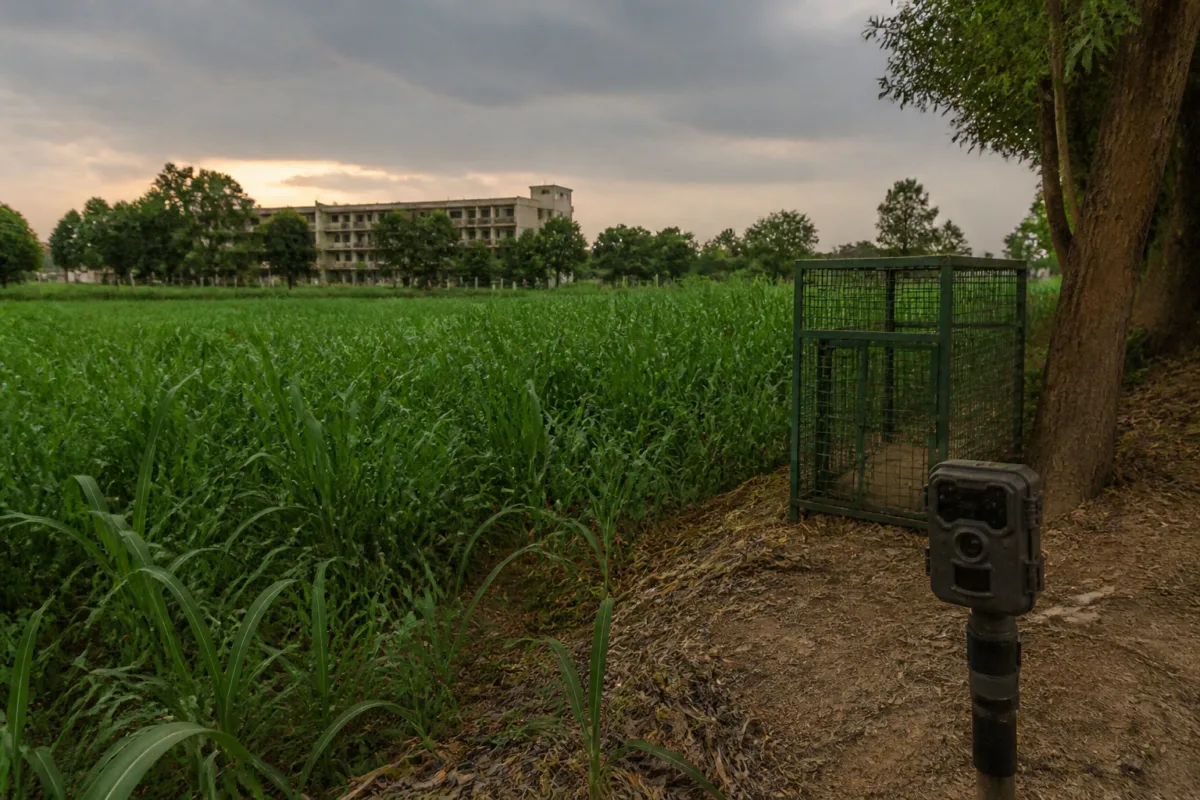
A suspected leopard sighting near Bawal in Rewari district has led the College of Agriculture to close its boys’ and girls’ hostels, restrict campus movement and monitor wildlife activity through camera traps.
The college, a constituent of Chaudhary Charan Singh Haryana Agricultural University in Hisar, took the precautionary measures after farm workers reported pugmarks suspected to belong to a leopard on November 7. The university administration then alerted the forest department and local authorities, according to Times of India.
Satyajeet Yadav, principal of the Bawal College of Agriculture, said the campus had declared holidays as a precaution. Around 450 students normally live in the two hostels, although only four to five boys were staying in the boys’ hostel when the measures were introduced. They were instructed not to venture outside.
The college operates an agricultural farm spread across nearly 300 acres. A forest department team inspected the premises and installed a cage near the university farm. The campus gates are now closed at 6 pm, with movement restricted until morning. CCTV cameras at the main entrance, hostel gates and other locations are also being monitored regularly.
The reported wildlife movement has raised concerns because a road from the campus leads towards Khatiwas village, potentially connecting the agricultural campus with nearby residential areas. Jhabua ki Beed, where the leopard has reportedly been sighted, is around 10 km from the college, Yadav said.
The forest department has installed five camera traps in the Bawal area to establish whether a leopard is moving through the locality and to identify its pattern of movement. Divisional forest officer Ram Kumar Jangra said forest teams were monitoring the footage, which would be assessed after four to five days.
The administration may seek approval from higher authorities to conduct classes online if the situation continues, Yadav said. The current measures are therefore affecting not only accommodation but also the college’s teaching and daily campus operations.
The forest department’s camera-trap assessment and continued monitoring of the campus and surrounding area will determine the next steps for the college and local authorities.

