


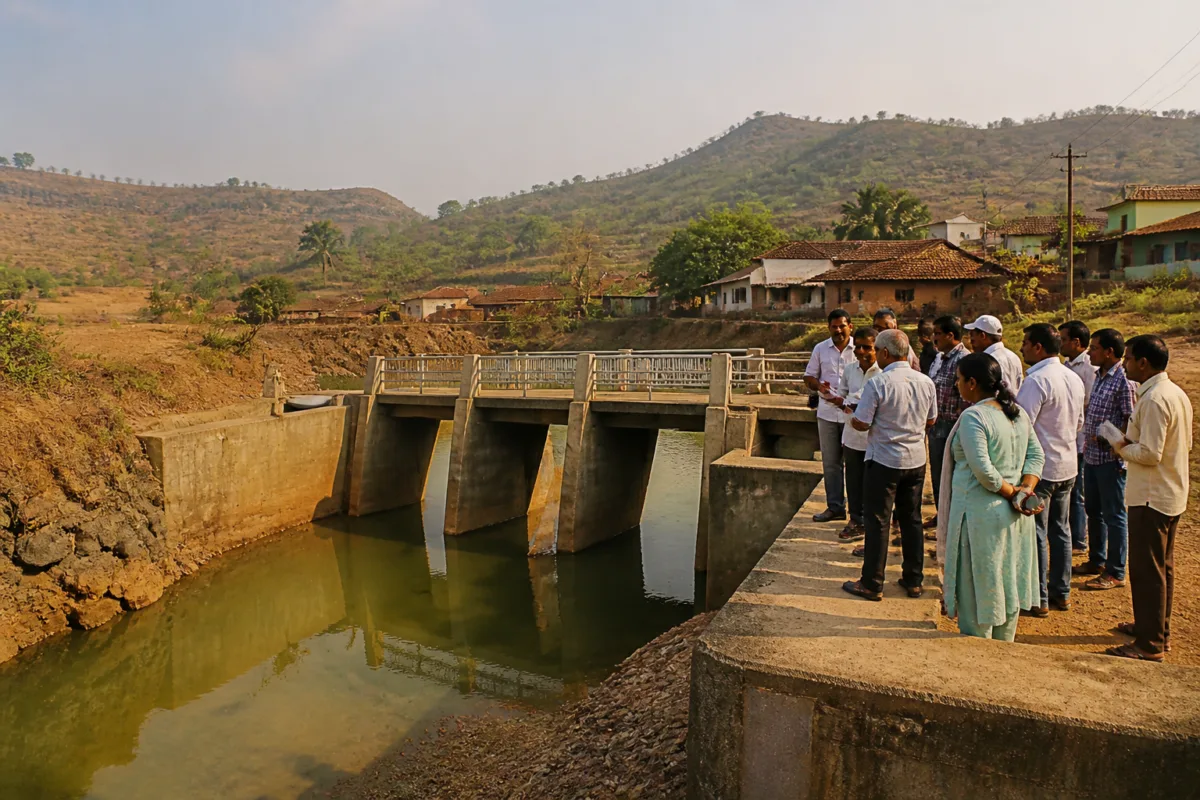
Ajra in Maharashtra’s Kolhapur district is preparing for possible summer water shortages after inadequate rainfall, with officials and local representatives calling for stricter water conservation and faster completion of drinking-water projects.
The warning was issued at a drought review meeting held at the Ajra panchayat samiti on November 12. The meeting reviewed the work of the irrigation, power distribution, forest, agriculture and animal husbandry departments, along with the rural water-supply administration.
Yashoda Powar, acting chairperson of the Ajra panchayat samiti, appealed to farmers and residents to use water carefully and avoid wastage. She also asked gram panchayats to install taps on water connections and urged farmers to choose crops that require less water.
Zilla Parishad member Sudhir Desai said several water-supply schemes under the Jal Jeevan Mission remained incomplete. He said steps should be taken to complete the projects and that contractors had been asked to move the work forward. Instructions were also issued regarding the acquisition of borewells and the use of tubewells, while the irrigation and electricity distribution departments were asked to coordinate their work.
Ajra irrigation department branch officer Ajinkya Abitkar said water had been stored in 32 check dams on the Hiranyakeshi and Chitri rivers. The Chitri project supplies drinking water to 72 gram panchayats in Ajra and Gadhinglaj, making the condition of the storage system important for rural water security across both areas.
The review also covered water availability for forests and livestock. Forest range officer Sachin Sawant said 48 Vanrai check dams had been built in the forest range through public participation and were expected to retain water until March. A proposal has also been made to construct borewells to provide drinking water for wild animals.
According to assistant commissioner P. C. Muttefod, Ajra taluka has 43,327 livestock and 56,000 tonnes of fodder available. The administration plans to distribute 6,600 kilograms of maize and sorghum seeds for fodder production. Rural water-supply officer Satish Kedar presented a report at the meeting, while block development officer Subhash Sawant, agriculture officer Dinesh Shete and other representatives placed additional suggestions before the review.
The meeting’s measures place drinking-water schemes, local water storage, electricity coordination, crop selection and fodder availability within a single drought-response framework. The authorities’ immediate focus is on conserving existing supplies, completing pending water projects and maintaining access to water for residents, livestock and wildlife as summer approaches.

