


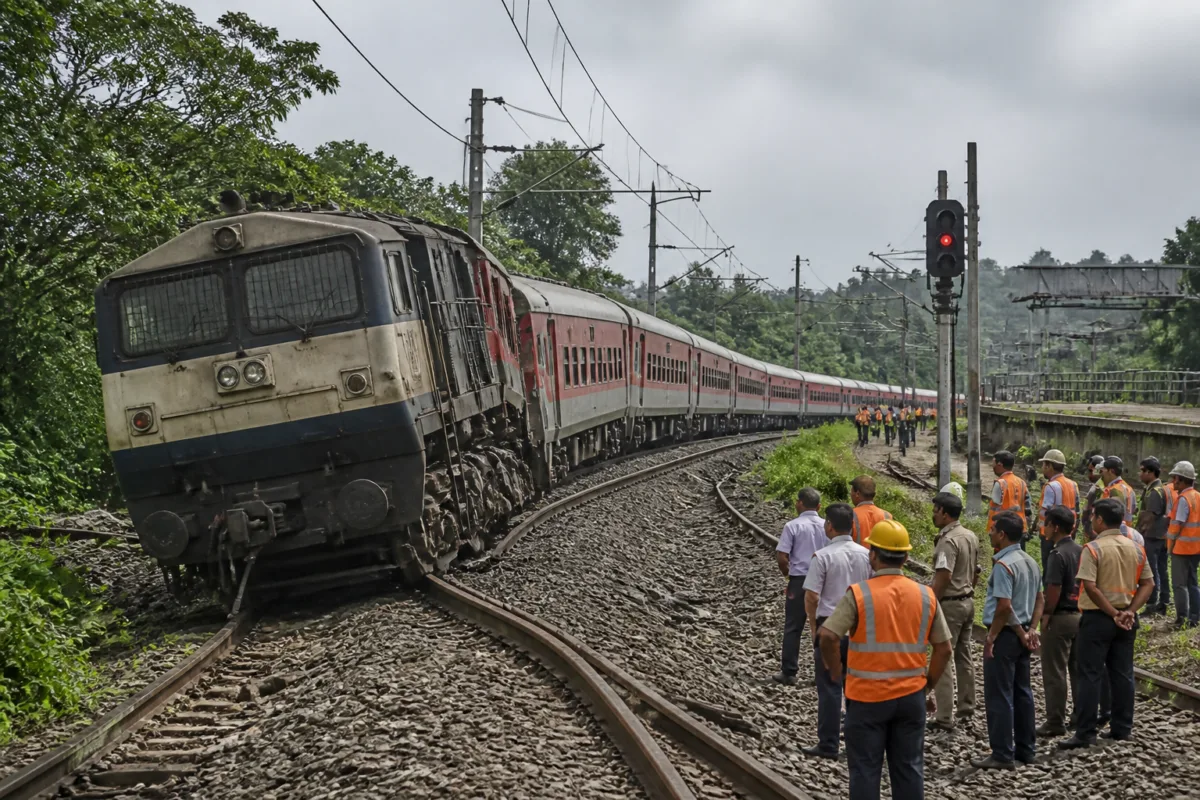
The derailment of the Kolkata-Sairang Express at Digaru railway station in Assam has prompted Mizoram Pradesh Congress Committee president Lal Thanzara to seek an immediate investigation into railway safety and operational preparedness. The incident occurred at around 6:54 am on Wednesday while the train was being received at the station to give precedence to another train.
According to Northeast Frontier Railway officials, the 13125 Kolkata-Sairang Express was entering Digaru station when the loco pilot allegedly could not control its speed. The locomotive and five coaches derailed during the incident.
In a letter to Union Railway Minister Ashwini Vaishnaw, Thanzara called for a “thorough and impartial investigation” into the derailment. He said the incident raised serious concerns about railway safety, operational preparedness and the measures in place to protect passengers.
Thanzara also urged the railway ministry to identify those responsible and take appropriate action in accordance with the law. He asked the ministry to implement corrective and preventive measures aimed at strengthening safety standards and preventing similar incidents.
The derailment occurred during a train-reception movement at Digaru, where the Kolkata-Sairang Express was being handled to allow another train precedence. The account provided by Northeast Frontier Railway officials identifies loss of speed control by the loco pilot as the alleged immediate cause, but the available information does not establish the findings of any formal inquiry.
The incident has direct implications for railway operations in the Northeast, where the Kolkata-Sairang service connects the region with Mizoram. Any disruption to the service can affect passengers travelling between the Northeast and other parts of the country, although the supplied information does not provide details on cancellations, delays, passenger injuries or damage beyond the derailment of the locomotive and five coaches.
Thanzara’s demand places the focus on how trains are received at stations, how precedence movements are managed and whether operating safeguards were adequate during the incident. His letter seeks both accountability for the derailment and preventive action to reduce the risk of similar failures.
The next steps will depend on the railway ministry’s response and the findings of the investigation into the incident. The supplied information does not state whether a formal inquiry has been ordered or provide a timeline for restoration of normal operations at Digaru.

