


Four construction projects in Hyderabad and Rangareddy districts could face closure after the Telangana Pollution Control Board’s task force committee found that they were operating without mandatory environmental consent and violating prescribed pollution-control norms. The committee also recommended a stop-construction order for another project.
The recommendations followed rolling inspections by TGPCB task force teams, which were deployed after complaints about air pollution from construction activity in the two districts. The committee reviewed the compliance status of 18 construction projects during a meeting on Wednesday.
Among the actions recommended was closure of four projects that had allegedly begun construction without obtaining Consent for Establishment, or CFE, from the pollution control board. The CFE is required before a project is established and is intended to ensure that prescribed environmental safeguards are incorporated at the planning and construction stage.
The committee also recommended closure of a captive Ready Mix Concrete plant linked to a non-compliant construction project. The plant was found to be operating without Consent for Operation, or CFO, and without adequate pollution-control measures, according to the report.
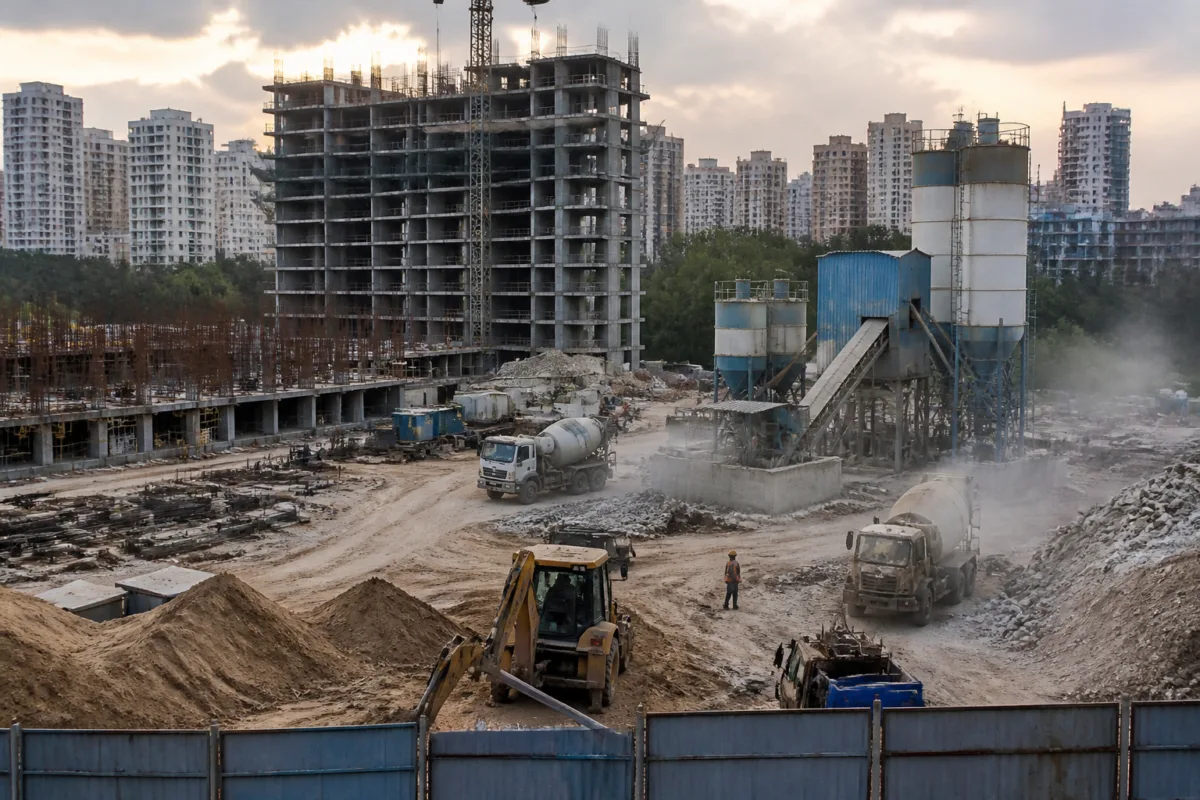
The inspections identified several violations connected with dust generation. These included the absence of wind-breaking walls of at least 10 metres, dust accumulation on internal roads, footpaths and main roads within and around project premises, and failure to regularly clean and sprinkle water on roads to control emissions.
Inspectors also found construction materials, including sand, dust and debris, stored in open areas. Such storage can allow particulate matter to spread beyond project sites, particularly when vehicles move through unpaved areas or when dry material is exposed to wind.
The task force committee decided to levy environmental compensation on projects where major non-compliances were identified. It also recommended forfeiting bank guarantees furnished by projects where minor non-compliances were observed. The measures add financial consequences to the regulatory directions issued against the projects.
The committee directed non-compliant projects to rectify the identified deficiencies within 10 days. The required corrections include addressing dust-control failures, improving site management and securing the relevant consents from the pollution control board. The report did not identify the projects by name or specify the amount of environmental compensation proposed.
The action places construction-site pollution under renewed regulatory scrutiny in Hyderabad and Rangareddy, where ongoing building activity has increased the number of sites handling earth, sand, debris and concrete materials. The immediate next step is the completion of corrective measures within the 10-day deadline and further compliance action by the Telangana Pollution Control Board.

