


Cloud seeding in Delhi could be attempted on November 11 if suitable clouds and atmospheric moisture are available, as the city’s air quality remained in the ‘very poor’ category with an AQI of 308, according to a report by Live Hindustan citing an NDTV report and sources at IIT Kanpur.
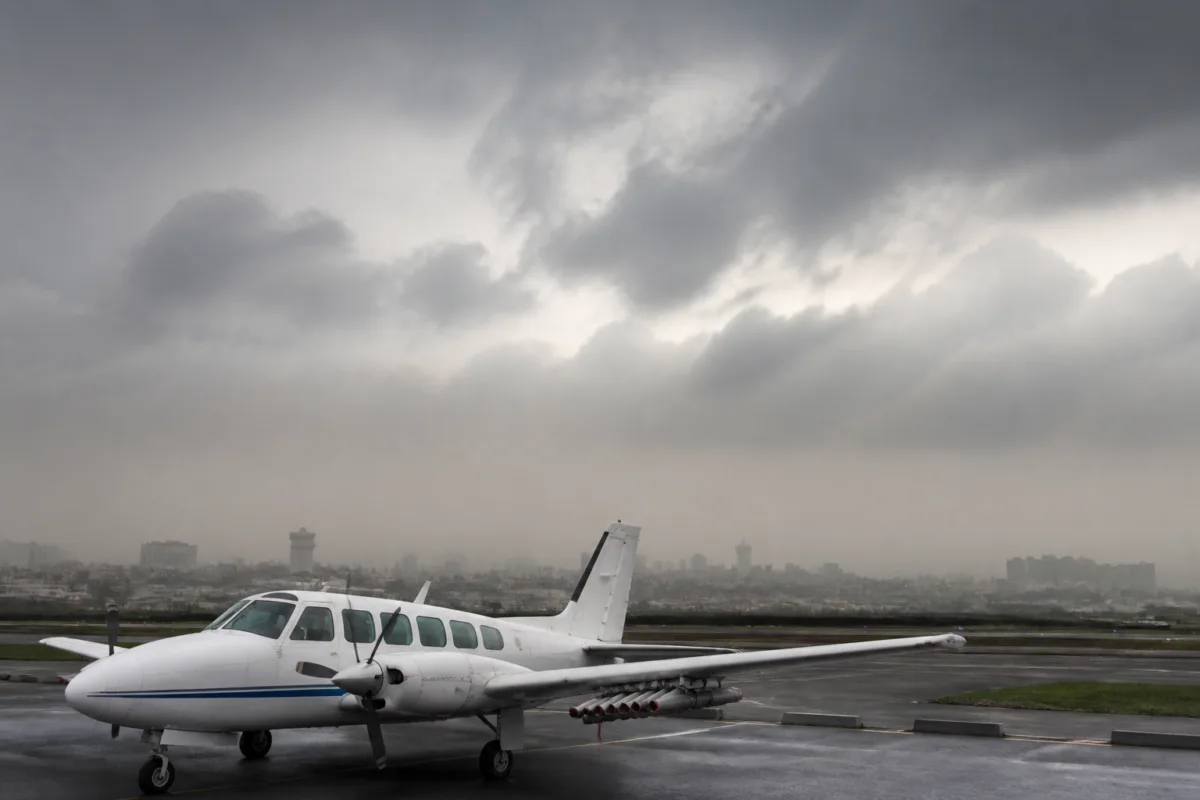
An aircraft equipped for cloud-seeding operations has reportedly been prepared at IIT Kanpur and could reach Delhi in about an hour. The aircraft would be activated only if the city develops clouds with adequate height and moisture. If weather conditions are favourable, the process could result in rainfall, although November 11 has not been confirmed as a fixed date.
Cloud seeding does not create clouds or produce rain in dry conditions. The reported process involves releasing fine particles of substances such as silver iodide and sodium chloride into existing clouds. These particles can help accelerate the formation of water droplets or small ice crystals from moisture already present in the clouds. If the droplets become sufficiently large and heavy, they may fall as rain.
The operation is therefore dependent on atmospheric conditions rather than a guaranteed schedule. Cloud height, moisture levels and wind conditions would determine whether the aircraft could be used. The report said that the aircraft would be activated only if these parameters were considered suitable.
The proposed operation comes as Delhi continues to experience heavy pollution after Diwali. The air-quality reading of 308 recorded on November 11 placed the city in the ‘very poor’ category, according to the report. Rainfall can temporarily help remove some particulate matter from the air, but the supplied report does not establish how much improvement a cloud-seeding operation would produce or how long any improvement would last.
Delhi has previously attempted cloud-seeding experiments in collaboration with IIT Kanpur. The Delhi government and the institute signed a memorandum of understanding on September 25, 2025. The project was delayed by poor weather and the need for necessary approvals before trials were conducted in two phases towards the end of October 2025.
During those trials, aircraft released chemical flares containing silver iodide and sodium chloride. The experiments did not produce rain. An assessment by IIT Kanpur attributed the outcome primarily to insufficient moisture in the clouds, highlighting the operational limitation of using cloud seeding during pollution episodes without suitable weather systems.
Two further cloud-seeding trials were reportedly conducted around Indira Gandhi International Airport during the 15 days before November 5 this year. The report said these experiments took place at a higher altitude than the previous year’s trials. Details of their outcome were not provided in the supplied material.
The next possible operation will consequently depend on whether Delhi receives clouds with adequate moisture and whether the required atmospheric conditions and approvals are in place. A final decision on activating the aircraft remains weather-dependent.

