


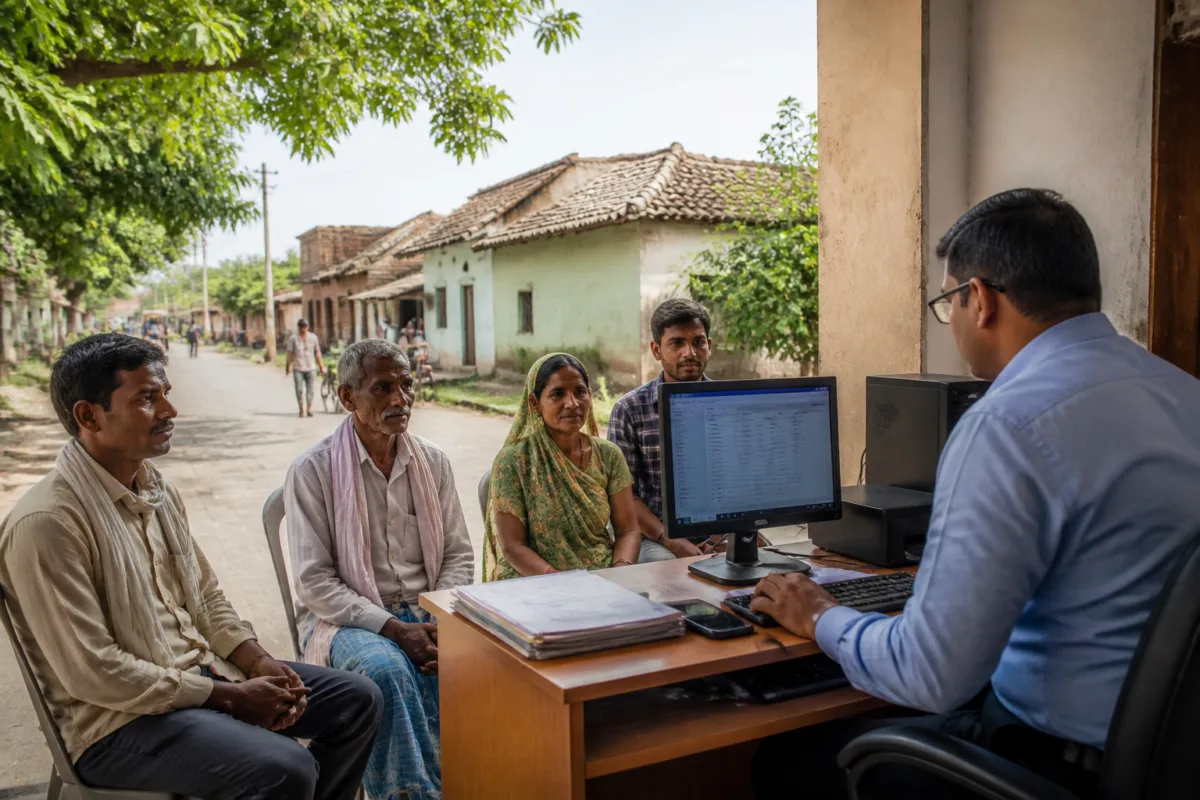
Bihar’s Gram Kachaharis have resolved more than 49,000 cases since January 2025, according to data on the state’s e-Gram Kachahari portal. The figure includes more than 25,000 civil cases and nearly 24,000 criminal cases, placing village-level dispute resolution at the centre of Bihar’s effort to make justice more accessible outside formal courts.
The development is significant not only because of the number of cases disposed of, but also because it combines a traditional local institution with a state-run digital record system. Gram Kachaharis are designed to handle certain disputes at the panchayat level. By allowing cases to be registered, monitored and concluded through an online platform, Bihar is attempting to make the functioning of these institutions more visible to residents and administrators.
The Panchayati Raj department has said Bihar is the first and only state to digitise Gram Kachahari proceedings. The claim, as reported by the Times of India, points to an institutional shift: village justice is no longer being treated only as a local administrative process, but also as a service whose records can be tracked through a common public interface.
The e-Gram Kachahari portal allows users to register cases, check their status, view hearing dates and download copies of final orders. It also provides information on cases registered and disposed of by Gram Kachaharis. These functions matter because access to justice depends not only on the existence of a forum, but also on whether people can understand where their case stands and obtain a record of the outcome.
For rural residents, the ability to track a case remotely can reduce dependence on informal communication with local officials or repeated visits to administrative offices. The available material does not establish how many users access the portal directly, how frequently the system is updated or whether residents face barriers such as poor connectivity and limited digital literacy. It does, however, show that the state is building transparency into the process through publicly available case information and downloadable orders.
The reported case figures also show that the Gram Kachaharis are handling two different categories of disputes at scale. More than 25,000 civil cases were disposed of, compared with nearly 24,000 criminal cases. The near balance between the two categories suggests that the institutions are not serving a single narrow function. Their workload covers both disputes involving civil claims and matters classified as criminal cases under the system described in the report.
District-level figures reveal an uneven pattern of disposal. Katihar recorded the highest disposal of criminal cases, with 2,237 cases, followed by Sitamarhi with 2,128, Samastipur with 1,724 and Madhubani with 1,616. In civil cases, Madhubani led with 1,598 disposals, followed by Patna at 1,571, Gaya at 1,458, West Champaran at 1,285 and Samastipur at 1,133.
These numbers provide an initial view of where Gram Kachaharis are most active, but they do not by themselves explain why disposal levels differ between districts. The supplied information does not provide the number of cases filed in each district, the pendency at the beginning of the period, the population served, the number of functioning Gram Kachaharis or the average time taken to resolve a case. Without those denominators, disposal totals should be read as measures of output rather than complete measures of performance.
That distinction is important for evaluating local justice institutions. A high number of disposals could reflect a large caseload, stronger institutional capacity, a greater number of functioning panchayats or differences in reporting. It could also coexist with a substantial pending caseload. The portal’s ability to display registered and disposed cases creates the basis for a more detailed assessment, but the figures cited in the report do not yet provide that full picture.
Bihar’s approach also brings the question of institutional capacity into focus. The state government is strengthening Gram Kachaharis as an alternative dispute resolution mechanism, according to the report. Their effectiveness therefore depends on more than digitisation. It requires functioning local bodies, trained participants, regular hearings, accessible records and procedures that residents can understand and use.
The appointment of Nyaya Mitras is part of that support structure. They receive a fixed honorarium to provide legal advice to sarpanchs and panchs, helping them make legally sound decisions. The arrangement also creates employment opportunities for educated rural youth, linking justice administration with a local skills and livelihoods objective.
The role assigned to Nyaya Mitras is especially relevant because Gram Kachaharis operate close to the community but must still make decisions within a legal framework. Local accessibility can make dispute resolution easier for residents, while legal assistance can help elected representatives navigate the requirements of their role. The information supplied does not specify the number of Nyaya Mitras appointed, their qualifications, the districts covered or the training they receive. Those details would be necessary to assess whether the support system is adequate for the reported workload.
Digitisation can improve transparency, but a portal cannot by itself guarantee equal access or legally sound outcomes. The public value of the e-Gram Kachahari system will depend on the accuracy and timeliness of the records, the availability of final orders, and whether residents who cannot use digital services can still obtain assistance through local institutions. The report establishes the functions of the portal, but does not provide independent data on user experience, disposal quality, appeals or compliance with orders.
The emerging model therefore has two connected dimensions. The first is administrative: Bihar is collecting and displaying information on the operation of village-level justice forums. The second is social: residents may be able to pursue disputes closer to home and at lower practical cost than if every matter required travel to a distant formal court. The report describes the institutions as accessible and affordable, while the case figures and portal functions offer supporting evidence of scale and visibility. The actual cost and time savings for citizens remain unquantified in the supplied material.
The larger urban and regional governance question is how public systems can extend reliable services beyond major cities and district headquarters. Justice is not usually discussed alongside digital public infrastructure, but the same issues arise: service availability, record transparency, institutional accountability and the ability of citizens to track a government process. In Bihar’s case, the platform is being applied to village institutions rather than a metropolitan service, yet it reflects a broader move towards making local governance measurable through digital records.
The next stage of scrutiny will need to move beyond the headline disposal figure. District-wise filing and pendency data, case timelines, order accessibility, user access and the functioning of Nyaya Mitras would show whether digitisation is improving the quality and reliability of the system, rather than simply recording its output. For now, the available evidence confirms that Bihar’s Gram Kachaharis have handled a substantial number of cases since January 2025 and that the state is using a digital platform to make their proceedings more traceable.

