


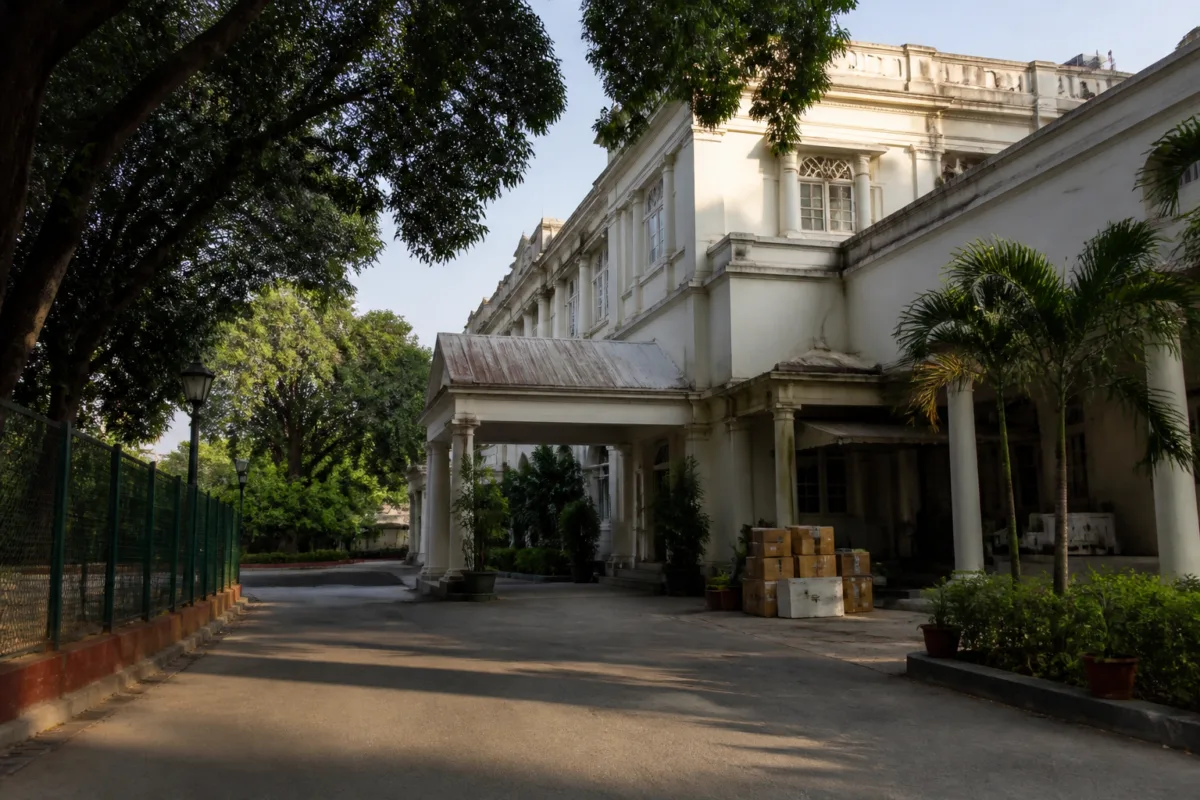
The Central Secretariat Club’s dispute over its premises in Delhi’s President’s Estate is no longer only a question of whether a 107-year-old institution can remain in a government-controlled location. The proceedings before the Delhi High Court have brought into focus a wider administrative problem: how the state manages long-standing institutional occupations when recognition is withdrawn, allotment arrangements are disputed and eviction proceedings follow.
The immediate position before the court is relatively limited but important. The Centre told the Delhi High Court that, at this stage, there is no proposal to allot the club’s premises to any other party. The statement was made while the court considered the club’s request for an interim stay on the cancellation of its recognition and the order requiring it to vacate the site.
That assurance shaped the court’s response. A bench led by Justice Amit Mahajan said that, in view of the Centre’s submission, no order was required at this stage. The petitioner was permitted to remove its belongings within one week, while the matter was listed for further hearing on December 21, 2026. The court’s approach does not resolve the underlying dispute. It addresses the immediate uncertainty around the premises without deciding whether the cancellation of recognition or the eviction order was legally sustainable.
The distinction matters because the case involves two connected administrative actions. The first is the withdrawal of the club’s recognition by the Department of Personnel and Training on July 14, 2026. The second is the Estate Officer’s July 17 order directing the club to vacate its existing location in the President’s Estate. The club has challenged both actions and is seeking interim protection while its wider petition remains pending.
According to the club’s petition, the institution was treated as an unauthorised occupant after the suspension of its allotment was allegedly found to be unlawful. The petitioner argues that this characterisation ignores the nature and history of its occupation, including what it describes as a permanent allotment. The club, earlier known as the Talkatora Club, has also described itself as a historic institution that has existed for 107 years.
These claims remain the club’s submissions and have not been finally adjudicated. They nevertheless identify the central administrative tension in the case. Government premises are controlled through allotments, recognitions and estate-management decisions, but such arrangements can acquire institutional continuity over decades. When an authority changes the status of an occupant, the legal question is not simply whether the government owns or controls the land. It is also how the occupant’s status was created, what conditions governed it and whether the process used to terminate that status met the requirements of law.
The club has alleged that the recognition was initially cancelled in February without a show-cause notice, during the tenure of an ad hoc committee managing its affairs. It says that complaints about irregularities during that committee’s tenure should have led to corrective action rather than immediate cancellation. Following the High Court’s intervention, the club was given an opportunity to present its case, after which a fresh cancellation order was issued on July 14.
This sequence is significant because it places procedural fairness at the centre of the dispute. The club’s argument is not merely that the authorities reached the wrong conclusion. It is that the decision-making process was arbitrary, unlawful and unconstitutional, and that the opportunity to respond came only after the court intervened. The Centre’s position, as reflected in the proceedings reported by Live Hindustan – NCR, is that the premises are not currently proposed to be allotted to anyone else. The supplied report does not set out the Centre’s full defence to the allegations concerning the cancellation process.
That limitation is important. The court has not, at this stage, declared that the club’s recognition was unlawfully withdrawn. Nor has it ruled that the eviction order is invalid. It has recorded the Centre’s statement about the absence of a current proposal for fresh allotment and allowed the petitioner time to remove its belongings. The underlying legal questions therefore remain open.
The case also illustrates how recognition and occupation can become administratively intertwined. Recognition concerns whether an institution is accepted or authorised in a particular official framework. Occupation concerns the right to use a physical site. In this dispute, the cancellation of recognition was followed closely by an eviction direction, creating a practical consequence for the club even while the legality of the cancellation is contested.
For public administration, that linkage creates a need for clarity. If an institution’s recognition is withdrawn because of alleged governance irregularities, the authority must establish how that decision affects the institution’s physical premises. If the premises were allotted under a distinct arrangement, the legal basis for ending that arrangement may require separate consideration. Conversely, if occupation was conditional on continued recognition, that condition would become central to the dispute. The supplied material does not establish which interpretation will ultimately prevail.
The case is therefore not evidence of a new allotment or redevelopment plan for the site. The Centre’s statement specifically indicates that no proposal exists at this stage to allot the premises to another party. That fact narrows the immediate public concern: the reported proceedings are about the club’s status and possession, not a confirmed transfer of the property to a replacement institution.
It also shows why court-supervised timelines matter in disputes involving public land. The club has been allowed one week to move its belongings, while the principal matter remains listed for December 21, 2026. Physical possession may therefore change before the court reaches a final conclusion on recognition, allotment and eviction. That possibility makes the legal distinction between temporary compliance and final adjudication especially important.
For Delhi’s built environment, the dispute offers a focused example of how institutional spaces are governed. Public estates are not only collections of buildings and plots; they also contain offices, clubs and other organisations whose presence may extend across generations. When those relationships are altered, administrative orders can affect both the use of land and the continuity of civic institutions. Yet the material supplied does not establish the club’s wider membership, public functions, financial arrangements or the precise terms of its original allotment, so broader claims about its social role would be premature.
What the proceedings establish for now is narrower. The Central Secretariat Club has challenged the July recognition-cancellation order and the July eviction order. It says the process was arbitrary and that it was wrongly treated as an unauthorised occupant. The Centre has told the High Court that no party is currently proposed to receive the premises. The court has not granted the requested interim stay in the reported proceedings, has allowed the club to remove its belongings within one week and has listed the matter for further hearing on December 21, 2026.
The next stage will determine whether the dispute remains an interim estate-management matter or develops into a broader ruling on procedural fairness, institutional recognition and the legal basis for occupying government premises. Until then, the court record—not the absence or presence of a replacement allottee—will remain the key source for understanding the club’s status.

