


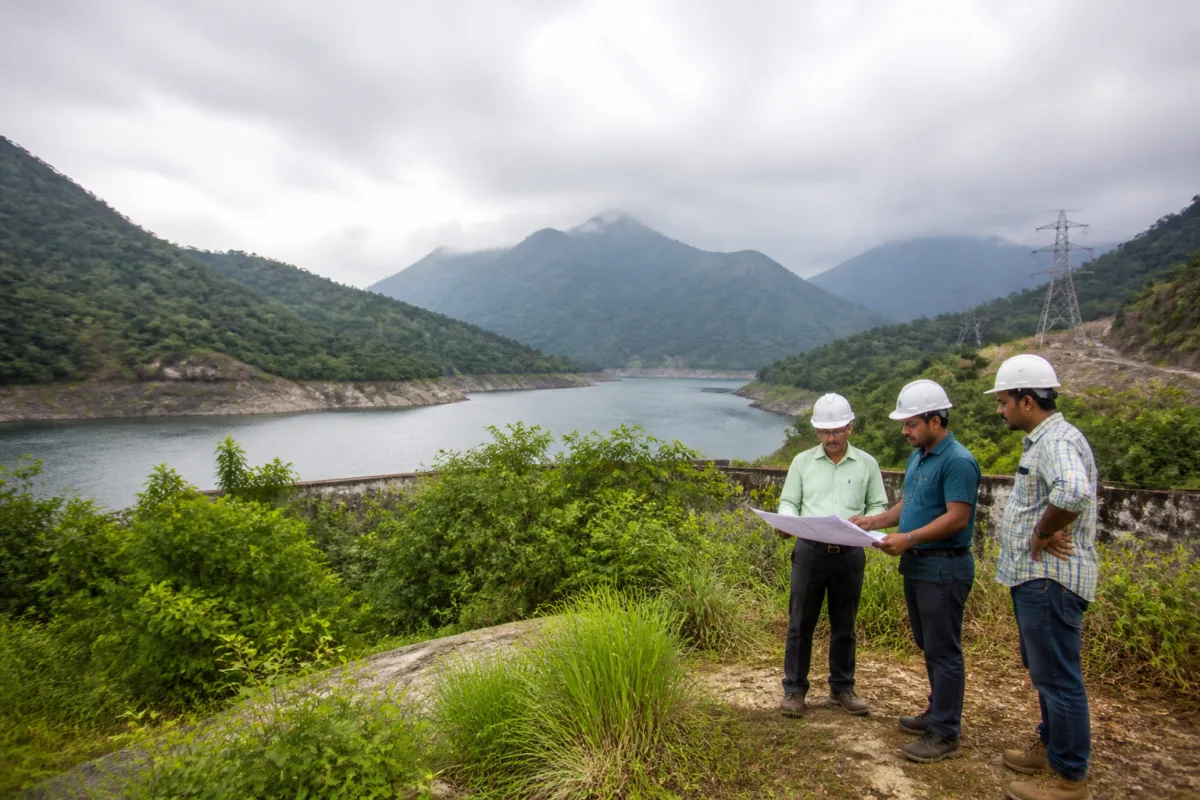
The extension of the detailed project report deadline for Kerala’s 800MW Idukki Extension Scheme to March 31, 2027, is more than an administrative revision. It reveals how large public infrastructure projects can remain in the preparatory stage for years when environmental studies, statutory clearances and changing technical guidelines continue to reshape the project before construction can even begin.
The Kerala State Electricity Board has granted Wapcos Ltd another extension to complete the feasibility study report, detailed project report, statutory clearances and bid documents for selecting an engineering, procurement and construction contractor. The decision carries no additional financial commitment for KSEB. A decision on imposing a penalty on the consultant has been deferred.
The project advisory agreement with Wapcos was signed in September 2020. The consultancy was awarded at an agreed cost of Rs 8.9 crore, excluding GST. The deadline has since been extended several times, most recently up to December 31, 2025, without additional cost to KSEB or a penalty on Wapcos. The latest extension moves the target by another 15 months.
That timeline matters because a DPR is not merely a technical document used to estimate construction costs. For a project of this scale, it brings together feasibility assessments, design assumptions, environmental studies, statutory approvals, financial parameters and the procurement framework for the eventual construction contractor. Any delay in one component can hold back the full package, because KSEB cannot reliably invite bids for an EPC contractor until the project’s scope and conditions are sufficiently settled.
Wapcos has attributed the delay to studies and investigations required by appraisal agencies. These include the environmental impact assessment, the environmental management plan, remaining pre-DPR clearances and finalisation of the DPR in accordance with the latest Central Electricity Authority guidelines. The consultant also said that authorities required additional investigations and specialised studies beyond the original scope of the assignment.
This places the Idukki Extension Scheme within a familiar institutional tension in infrastructure delivery. Project owners need a firm schedule and predictable costs, while appraisal and regulatory agencies require more information before allowing a project to move forward. When additional studies are demanded after the consultancy has begun, the project’s contractual deadline can become difficult to enforce without first determining whether the delay arose from poor performance, changed requirements or conditions outside the consultant’s control.
KSEB’s response reflects that distinction. The chief engineer for project planning referred to Clause 2.2.3 of the contract while considering the extension request. The clause concerns situations in which authorities including the Central Electricity Authority, the Central Water Commission or the Ministry of Environment, Forest and Climate Change take time to provide clearances or decisions. The supplied report ends while describing the application of the clause, but the reference shows that the contract itself anticipated delays linked to external appraisal processes.
The decision to extend the deadline without additional financial commitment indicates that KSEB has so far treated the pending work as a continuation of the existing consultancy rather than as a new assignment. At the same time, deferring the penalty decision keeps open the question of how responsibility for the delay will ultimately be assessed. That assessment is important for public-sector contracting because repeated extensions without a clear record of causes can make accountability difficult, even when the project owner does not incur an immediate additional payment.
The project’s preparation has also become more demanding over time. The report identifies the environmental impact assessment and environmental management plan as unfinished components, along with pre-DPR clearances and revisions required under updated CEA guidelines. This means the project is being evaluated against requirements that may not have been fully captured when the original consultancy agreement was signed in 2020.
For KSEB, the immediate choice is between accepting more time and risking an incomplete or outdated project document. A DPR prepared without the required studies could expose the project to further objections, redesign or procurement uncertainty. Allowing additional time can postpone the next stage, but it may also reduce the risk of inviting an EPC contractor against an inadequate scope. The supplied material does not establish which option would have produced a better outcome, but it makes clear that the project cannot proceed to contractor selection until the preparatory package is completed.
The proposed 800MW capacity gives the delay a wider infrastructure significance. The Idukki Extension Scheme is not a routine local works contract; it is a major power-generation proposal whose construction phase would require a technically defined project, a regulatory pathway and a procurement package capable of supporting a single EPC contractor. Until the DPR is complete, the project remains in the planning and appraisal phase rather than the construction phase.
The arrangement also illustrates why the choice of an EPC model places particular importance on the quality of the tender documents. Under this model, one contractor assumes responsibility for design and engineering, equipment and material procurement, construction, commissioning and handover of a ready-to-operate facility. For KSEB, this can simplify coordination after award because the project owner deals primarily with one contractor. But it also requires the employer’s requirements, technical specifications, clearances and project boundaries to be clearly defined before bidding.
If those elements remain unsettled, bidders may face uncertainty about the work they are expected to price and deliver. That can affect competition, contract interpretation and the management of changes after award. The report does not provide details on the eventual tender value, construction schedule or financing structure, so the consequences for the future EPC procurement cannot yet be measured. The immediate issue is that the documents needed to begin that procurement are still under preparation.
The repeated extensions also create a governance question about how project preparation should be monitored. The consultancy began in 2020, and the deadline has now been moved to March 31, 2027. KSEB’s decision preserves the existing financial commitment, but it does not by itself resolve whether all pending studies can be completed within the new period. The deferred penalty decision suggests that the board still needs to examine the contractual and procedural record before determining whether delay-related action is justified.
For citizens and electricity users, the most relevant fact is not simply that the deadline has shifted. It is that a large public power project has yet to reach the construction procurement stage more than six years after the consultancy agreement was signed. The delay shows how the delivery of infrastructure depends not only on approving a project in principle, but also on completing the evidence, clearances and technical documentation required to make it legally and commercially executable.
The next milestone is the revised March 31, 2027 deadline for Wapcos to complete the feasibility study, DPR, statutory clearances and EPC bid documents. KSEB’s eventual decision on penalties, together with the completion of the pending environmental and appraisal work, will determine whether the Idukki Extension Scheme can move from prolonged preparation towards contractor selection.

