


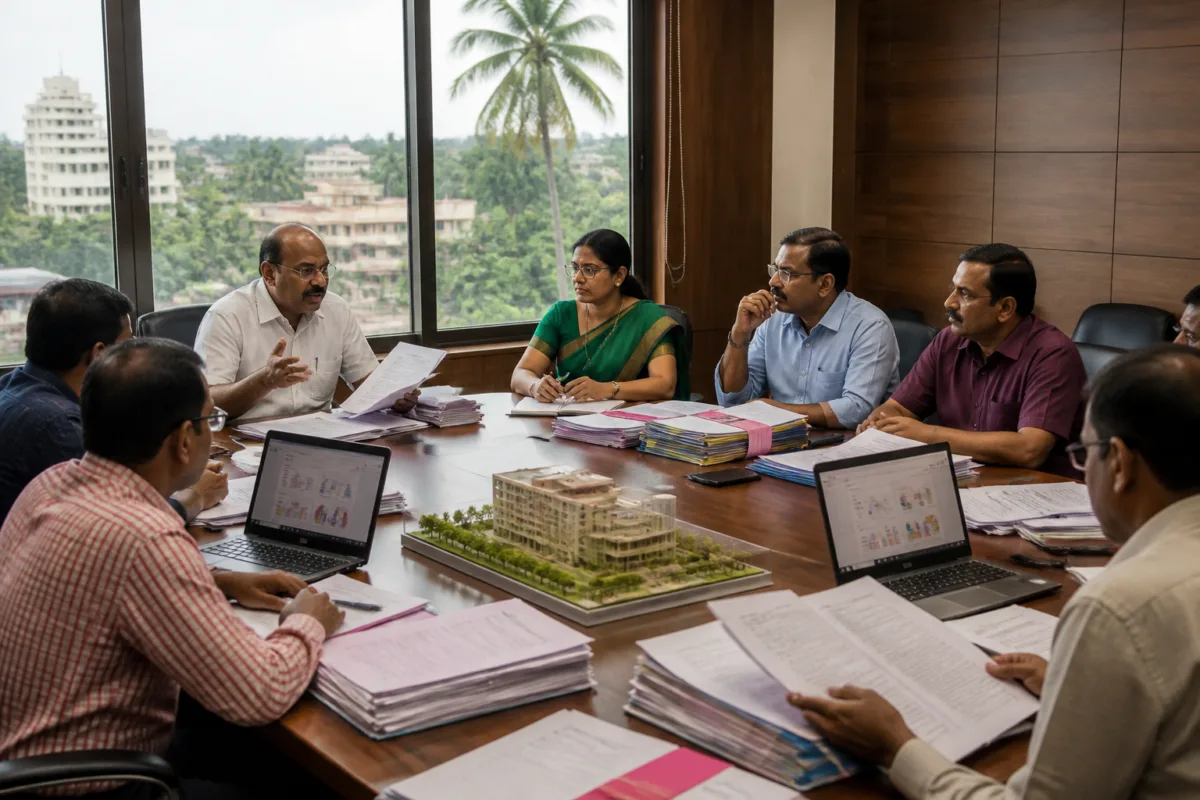
Thiruvananthapuram MSME approvals are set for closer administrative follow-up after the district-level Single Window Clearance Board reviewed entrepreneurs’ complaints about delays involving multiple government departments and local self-government institutions.
The meeting, chaired by district collector Anju K S, examined pending complaints related to mandatory clearances for micro, small and medium enterprises. Officials reviewed applications submitted through Kerala’s K-Swift online clearance system and discussed cases in which entrepreneurs had submitted the required documents but had not received approvals.
The complaints covered clearances from the pollution control board and other departments, operational permits for farms, and delays in securing building numbers and licences from local self-government institutions. These approvals are important for enterprises to begin or continue operations, particularly where a business requires both regulatory permissions and local body documentation.
The district collector directed officials to expedite statutory procedures in cases where all required documents had already been submitted. She also instructed departments not to impose unnecessary demands for additional documents or information on entrepreneurs.
At the same time, the board directed officials to conduct factual assessments of complaints involving environmental, health and agricultural matters. Decisions in such cases, the meeting said, must be taken strictly in accordance with applicable laws and regulations. The direction seeks to distinguish genuine procedural delay from cases where further scrutiny is legally required.
The meeting also focused on coordination between departments. The board emphasised that grievances should be addressed within stipulated timeframes and that procedural delays should not affect the functioning and growth of MSMEs. The review places the district’s single-window mechanism at the intersection of online clearance processing, departmental approvals and local government responsibilities.
Representatives and officials from the industries and agriculture departments, the pollution control board, Kerala Water Authority, Thiruvananthapuram city corporation and various gram panchayats attended the meeting. Their participation reflects the number of agencies involved in approvals that can affect enterprise operations, including permissions linked to buildings, water, pollution control, health and agricultural activity.
The board’s next steps are to follow up on complaints, assess the status of K-Swift applications and ensure that departments act on eligible cases without avoidable procedural delays, while retaining legally required scrutiny for environmental, health and agricultural matters.

