


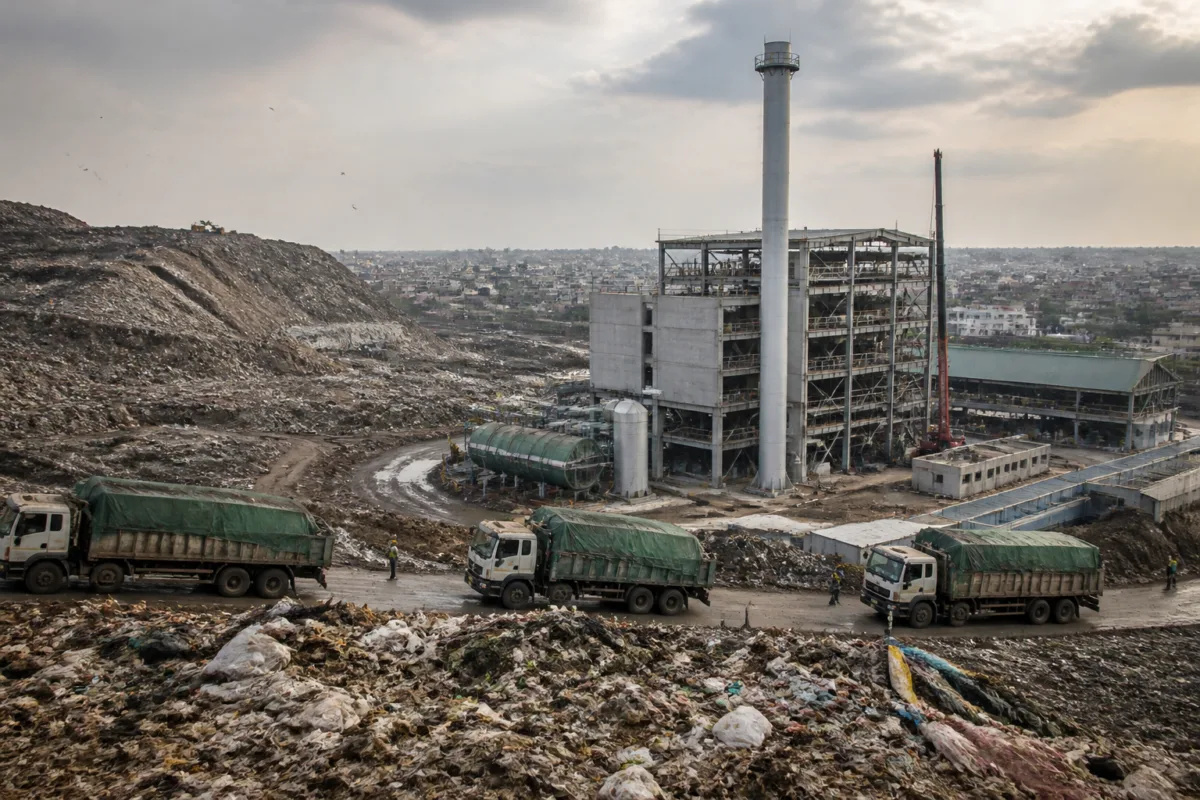
Delhi’s Ghazipur landfill is set to host a waste-to-energy plant capable of processing 2,000 metric tonnes of solid waste a day and generating about 24 megawatts of electricity, according to information shared by the Municipal Corporation of Delhi’s Standing Committee chair Satya Sharma.
The project will be developed across 10 acres within the Ghazipur landfill site in east Delhi. Sharma said the modern plant is being established to use solid waste for power generation while advancing the scientific disposal of the city’s growing waste burden.
The project has been awarded to Jabalpur MSW Private Limited. The company has proposed a tariff of Rs 7.39 per kilowatt-hour, or unit, for the electricity generated by the facility. The Delhi Electricity Regulatory Commission approved the proposed rate in an order dated 13 October 2026.
The plant will be developed under a public-private partnership model. Under the arrangement, the selected company will be responsible for constructing, financing and operating the facility. Once commercial production begins, the company will operate the plant for 25 years.
The MCD will provide land within the Ghazipur landfill premises on lease, subject to the conditions finalised for the project. The Union Ministry of Housing and Urban Affairs will provide Rs 122 crore for the project under the Swachh Bharat Mission-Urban 2. The announcement did not specify the construction start date or the expected date for commercial power generation.
Sharma said the project is part of the civic body’s effort to respond to Delhi’s increasing waste volumes by improving disposal systems and introducing modern technology. The project is intended to convert waste into a usable resource while increasing electricity generation.
The Ghazipur site is one of Delhi’s major landfill locations, making the project relevant not only to power production but also to the way the city manages municipal solid waste. Its stated capacity of 2,000 tonnes a day will determine how much waste can be diverted into the facility once it becomes operational. The announcement, however, did not provide details on the plant’s emissions-control technology, residue management system or the volume of waste that will be separately processed for recycling.
Sharma said the construction and operation of the facility would have to comply with requirements set by the National Green Tribunal, the Delhi Pollution Control Committee and other environmental authorities. These requirements will govern the project’s implementation and operation, including its compliance with applicable environmental standards.
The project’s next formal milestones will be its construction, financing and commissioning under the PPP agreement, followed by the start of commercial electricity production. The MCD’s announcement did not provide a detailed implementation timeline.

