


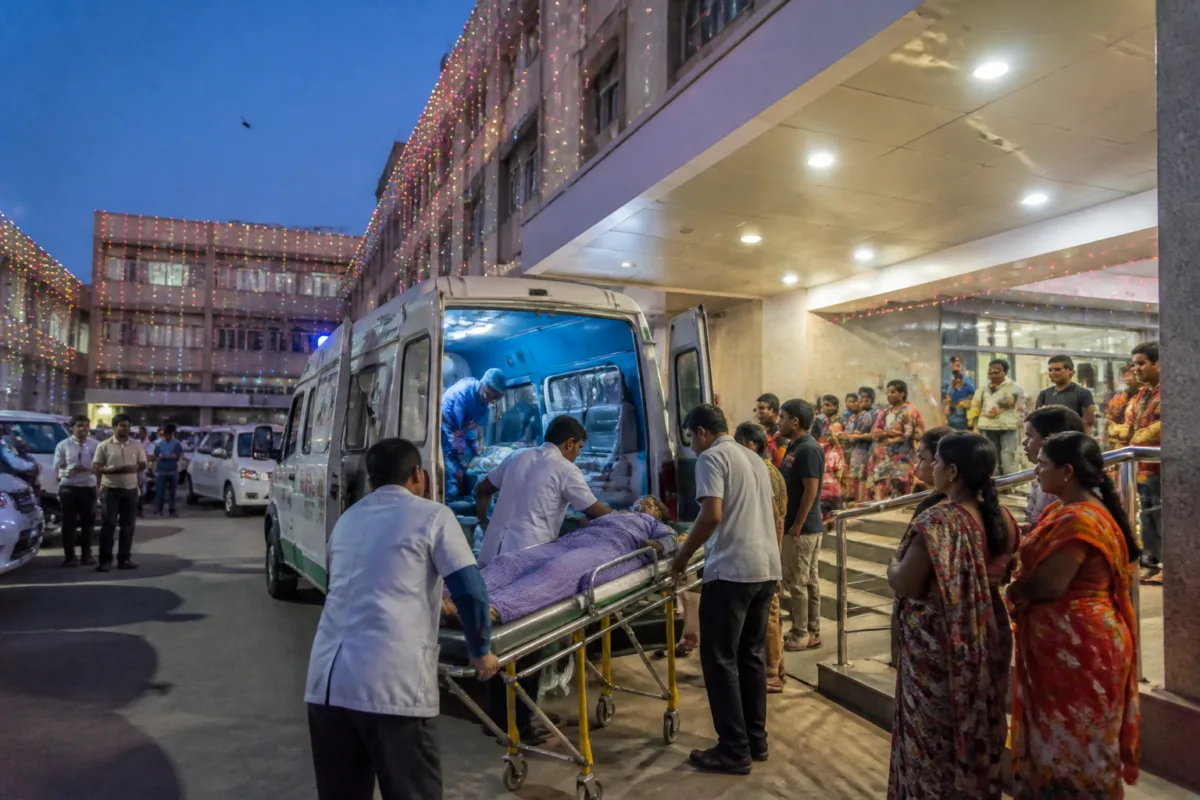
Ahmedabad Diwali emergencies rose by 13% during the festival period, according to EMRI 108 data, with sharp increases in vehicular and non-vehicular trauma and 62 burn cases recorded across Gujarat on Diwali day. Ahmedabad recorded 13 of the burn emergencies, while Surat reported 12.
The emergency categories showing the steepest increases were vehicular trauma, which rose by 87%, and non-vehicular trauma, which increased by 75%, EMRI 108 data showed. The figures cover emergency calls handled during the festivities and include incidents linked to movement, celebrations and firecracker-related injuries.
Ahmedabad’s Civil Hospital treated 28 burn patients since Dhanteras, according to Dr Rakesh Joshi, the hospital’s medical superintendent. Twenty of those patients were managed in the outpatient department, while eight others did not continue treatment at the hospital. Three of them chose to take discharge and seek care at hospitals closer to their homes, Joshi said.
The hospital was treating five burn patients as of Monday morning. The cases ranged significantly in age and severity. Civil Hospital officials said the youngest patient was a one-year-old child admitted with burns covering 5% of the body. The oldest was a 51-year-old woman admitted with burns covering 50% of her body.
The festival-related emergency load was also reported at Sola Civil Hospital, where officials handled more than 10 Diwali-related cases. Five involved eye redness or injuries associated with firecrackers. All five patients were treated in the outpatient department, and none required hospital admission, a senior official said.
Across Gujarat, the 62 burn emergencies recorded on Diwali day placed Ahmedabad and Surat among the cities reporting the highest numbers. The data provides a city-level picture of how festival-period incidents translate into demand for ambulance and hospital services, particularly for trauma and burn care.
EMRI officials said they would continue using a dynamic ambulance placement plan until the end of the festivities. Under the arrangement, ambulance locations are determined using trends from previous years, with the stated aim of reducing response time during periods when emergency demand is expected to rise.
The deployment strategy keeps ambulance positioning responsive to the changing pattern of calls during the remaining festival period. Emergency services and hospitals will therefore continue handling burn, eye-injury and trauma cases as celebrations conclude.

