


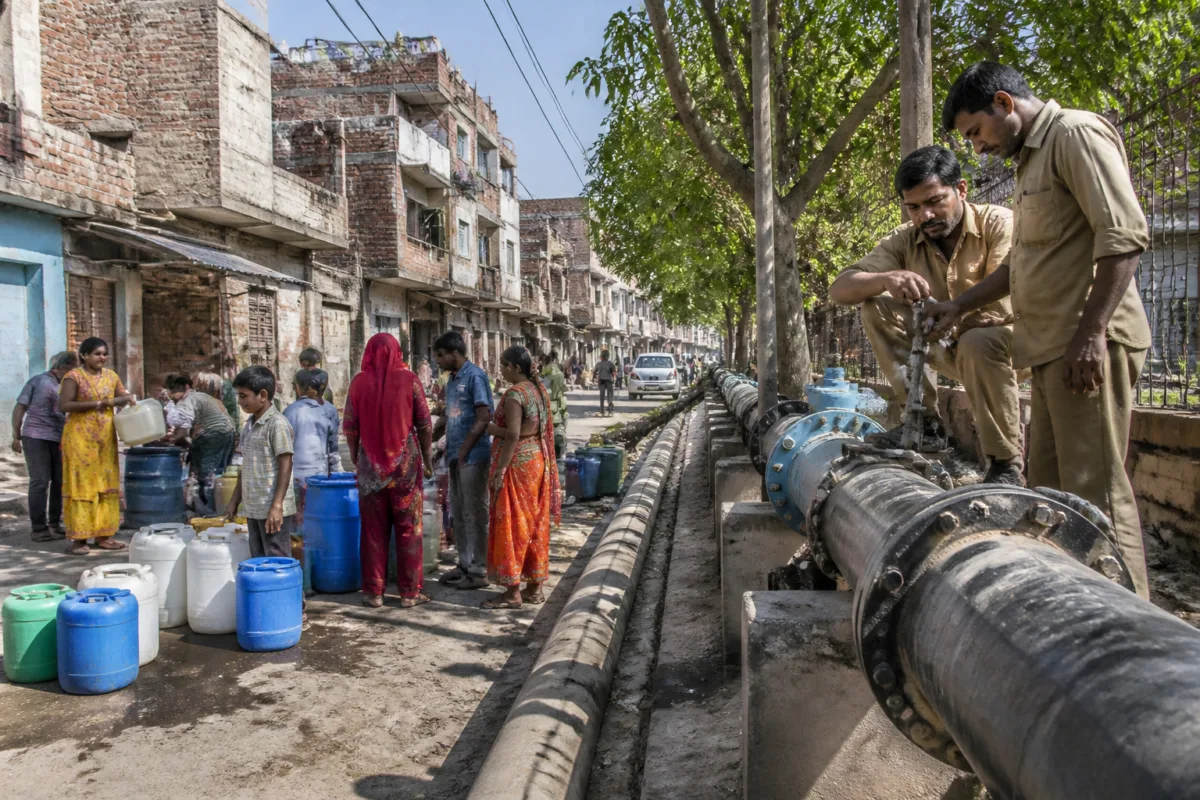
The Delhi Jal Board has issued a tender for a three-year water conservation awareness programme in the command area of the Chandrawal Water Treatment Plant, covering parts of central and west Delhi and about 22 lakh residents. The programme, supported by the Japan International Cooperation Agency (JICA), is intended to reduce water wastage and improve public participation in the city’s water supply system.
The public relations programme will be implemented under the Delhi Water Supply Improvement Project, for which the board plans to spend about Rs 1.53 crore. The proposed programme will run for 36 months, according to details reported by Jagran – New Delhi. It will focus on the appropriate use of water, conservation and awareness about improvements in the water supply system.
The command area covers approximately 92 square kilometres, or about 6.2% of Delhi’s total geographical area. It includes Old Delhi, Chandni Chowk, Paharganj, Sadar Bazaar, Civil Lines, Karol Bagh, Kamla Nagar, Malkaganj, Patel Nagar, Rajendra Nagar, Shadipur and Naraina, among other localities.
The board’s campaign is being planned alongside efforts to improve supply arrangements in the Chandrawal plant’s command area. The programme will use public outreach to explain water conservation and encourage residents to participate in the functioning and improvement of the water supply network.
The initiative also brings attention to Delhi’s non-revenue water challenge. According to the information cited by the Delhi Jal Board, between 51% and 53% of the city’s total water supply falls into the non-revenue water category. This includes leakage from pipelines, theft, supplies that are not billed and meter-related discrepancies.
The non-revenue water figure does not mean that the entire volume is physically flowing onto roads or being visibly wasted. It also includes water for which supply records or bills are not generated. The distinction is important for a city water utility because losses can arise both from physical leakage and from gaps in measurement, billing and accounting.
The report also states that several water supply pipelines in Delhi are between 40 and 50 years old. Ageing networks can contribute to leakage, making public awareness only one part of the wider challenge facing the utility. The planned outreach programme is therefore being introduced within a system that requires both household-level changes in water use and improvements in network management.
This is not the first attempt to establish such a public relations programme under the project. A tender for a similar programme was issued in 2019, but work on the initiative did not move forward, according to the report. The latest tender represents a fresh attempt to connect infrastructure improvement with sustained communication across a large and densely occupied command area.
The Delhi Jal Board’s stated objectives include informing residents about the water supply system, promoting the proper use of water and building participation in conservation efforts. The next formal step is the tender process for the 36-month programme.

