


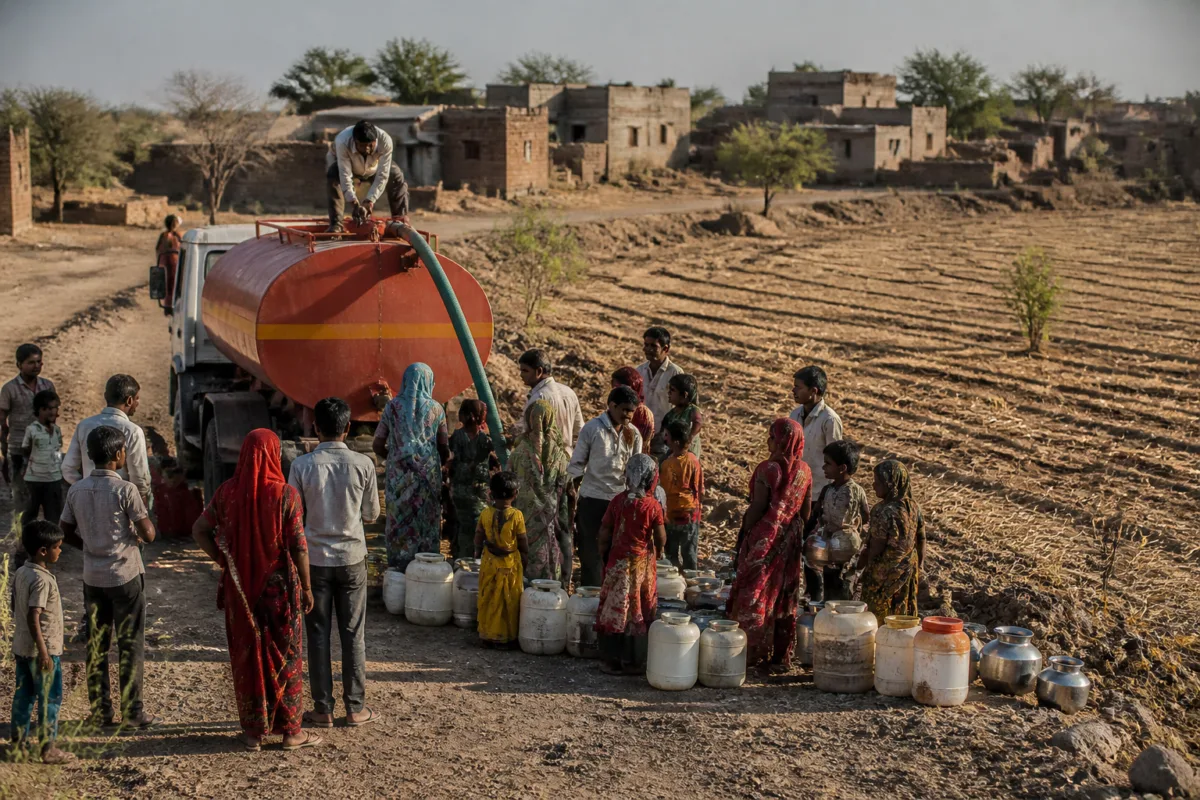
The Beed district administration has sought Rs 754.79 crore in assistance after assessing that drought has damaged crops across 7,84,479 hectares, while the district faces sharply reduced groundwater levels, depleted reservoirs and growing dependence on water tankers.
The assessment was presented at a drought review meeting held at the district collector’s office on November 5 under the chairpersonship of Animal Husbandry Minister Pankaja Munde. District Collector Vivek Johnson presented the review of crop damage and compensation requirements, according to a report by Sakal’s Agrowon service.
The administration classified the damage as exceeding 33% across the affected cropped area. The meeting focused on crop compensation, fodder availability, drinking water and incomplete water-supply projects. Officials also reviewed plans to provide farmers an advance payment of Rs 5,000 under crop insurance, along with the status of the Diwali assistance announced by the chief minister and the reported farm-loan waiver.
The district’s water position remains a major concern. Groundwater levels have fallen by 4.55 metres, while the 164 water projects together hold only 12.01% of their capacity, according to the review presented at the meeting. Fifty-one projects have reportedly dried up, and water is being supplied through 294 tankers.
The administration has also acted against unauthorised water use. It disconnected 2,710 illegal water connections and seized 266 pumps, the report said. Munde expressed concern over the decline in groundwater levels and instructed officials to prepare detailed water-supply planning through the next monsoon. She also called for the early completion of pending water-supply schemes.
Livestock face a parallel risk as the district’s available fodder is estimated to last only 26 days. The Forest Department, Animal Husbandry Department and corporate social responsibility initiatives are to be used to plan additional fodder production. If fodder camps become necessary, the administration has decided to use geofencing and animal tagging.
The review also included measures intended to support local livelihoods. Officials discussed promoting products from Beed and neighbouring Jalna, including the creation of a separate brand for silk and handloom products made through women’s self-help groups. The administration said the initiative is intended to create employment for women.
The immediate administrative priorities identified at the meeting are crop compensation, drinking-water supply, fodder production, groundwater protection and completion of pending water projects. The report did not state when the requested Rs 754.79 crore would be sanctioned or released.

