


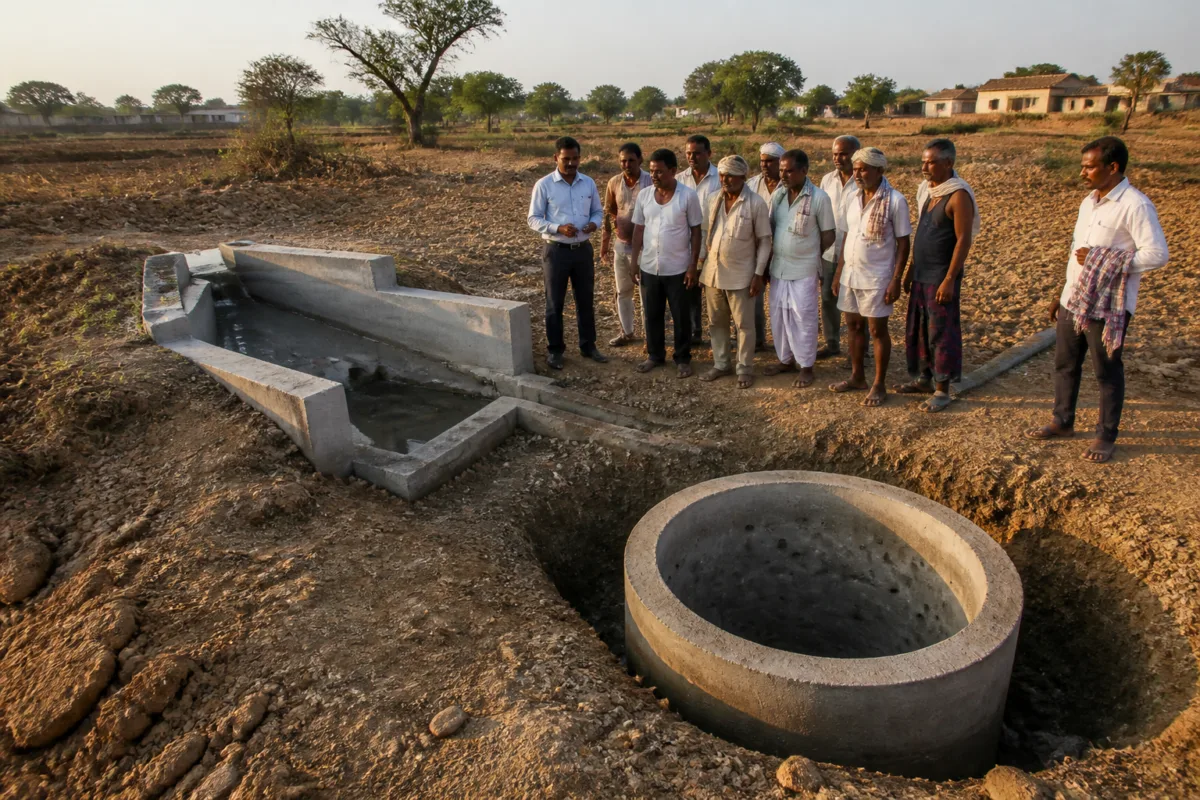
Nagpur water conservation works and projects addressing drinking water and fodder shortages in rural areas will receive priority support from the Maharashtra government, Chief Minister Devendra Fadnavis told village representatives in Lohari Sawanga in Nagpur district’s Narkhed taluka on Sunday.
Fadnavis was speaking to sarpanches and other local body representatives during a meeting on the impact of drought in the area. He had stayed overnight in Lohari Sawanga to celebrate Diwali with farmers. The meeting focused on drinking water, fodder for cattle and water-conservation measures being undertaken by villages.
The chief minister assured representatives that the government would provide full cooperation to villages working to address drinking water and fodder problems in rural areas. He also said works linked to water conservation, along with suggestions raised by the village representatives, would be started on priority.
The meeting also brought attention to problems in the implementation of existing works. One sarpanch said recharge shafts installed as part of water-conservation projects were not suitable. The representative also said gram panchayats were not being informed about the different works carried out in villages.
The concerns were linked to the quality and oversight of development works. The sarpanch said that, to ensure better-quality construction, works should be assigned to a single contractor rather than being divided among multiple contractors. Fadnavis responded that this would not happen again, according to the report.
Representatives also asked that works under the Atal Bhujal Yojana be completed on priority. They sought funds to repair water-conservation works that are in poor condition. The requests place the focus not only on creating new water infrastructure but also on the functioning and maintenance of assets already built in villages.
Atal Bhujal Yojana works, recharge shafts and other water-conservation measures require coordination between village-level institutions and the agencies implementing development projects. The complaints raised at the meeting indicate that local bodies are seeking greater information about works taking place in their villages and a clearer role in ensuring their quality.
Fadnavis expressed satisfaction with the way local body representatives were responding to drought conditions. He said they were remaining alert and giving priority to drinking water, fodder for cattle and water conservation in their villages.
The government’s next steps, as conveyed at the meeting, are to begin the proposed water-conservation works and village suggestions on priority, complete pending Atal Bhujal Yojana works and provide funds for repairs to deteriorated projects.

