


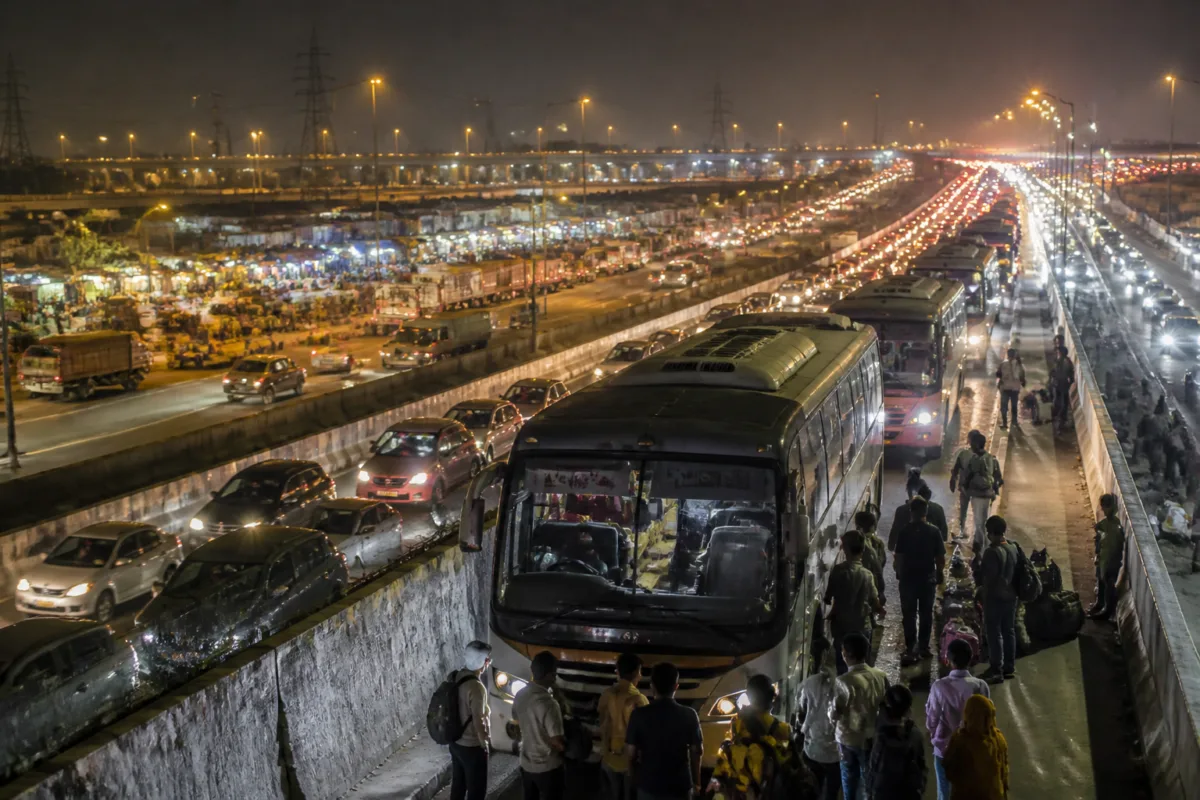
Delhi-Meerut Expressway traffic slowed to less than 1 kmph over a 650-metre stretch near Ghazipur after buses stopped on highway lanes to pick up passengers and load luggage, turning a major expressway corridor into an informal interstate bus terminal.
The congestion was reported between the Ghazipur round-about and the flower market crossing around midnight on Friday. It took approximately 45 minutes to cover the stretch, according to a report by the Times of India. The affected road forms part of NE3, described in the report as having six expressway lanes and eight highway lanes.
State and private bus operators running services to Uttar Pradesh, Bihar and Uttarakhand were using the highway as a boarding point. Buses stopped on the carriageway while passengers waited for departures and loaded their luggage, leaving other vehicles to move through the road space that remained available.
The disruption affected commuters travelling between Delhi, Ghaziabad and Noida, including passengers heading home during the pre-Diwali rush. Pradeep Rawat, who was travelling to Uttarakhand, told the newspaper that he had waited three hours for his bus. His operator had informed him about the delay caused by traffic, while passengers waited in the open for updates through messages from bus operators.
The traffic pressure was compounded by activity around the Ghazipur flower mandi. Wholesale buyers, delivery tempos and roadside vendors crowded the service lanes, adding to the congestion around the expressway and the adjoining market area.
The incident highlights the operational gap between Delhi’s designated interstate bus infrastructure and the way private and state-operated services are being accessed on the ground. Delhi has three designated interstate bus terminals, but the reported boarding activity effectively shifted that function onto a high-capacity road used by commuters and through traffic.
The arrangement also left passengers waiting beside highway lanes rather than inside a formal terminal environment. The report said that law enforcement was not visible at the location while buses stopped to collect passengers and luggage.
For road users, the result was a severe bottleneck on a corridor designed to carry traffic across Delhi and the National Capital Region. The immediate causes described in the report were bus boarding activity, market-related traffic and crowded service lanes. The report did not cite any official response or enforcement action at the time of publication.

