


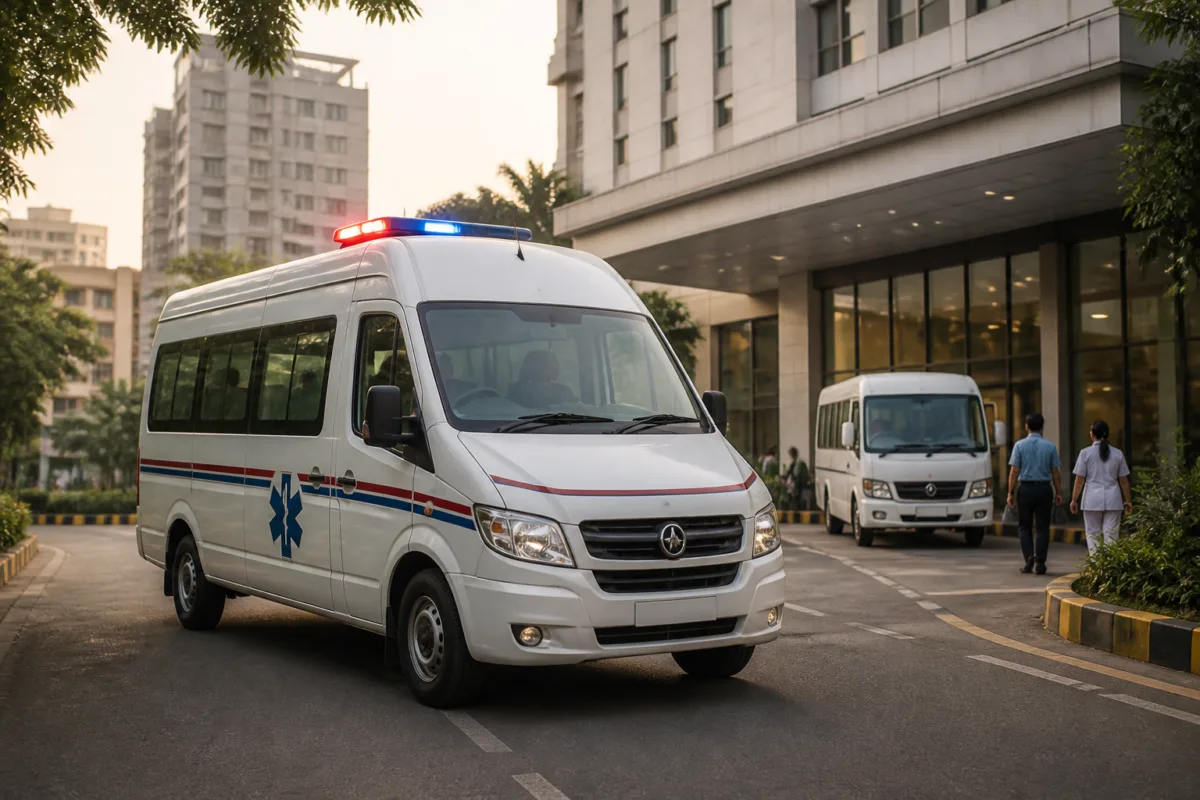
Force Motors will launch electric vehicles based on its Traveller platform in the January-March period next year, with an electric ambulance expected to be among the first offerings, Managing Director Prasan Firodia said. The company’s Traveller EVs have been developed and are undergoing final testing and homologation with the Automotive Research Association of India (ARAI).
The launch will mark Force Motors’ entry into electric passenger-carrier vehicles on the Traveller platform after the company showcased an electric variant at the 2024 Auto Expo. The manufacturer has not yet started sales of the model. Firodia said multiple Traveller EV variants were planned, although the company has not disclosed their specifications, prices or launch schedule beyond the January-March window.
The Traveller platform serves several urban and institutional uses, including ambulances, school buses, police vans, employee transport, tourism and delivery operations. An electric ambulance would place the vehicle in a segment where operating schedules and charging availability can affect emergency and healthcare services. The company is also developing an electric version of its Urbania people carrier, which Firodia said would require a few more months before homologation.
Force Motors’ announcement comes as commercial passenger transport operators assess whether electric vehicles can meet the demands of varied routes and intensive daily use. Firodia said adoption of electric vehicles in the passenger-carrier segment, particularly vehicles shorter than seven metres, remained at an early stage and would be gradual. He identified vehicle economics, range limitations and charging infrastructure as major factors affecting the transition.
According to Firodia, school transport could shift to electric vehicles sooner because school routes and daily distances are generally more predictable. Tourism and travel vehicles, by contrast, operate across changing routes, making charging requirements and operating costs harder to estimate. The company’s Traveller range is used across healthcare, education, employee transport, tourism and other passenger-transport applications.
The comments underline the operational difference between electrifying private vehicles and electrifying commercial fleets. Passenger carriers often need to remain in service for long periods, while their routes can vary significantly by operator and application. For fleet owners, the decision therefore depends not only on the vehicle itself but also on access to charging infrastructure and the ability to plan daily operations around available range.
Firodia said Urbania had become a significant platform for Force Motors in terms of volume and revenue. The company plans to electrify its other platforms in stages, rather than shifting its entire portfolio at once. The timing of those future launches has not been disclosed.
Force Motors is investing ₹3,000 crore across capacity expansion, engineering, electrification, hybrid driveline technology and digitisation, Firodia said. The company is also increasing production capacity to 85,000 vehicles. The Traveller EVs will proceed towards launch after completion of final testing and ARAI homologation, while the Urbania EV remains under development ahead of its own homologation process.

