


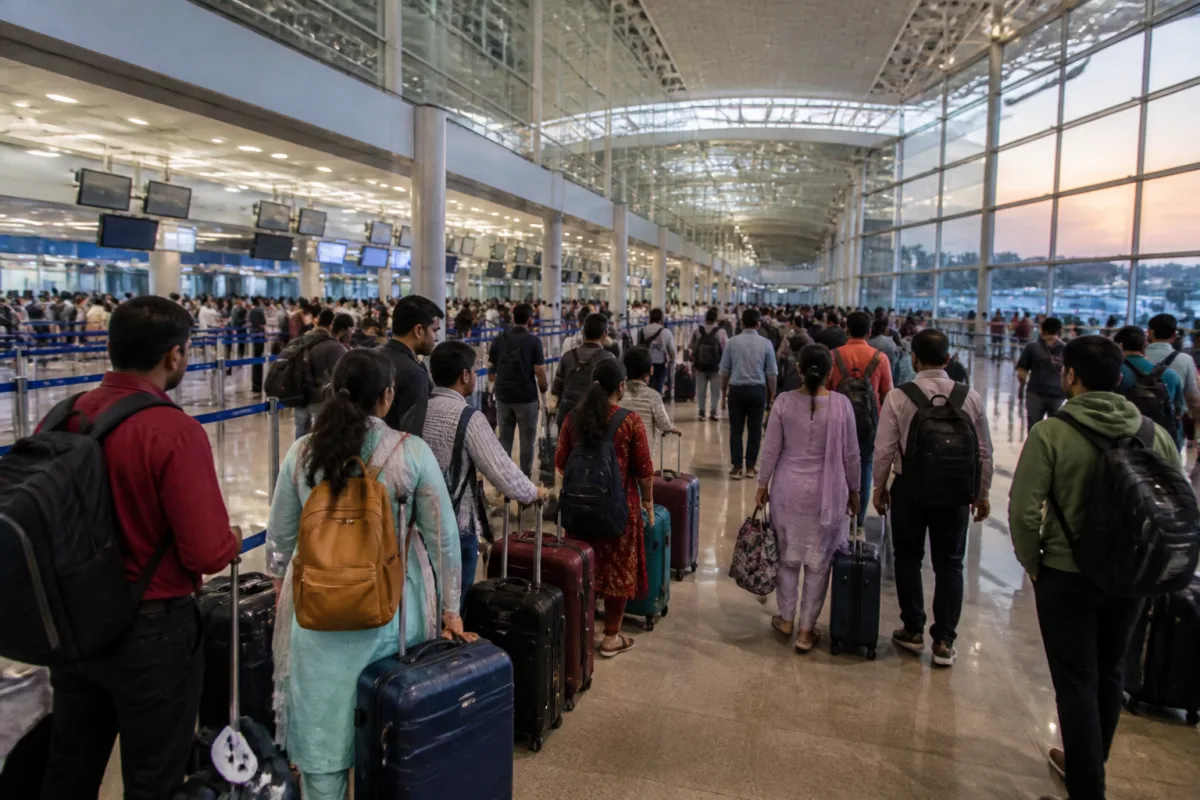
Airfares from Pune have risen sharply ahead of Diwali, with passengers reportedly paying three to seven times more than usual on several domestic routes, including flights to Nagpur, Patna, Bengaluru, Delhi and Bhopal. The increase has made air travel unaffordable for some families, students and workers travelling during the festival period.
On the Pune-Nagpur route, where one-way fares are usually between Rs 5,500 and Rs 6,500, tickets during the Diwali period have risen to between Rs 19,068 and Rs 42,682, according to the report. Fares on the Pune-Patna route, normally around Rs 6,000 to Rs 8,000, have reached about Rs 24,439 for a non-stop journey.
The Pune-Bengaluru route has seen fares rise from the usual Rs 3,000-Rs 5,000 range to about Rs 7,000-Rs 10,000. On the Pune-Delhi route, tickets that generally cost Rs 5,000-Rs 6,000 are now priced above Rs 9,000-Rs 10,000. Pune-Bhopal fares have increased from approximately Rs 8,000-Rs 10,000 to between Rs 17,800 and Rs 28,000.
Passengers quoted in the report have called for government intervention and limits on airfares during peak festival periods. Pradnya Kakade, a Nagpur native, said the cost of taking her entire family home for Diwali had reached the level of some people’s monthly salaries. She said higher demand was understandable but argued that fares should not become excessive.
Akanksha Patel, who was planning to travel to Bengaluru, said that checking fares several weeks in advance had not guaranteed affordable tickets. She said passengers often have limited flexibility to change travel dates during festivals and called for a mechanism to keep fares under control. Patel also suggested that airlines be encouraged to add flights, deploy larger aircraft and increase capacity on high-demand festive routes rather than face blanket restrictions.
Aviation expert Dhairyashil Wandekar cautioned against imposing across-the-board fare caps without considering airline costs. He said airline profit margins were low and unstable, and that rigid limits could discourage carriers from adding capacity and reduce travel options for passengers. He supported temporary government intervention during a genuine emergency, while calling for regular monitoring by the Directorate General of Civil Aviation and greater transparency on ticket pricing.
The report attributed the fare increase to high seasonal demand as well as costs linked to aircraft leasing, aviation turbine fuel, maintenance, airport charges, financing and fluctuations in the US dollar exchange rate. It also said the current crisis in West Asia had increased fuel costs and required changes to flight routes. Aviation fuel normally accounts for around 30% to 40% of airline expenditure, but the report said the proportion was currently estimated to have risen to 55% to 60%.
Wandekar also called for rationalising taxes on aviation turbine fuel, reviewing airport charges and increasing competition among airlines. He said the government’s temporary support to scheduled airlines to help stabilise fuel costs was welcome, but added that longer-term reforms were required. The report noted that the Indian Aircraft Rules, 2026 are scheduled to come into effect on 1 January 2027, with provisions expected to strengthen fare oversight, require more transparent ticket information and give the central government intervention powers in exceptional circumstances.

