


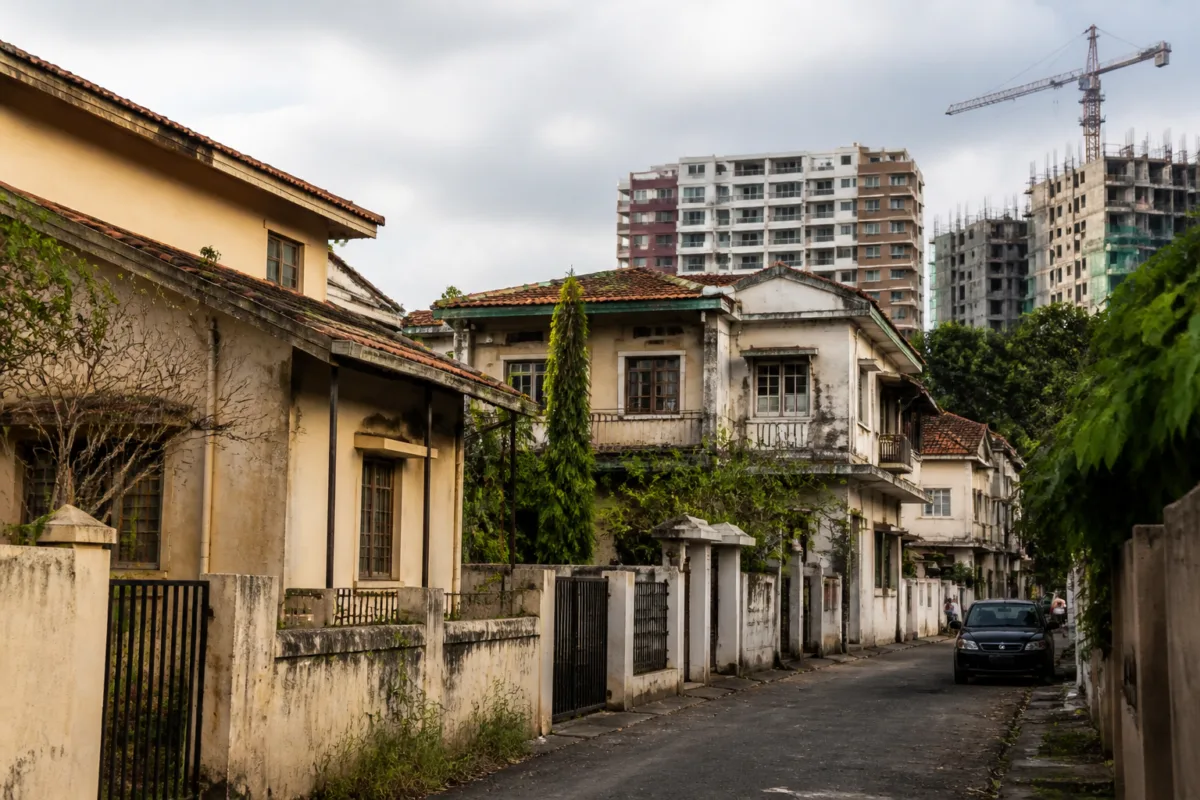
The dispute over Pune Cantonment FSI is no longer only a technical argument about how much construction a plot can accommodate. Hundreds of objections to the draft building bylaws proposed by the Ministry of Defence have exposed a deeper problem in the Camp area: residents still do not know, with sufficient clarity, what redevelopment rights they will receive for properties that have faced construction restrictions for decades.
The Pune Cantonment Board has received suggestions and objections from citizens, with most reportedly seeking a uniform floor space index of 2 instead of the four slabs proposed in the draft. The proposed limits are 1.25, 1.5, 1.75 and 2. The central concern is not simply that the maximum FSI may be lower than expected. It is that residents are unclear about the criteria that will determine which property receives which entitlement.
That distinction is important in a cantonment because development rights are shaped by more than ordinary municipal planning. The civilian pockets of Pune Cantonment exist within a regulatory environment influenced by defence-related restrictions, the Ministry of Defence and the Directorate General of Defence Estates. For property owners, the result has been a long-running gap between owning a house and being able to substantially rebuild or expand it.
The source report says around 2,500 properties in the civilian areas are affected by construction restrictions. Owners have largely been confined to repairs, while substantial reconstruction and expansion have remained difficult. Several houses have deteriorated over time, leaving residents attempting to improve living conditions within a regulatory framework that has not provided a clear pathway for renewal.
The draft bylaws were expected to address that accumulated pressure. The Pune Cantonment Board began framing new bylaws for civilian and bungalow areas in March 2025 after directions from the Directorate General of Defence Estates. The process raised expectations that restrictions would be relaxed in a comprehensive manner. Instead, the proposed graded system has shifted the debate towards eligibility, plot size and equal treatment.
The board’s chief executive officer, Vidyadhar Pawar, said the response had been overwhelming and that the board would discuss each suggestion and objection before submitting them through the competent authority to the ministry for approval. This indicates that the draft is still within an administrative review process. The objections have not resulted in a final change to the proposed FSI structure, and the ministry’s approval remains a necessary subsequent step.
The case for a uniform FSI of 2 is being made by residents, activists and former board members on grounds of simplicity and fairness. Nominated member Sachin Mathurawala described FSI revision as a long-pending demand and said residents wanted a straightforward 2 FSI without conditions. Former board vice-president Vinod Mathurawala said the regulations should clarify how permissible FSI would be determined and why different limits should apply to properties within the same civilian area.
These objections reveal the institutional problem at the heart of the proposal. FSI is usually presented as a numerical planning control, but in practice it decides how much built-up space a property owner can create. A difference between 1.25 and 2 can substantially change whether an ageing house can be replaced with a viable home, whether a family can accommodate changing needs, or whether redevelopment is financially possible. When the basis for that difference is unclear, the regulation becomes difficult for residents to understand and harder for officials to administer consistently.
The proposed structure appears to link FSI to the size of individual land parcels, with larger plots likely to receive a lower FSI. A senior DGDE official said the approach was intended to control vertical growth in the Camp area and prevent large-scale construction by property owners. That explanation establishes the planning objective behind the graded system: limiting the intensity of development rather than extending the maximum permissible FSI uniformly.
But controlling vertical growth and ensuring equitable redevelopment are not automatically the same goal. The draft is attempting to manage the built form of the cantonment while responding to residents who have been unable to undertake substantial reconstruction. The objections suggest that the current proposal may be seen as addressing one side of the problem—growth control—without sufficiently explaining how the other side—housing renewal—will be protected.
The conflict is also connected to the geography of the Camp area. Residents fear that neighbouring properties could receive substantially different redevelopment opportunities under the graded system. That concern is about more than individual expectations. If two properties in the same civilian area face different FSI entitlements, the regulation needs a publicly understandable reason, such as a clearly defined planning, safety or infrastructure criterion. Without that clarity, plot-specific decisions can appear arbitrary even when they are intended to serve a legitimate planning purpose.
The Sumit Bose committee on cantonment reforms had recommended aligning FSI in civilian areas with that of neighbouring municipal corporations. Residents have argued that this recommendation has not translated into the expected relief on the ground. The present objections therefore reflect a wider implementation gap: reform language may recognise the need for change, but the resulting rules can still leave property owners uncertain about what is actually permissible.
That gap matters because cantonment governance involves multiple layers of authority. The Pune Cantonment Board is collecting and examining the objections, but the draft originated with the Ministry of Defence and was framed following directions from the Directorate General of Defence Estates. The board is expected to forward the suggestions through the competent authority to the ministry. In practical terms, residents are engaging with a local institution while the final regulatory decision remains connected to a higher defence-estates framework.
This administrative structure can make accountability difficult to follow. The board is the visible point of contact for residents, yet it may not have the final power to settle the FSI question. The ministry, meanwhile, must balance civilian redevelopment demands with defence-related restrictions and planning considerations. The draft’s success will therefore depend not only on the numerical FSI permitted, but also on whether the final rules identify responsibilities, eligibility standards and approval procedures clearly enough for ordinary property owners to use them.
The available evidence does not establish how many properties would fall into each of the four proposed FSI slabs, how the plot-size thresholds would be calculated, or what additional conditions would apply to properties seeking an FSI of 2. It also does not state whether the final bylaws will adopt the residents’ demand for a uniform entitlement. Those unresolved details are central to the public impact of the policy and cannot be inferred from the draft’s broad structure alone.
What is clear is the scale and duration of the underlying problem. Around 2,500 civilian properties are affected by restrictions, and residents have been seeking relief for years. The current process has converted that long-standing frustration into a formal consultation, producing hundreds of objections. The response indicates that the issue is not confined to a small group of developers or isolated property disputes. It concerns a substantial civilian population living within a defence-estates jurisdiction.
The Pune Cantonment FSI debate therefore presents a test of whether urban regulation can combine control with predictability. Authorities may have reasons to limit vertical growth, particularly in a constrained cantonment environment. Residents may also have a legitimate need to replace deteriorating homes and obtain a consistent basis for redevelopment. The policy challenge is to make those objectives visible in the rules rather than leave residents to decode them property by property.
The next stage is procedural but consequential. The Pune Cantonment Board has said it will examine the suggestions and objections in a board meeting and submit them to the competent authority for forwarding to the Ministry of Defence. Until that process is completed and the bylaws receive approval, the final redevelopment rights of civilian property owners in Pune Cantonment remain unsettled.

