


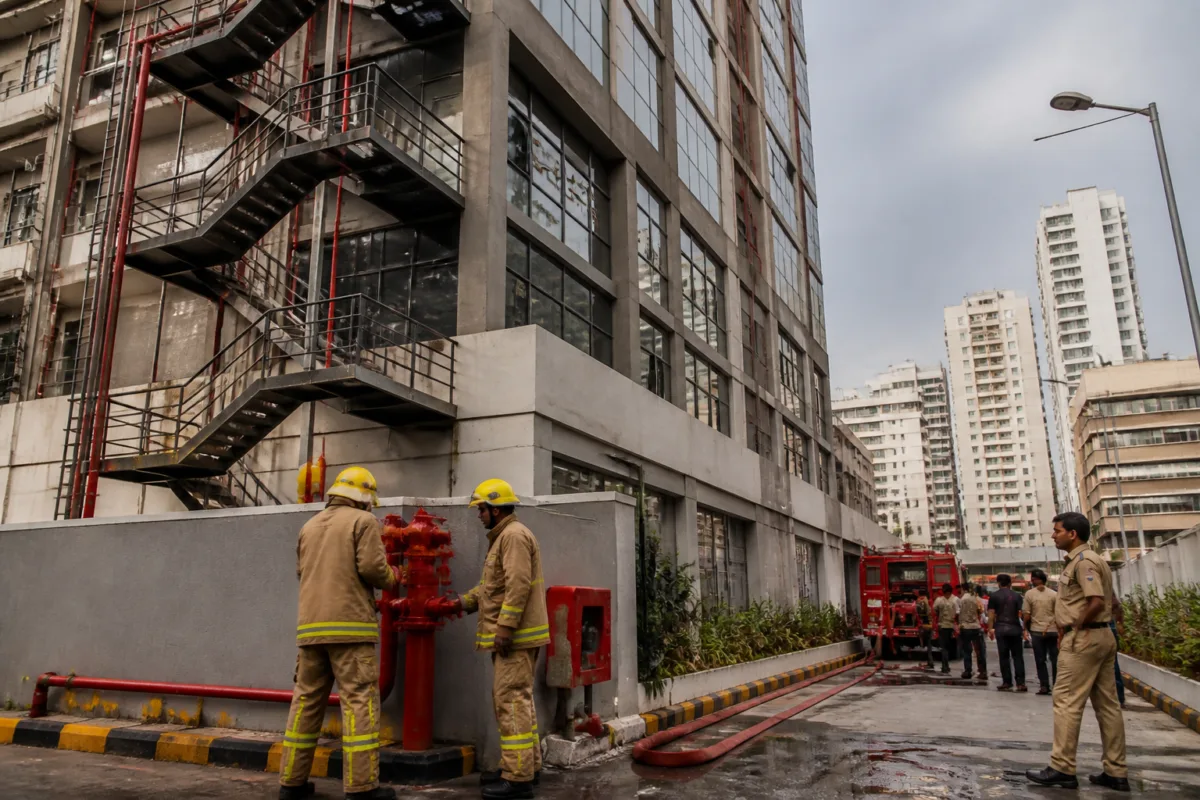
Telangana is set to tighten fire safety enforcement through a proposed ordinance that could introduce up to three years’ imprisonment and a fine of Rs 5 lakh when negligence in a fire accident results in death, while also giving the Director-General of Fire Services wider powers over unsafe buildings.
The state Cabinet cleared proposals on Thursday to amend the Telangana Fire Services Act, 1999, and implement amended provisions of the Water (Prevention and Control of Pollution) Act, 1974. The proposals have been referred to the Governor for approval, according to official sources cited by Deccan Chronicle.
Under the proposed fire safety amendments, a person whose negligent act causes a death in a fire accident could face up to three years in prison and a fine of Rs 5 lakh. Acts that endanger life or personal safety could attract up to six months’ imprisonment and a fine of Rs 1 lakh. The same punishment has been proposed for removing, tampering with or breaking the seal of electrical equipment.
The amendments would make both building owners and occupiers responsible for providing and maintaining prescribed fire safety measures. The Director-General of Fire Services would be empowered to declare buildings unsafe, issue notices and seal them. Such powers are currently largely vested with municipal authorities.
Residential welfare associations, owners and occupiers could also face penalties for failing to appoint a fire safety manager. The Director-General could impose a fine of Rs 50,000 on a welfare association for every month of default and take action against owners who do not comply with prescribed safety measures.
The proposed law also provides for a Fire Prevention and Life Safety Fund under the Director-General of Fire Services. Fees, penalties and other amounts collected under the Act would be credited to the fund and used for firefighting equipment, infrastructure and training. The government has also proposed a fire tax on citizens, collected on the lines of property tax by civic bodies.
Buildings would be divided into three categories based on fire risk and licensing requirements. Category A buildings would require a no-objection certificate from the Fire Services Department, Category B buildings would need a fire safety certificate, and Category C buildings would be permitted to rely on self-certification. The government will notify the categories separately.
Buildings outside Category A would have to obtain fire safety certificates from qualified fire and life safety auditors. The certificates would confirm compliance with prescribed fire prevention, protection and life safety measures and would require periodic renewal. Existing buildings would receive one year to obtain certification, with violations attracting prosecution.
A second ordinance cleared by the Cabinet concerns implementation in Telangana of the Water (Prevention and Control of Pollution) Amendment Act, 2024, enacted by Parliament. The state proposes to implement the amended provisions from this month.
Under the revised water pollution framework, minor procedural lapses would no longer automatically be treated as criminal offences. Permissions for industries from the Telangana Pollution Control Board would also be simplified through a single portal with a prescribed time limit, while safeguards would remain against the discharge of hazardous trade effluents, agricultural runoff and domestic sewage into water bodies.

