


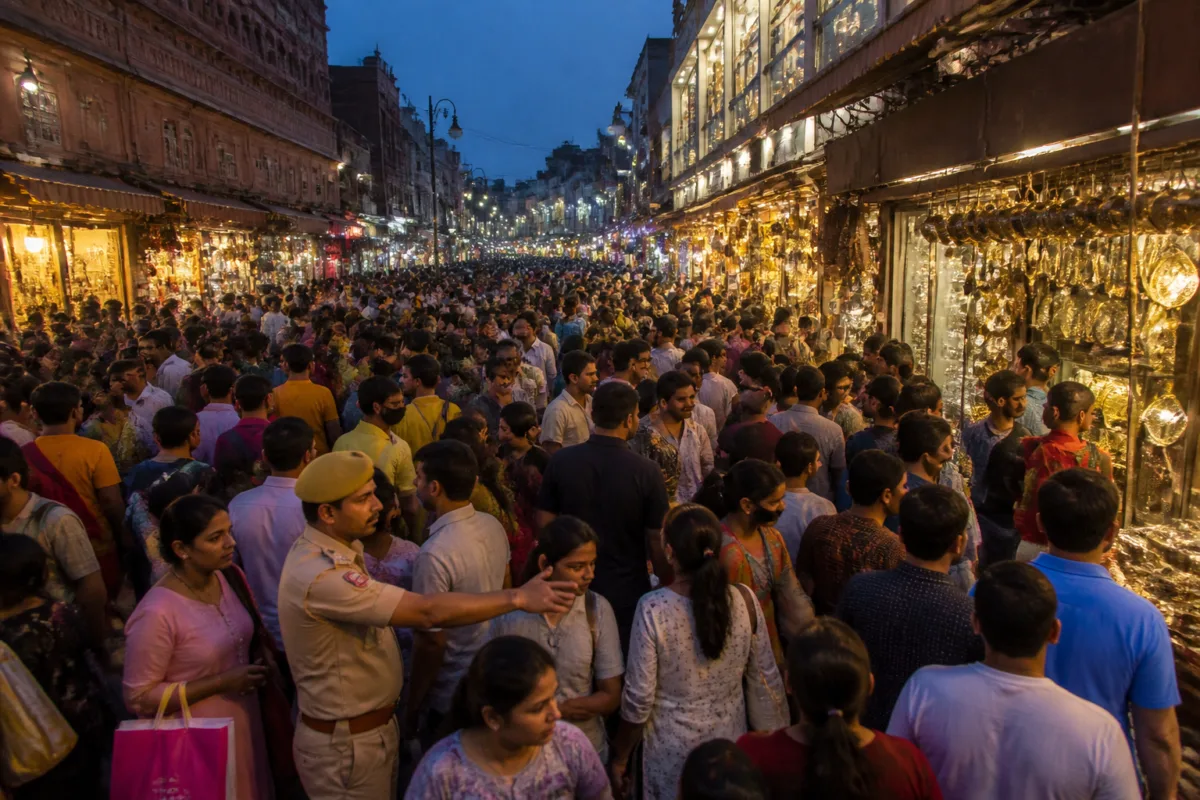
Delhi’s major markets saw exceptionally heavy Dhanteras footfall on Friday, with crowds stretching from Sadar Bazaar and Chandni Chowk to Khari Baoli, Bhagirath Palace, Connaught Place, Khan Market, Karol Bagh, Daryaganj and Dariba, according to a report by Jagran – New Delhi.
The report said there was barely enough space to walk in several market areas as shoppers arrived to buy gold and silver jewellery, utensils, electronic goods and puja items ahead of Diwali. The surge created a festive trading atmosphere but also placed pressure on movement and crowd management in some of the capital’s busiest commercial districts.
At several locations, shoppers were reportedly forced to move closely together because of the density of people. The conditions also raised concerns among visitors about the possibility of a stampede if movement was suddenly disrupted. The report did not record a stampede or other major crowd incident, but described the congestion as severe enough to generate safety fears among shoppers.
Police personnel and paramilitary forces were deployed in Sadar Bazaar, Chandni Chowk and other markets, the report said. Their presence was intended to support security and manage the large number of people entering and moving through the commercial areas during the festival shopping period.
The crowd was spread across markets with different commercial roles. Sadar Bazaar and Chandni Chowk attracted shoppers for a wide range of goods, while Khari Baoli and Bhagirath Palace also saw heavy footfall. Connaught Place, Khan Market, Karol Bagh, Daryaganj and Dariba reported similarly strong shopper presence, according to the report.
The scale of the rush highlighted the operational challenge faced by Delhi’s traditional markets during peak festivals. These areas combine narrow or heavily occupied trading streets, dense shopfronts and large volumes of pedestrians. When shoppers, vendors and goods movement overlap, even short-term increases in footfall can make walking difficult and complicate the work of security personnel.
For residents, the immediate impact was slower movement through market streets and a more crowded shopping experience. The report said people continued buying festival goods despite the congestion, with the demand for precious-metal items, utensils, electronics and worship materials driving activity across the markets.
The report characterised the day’s turnout as breaking records from previous years, although it did not provide a numerical footfall estimate or comparative sales figures. It also did not cite a separate statement from the police or market authorities on the total deployment, crowd-control measures or any recorded incidents.
The immediate next step for authorities is continued management of crowds and security arrangements in these markets during the remaining Diwali shopping period, when high pedestrian volumes are expected to continue.

