


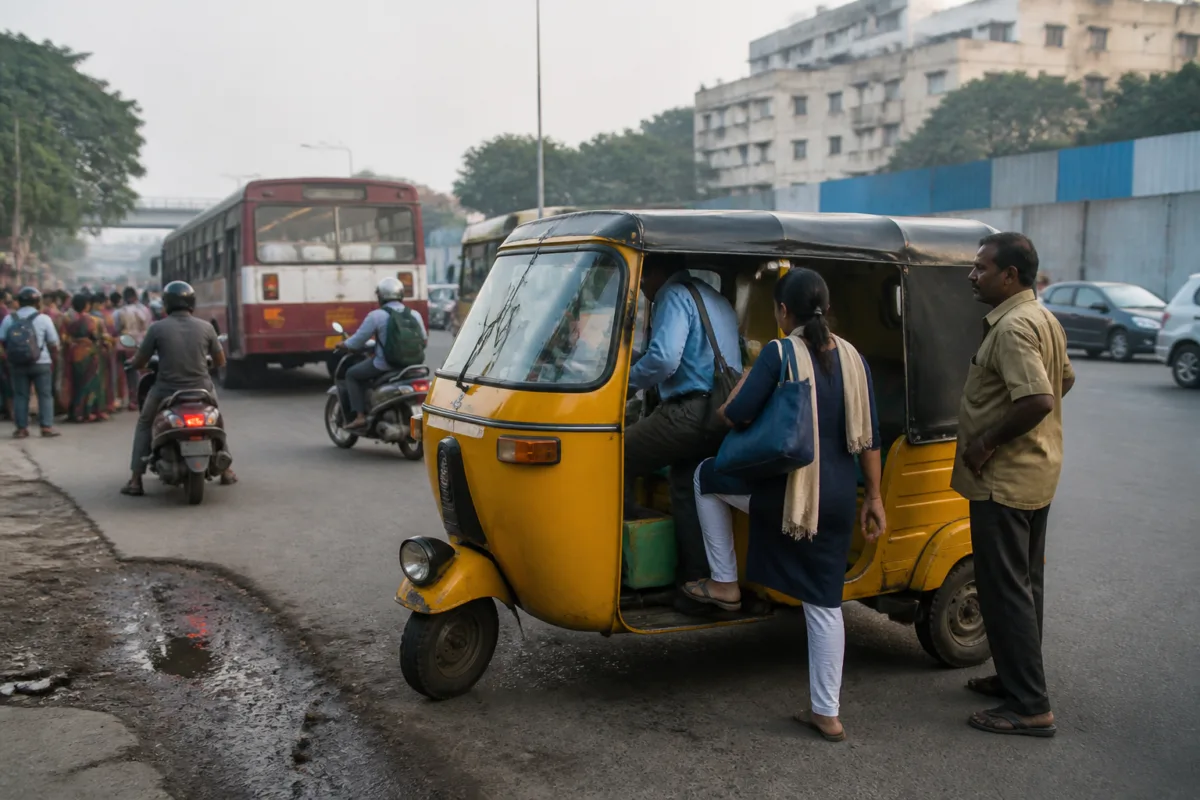
Chennai commuters are paying sharply more for autorickshaw rides during the Diwali travel rush, with fares on aggregator apps rising by ₹80–₹100 and some drivers demanding an additional ₹30–₹80 beyond the quoted amount. The increase follows Tamil Nadu’s decision to double autorickshaw fares, making short-distance travel more expensive for residents who depend on autos for daily journeys.
Passengers reported that fares during morning peak hours have in some cases reached or exceeded the cost of a cab ride. S Geetha, a resident of Virugambakkam who travels to T Nagar for work, said an aggregator app showed a fare of ₹175 for her 9.3km commute until last week. Since Tuesday, the quoted fare has risen to ₹240.
“On top of that, auto drivers demand extra. This shows that no matter how much you increase the fares, auto drivers will demand more,” Geetha said, according to the report.
The fare increase comes days after the revised rates took effect in Tamil Nadu. Under the new structure, passengers pay ₹50 for the first 1.8km, compared with the earlier ₹25. Each subsequent kilometre is charged at ₹25. The revised rates have placed Chennai among the costliest cities for autorickshaw travel, according to the report.
The higher app fares are being seen during a period of increased travel demand linked to the Diwali festival. Drivers cited the festive season, poor road conditions and traffic congestion as reasons for the increase and for seeking additional payments over the fare displayed on the app. For passengers, however, the combination of higher quoted fares and extra demands makes the final cost difficult to predict before a ride begins.
The reported difference between app quotations and the amounts sought at the end of trips also highlights the practical limits of a fare revision when enforcement and platform-level pricing are not aligned. A regulated fare chart may establish the official rate, but commuters using app-based services can still face a separate negotiation over the amount payable.
For daily users, the impact is most immediate on short and medium-distance journeys that connect residential neighbourhoods with workplaces, commercial districts and public transport points. A rise from ₹175 to ₹240 on a 9.3km commute represents an increase of ₹65 before any additional demand by the driver. Repeated across a working week, that difference can substantially raise the cost of accessing employment and city services.
The report did not cite a response from transport authorities or aggregator companies on the additional payments being demanded by some drivers. The immediate issue for commuters remains whether the revised fare chart will be consistently applied and whether the amount shown on an app will match the amount passengers are ultimately asked to pay.

