


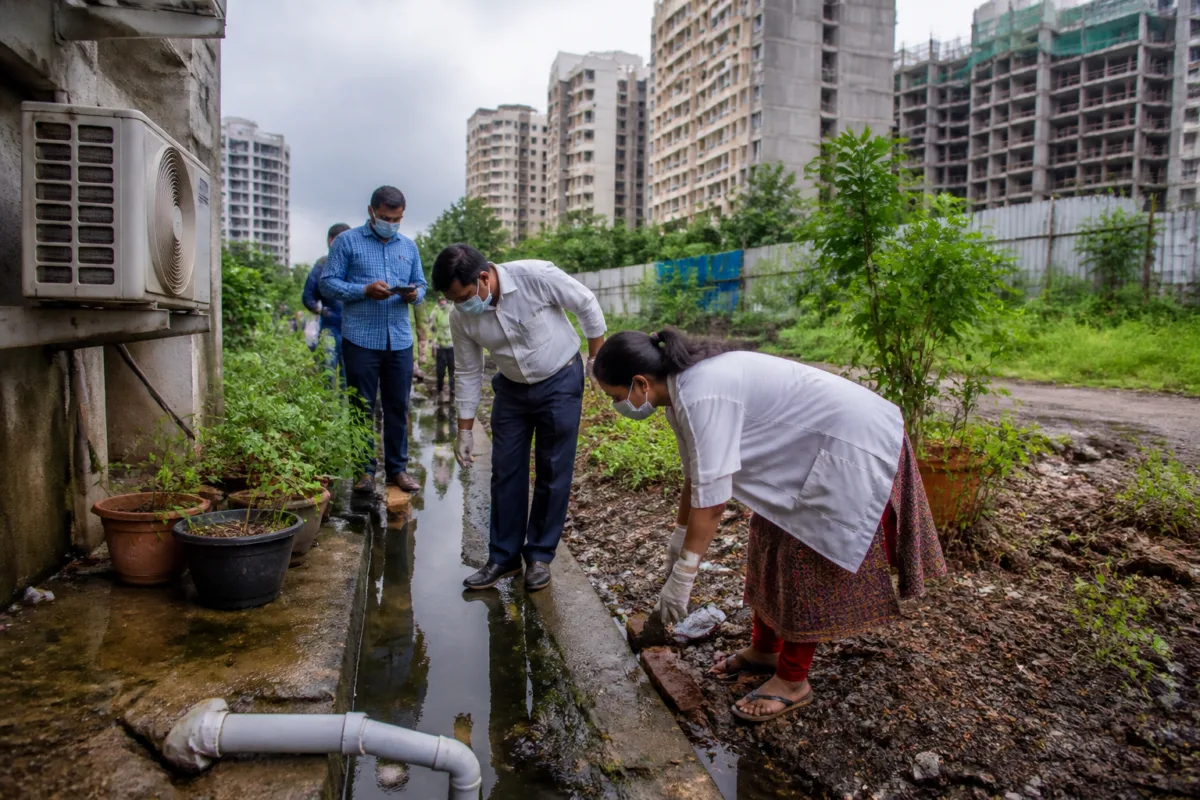
A joint survey by the Maharashtra health department and Pune Municipal Corporation has found dengue mosquito breeding sites in high-rise buildings and premium residential complexes, while some housing societies have reportedly denied civic teams access for inspections and preventive action.
The survey was conducted in the third week of October as part of measures to prevent the spread of dengue. According to the report, municipal teams visiting housing societies to check for mosquito larvae and eggs have faced restrictions, raising concerns about the implementation of preventive measures across parts of the city.
The findings have challenged the assumption that dengue breeding is concentrated mainly in informal settlements. In Ramtekdi and Vaiduwadi, teams inspected around 160 homes in slum areas and found only two water containers containing mosquito larvae and eggs. In contrast, higher numbers of dengue patients were reported in high-rise residential areas in Dhankawadi-Sahakarnagar, Aundh-Baner, Kothrud, Yerawada and the Nagar Road area.
The survey identified several potential breeding locations in and around residential buildings. Water accumulated in plant pots, household containers and air-conditioner trays can provide conditions for mosquito breeding. Construction sites were also identified as a concern, particularly where work has stalled and debris, waste and stagnant water have accumulated.
Redevelopment areas in Kothrud have also reported clusters of dengue patients, according to the report. These sites can combine active construction, incomplete drainage arrangements and exposed containers, creating multiple locations that require regular inspection and maintenance.
The reported resistance from some housing societies emerged after the civic administration indicated that stricter action would be taken against premises where breeding sites are found. The denial of access has created an administrative challenge for the municipal corporation because preventive surveillance depends on teams being able to inspect private and common areas within residential complexes.
The issue places housing societies, developers and civic authorities in a shared public-health framework. Areas such as terraces, basements, parking spaces, service ducts, construction zones and common gardens may fall under different management responsibilities, but stagnant water in any of them can contribute to mosquito breeding. The report does not specify the number of societies that denied entry or the penalties imposed by the municipal corporation.
The joint survey’s findings also underline the need to look beyond neighbourhood-level assumptions when tracking dengue risk in a rapidly developing city. High-rise housing, redevelopment and construction activity have created new urban environments where small volumes of standing water can remain outside routine household checks.
Pune’s municipal teams are continuing preventive inspections and action against mosquito-breeding sites. Further details on enforcement measures, access protocols for housing societies and the next phase of the joint campaign were not provided in the report.

