


Uno Minda’s approval of another ₹85 crore for sunroof manufacturing is more than an expansion of a single automotive component line. It adds to a much larger investment cycle in which Indian suppliers are building capacity around premiumisation, electric mobility, exports and rising component content per vehicle. The company’s numbers show how this shift is changing the scale and geography of industrial manufacturing, while also exposing the financial test that follows: whether new plants and product lines can generate stronger margins and cash flows.
The new investment will expand sunroof production capacity at Bawal in Haryana by the second quarter of FY28. It follows additional customer orders and comes on top of a ₹63 crore facility approved in 2024 under a licensing agreement with Japan’s Aisin. That earlier facility is expected to begin production by the end of FY27. The timing indicates that sunroofs are moving from a niche feature towards a more important part of the product mix supplied to original equipment manufacturers, although the supplied material does not establish how much of the new capacity is already contracted.
The immediate financial scale of the approval is modest compared with Uno Minda’s overall pipeline. Four previously announced projects were valued at ₹1,415 crore. With the latest sunroof investment, the combined value of five investments, including one linked to an associate company, reaches ₹1,500 crore. Separately, the company’s November investor presentation identifies 16 ongoing projects with an estimated total cost of ₹5,287 crore. By September 30, ₹1,628 crore had already been incurred, leaving a substantial portion of the programme to be funded and executed.
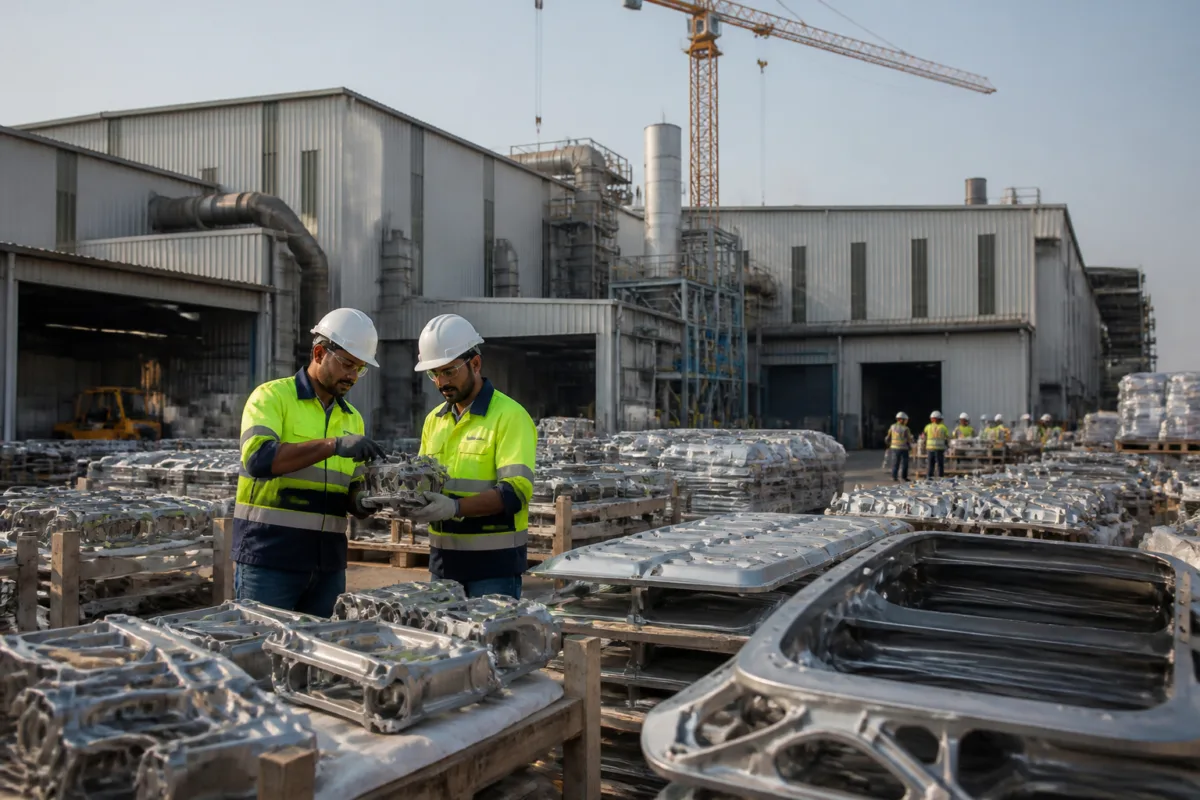
That pipeline is spread across several manufacturing capabilities rather than concentrated in one product. The earlier investment plan includes ₹510 crore for an aluminium casting plant in Hosur, ₹155 crore to expand two-wheeler alloy-wheel capacity at Kharkhoda and ₹80 crore for a moulding facility in Bengaluru. A further ₹670 crore is earmarked for a plant in Chhatrapati Sambhajinagar by Toyoda Gosei South India, a subsidiary of an Uno Minda associate, to manufacture automotive components. Together, these projects point to a supplier network that is expanding across casting, wheels, moulding, safety-related components and other systems.
This is significant because the company’s growth is not being driven solely by an increase in vehicle volumes. Uno Minda reported that consolidated revenue rose 38.2% year on year to ₹6,655.42 crore in the July-September quarter of FY27, while the company estimated automobile industry volume growth at 18% during the same period. The two measures are not directly comparable, but the difference illustrates the role of higher component content per vehicle, new capacity additions and product mix in supplier growth. In practical terms, a vehicle can generate more value for a component manufacturer even when overall vehicle volumes grow more slowly.
The product-level figures reinforce that pattern. Castings revenue increased 57% to ₹1,441 crore, supported by 64% growth in four-wheeler alloy-wheel sales and 65% growth in aluminium die-casting sales. Switches generated ₹1,609 crore, up 37%, while lighting contributed ₹1,381 crore, an increase of 25%. Seating revenue rose 34% to ₹476 crore. These categories connect the company’s investment programme to a broader industrial transition: lighter materials, more electrical content and greater integration of components into vehicles.
Electric mobility is another part of the expansion, although the supplied figures show that it remains one component of a diversified business rather than the sole driver. Green mobility, comprising electric systems and alternative-fuel components, generated ₹649 crore, nearly double the level recorded a year earlier. Revenue from electric two- and three-wheeler systems grew 53% to ₹291 crore. The numbers show increasing exposure to electrification across vehicle segments, while also indicating that the company continues to draw substantial revenue from conventional automotive categories such as switches, lighting, castings and seating.
Exports provide a further indication of how Indian component plants are being connected to markets beyond domestic vehicle production. Exports shipped from India rose 77% to ₹218 crore in the September quarter from ₹123 crore a year earlier. Their share of consolidated revenue increased to 3.3% from 2.6%, while exports of two-wheeler switches grew 35%. The export contribution remains a relatively small share of total revenue, but its rate of increase adds an external demand channel to the company’s domestic original equipment manufacturer relationships.
The institutional structure behind this expansion is also important. Uno Minda supplies automakers including Maruti Suzuki, Hyundai, Tata Motors, Mahindra & Mahindra and Hero MotoCorp. The Bawal sunroof facility is being developed through a licensing arrangement with Aisin, while the Chhatrapati Sambhajinagar investment is linked to an associate company. This combination of customer orders, technology licensing, subsidiaries and associate-company investments shows how component manufacturing capacity can be assembled through multiple corporate relationships rather than through one company-owned project alone.
The geographic spread of the investments gives the capex programme an industrial-infrastructure dimension. Bawal, Hosur, Kharkhoda, Bengaluru and Chhatrapati Sambhajinagar represent manufacturing locations across northern, southern and western India. The source material does not provide employment numbers, land details, utility requirements or construction timelines for every project, so the direct effect on local infrastructure and labour markets cannot be quantified from the available evidence. It does, however, establish that the company is adding facilities in multiple production clusters as it responds to customer demand and product expansion.
The central financial question is whether this growth is translating into sufficient operating returns. Profit attributable to shareholders rose 38.1% to ₹419.72 crore in the September quarter from ₹303.99 crore a year earlier. Consolidated EBITDA increased 32.9% to ₹733.27 crore. Yet the EBITDA margin narrowed to 11.02% from 11.46%. The combination is important: revenue, profit and operating earnings are growing, but earnings expansion has not kept pace with revenue growth on a margin basis.
That margin movement places a clear condition on the ₹5,287 crore pipeline. New capacity can support future customer orders and provide access to higher-value product categories, but it also creates a requirement for utilisation, pricing discipline and efficient execution. The supplied material does not establish the expected returns, funding mix or commissioning schedule for all 16 projects. It therefore cannot support a conclusion that the pipeline will automatically improve profitability. What it does show is the scale of the commitment and the need to measure the programme not only by announced investment, but also by capacity utilisation, cash generation and returns after commissioning.
Uno Minda Managing Director Ravi Mehra said the company continued to “outperform underlying automotive market trends”. The evidence supplied supports that statement in terms of reported revenue growth, component-category performance and exports. It also introduces a qualification through the lower EBITDA margin. For the company and the wider supplier ecosystem, the next phase will be defined by how effectively the new plants convert demand for sunroofs, castings, wheels, electric systems and other components into durable operating performance.
Uno Minda’s latest approval therefore captures a larger change in Indian automotive manufacturing: suppliers are expanding from volume-led production towards a portfolio shaped by premium features, electrification, materials and export capability. The evidence confirms a substantial and geographically distributed investment programme, but leaves open the most consequential measure of success. The company’s forthcoming project execution, the Bawal commissioning timeline and the performance of its margins and cash generation will show whether the capex surge becomes productive industrial capacity or simply a larger cost base.

