


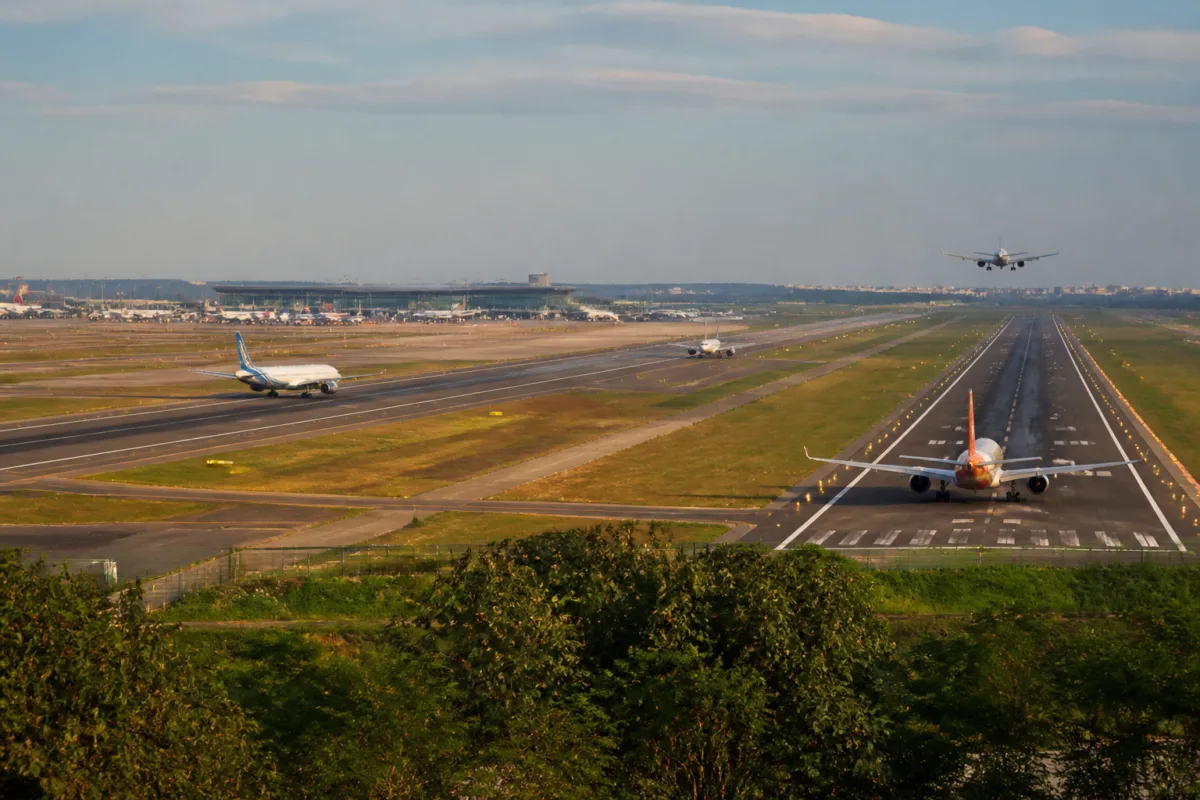
Kempegowda International Airport will begin a phased transition towards mixed-mode runway operations from November 11 after receiving approval from the Directorate General of Civil Aviation, a move expected to raise aircraft handling capacity by more than 45% and reduce delays at Bengaluru’s main airport.
The airport currently handles about 60 air traffic movements an hour. The revised operations are expected to increase that figure to between 85 and 90 movements an hour, according to airport sources cited in the report. The changes are also intended to reduce aircraft taxiing time, fuel consumption, departure queues and airborne holding.
The first phase will involve interchanging the primary runways used for arrivals and departures while retaining the existing segregated mode of operations. This means the runways will not initially be used for fully simultaneous mixed-mode movements.
About two weeks after the first phase begins, authorities plan to start trials for simultaneous departures from both runways under a semi-mixed mode. The trials will initially be limited to selected hours rather than operating throughout the day. The gradual rollout is intended to give air traffic controllers time to train and familiarise themselves with revised procedures.
G Sambath Kumar, General Manager (ATM), Airports Authority of India at KIA, said the initial change would only involve an interchange of runway functions. “For simultaneous departures, we will initially start with a few hours a day as controller training and familiarisation are required. We will gradually extend duration as training is completed,” he said.
The subsequent phase will involve trials for segregated arrivals, allowing both runways to be used simultaneously for incoming aircraft. The existing four-nautical-mile separation between arriving aircraft will be retained during this phase, according to the report.
This stage is likely to begin in January 2027 and is expected to improve runway utilisation by reducing aircraft waiting and taxiing time. More flexible runway sequencing could also help reduce departure queues and airborne holding, while giving airlines greater scope to manage schedules and turnaround times.
The operational changes could lower fuel consumption and carbon emissions if aircraft spend less time waiting on the ground or in the air. For passengers, the immediate effect will depend on how the trials are scheduled and how quickly the new procedures are expanded across operating hours.
The final implementation of mixed-mode operations will remain subject to further DGCA approvals, trial results and safety assessments, Kumar said. Independent arrivals, which would allow more flexible use of both runways, are expected to take longer because they require additional infrastructure and manpower. Airport sources indicated that this part of the transition could take more than a year.

