


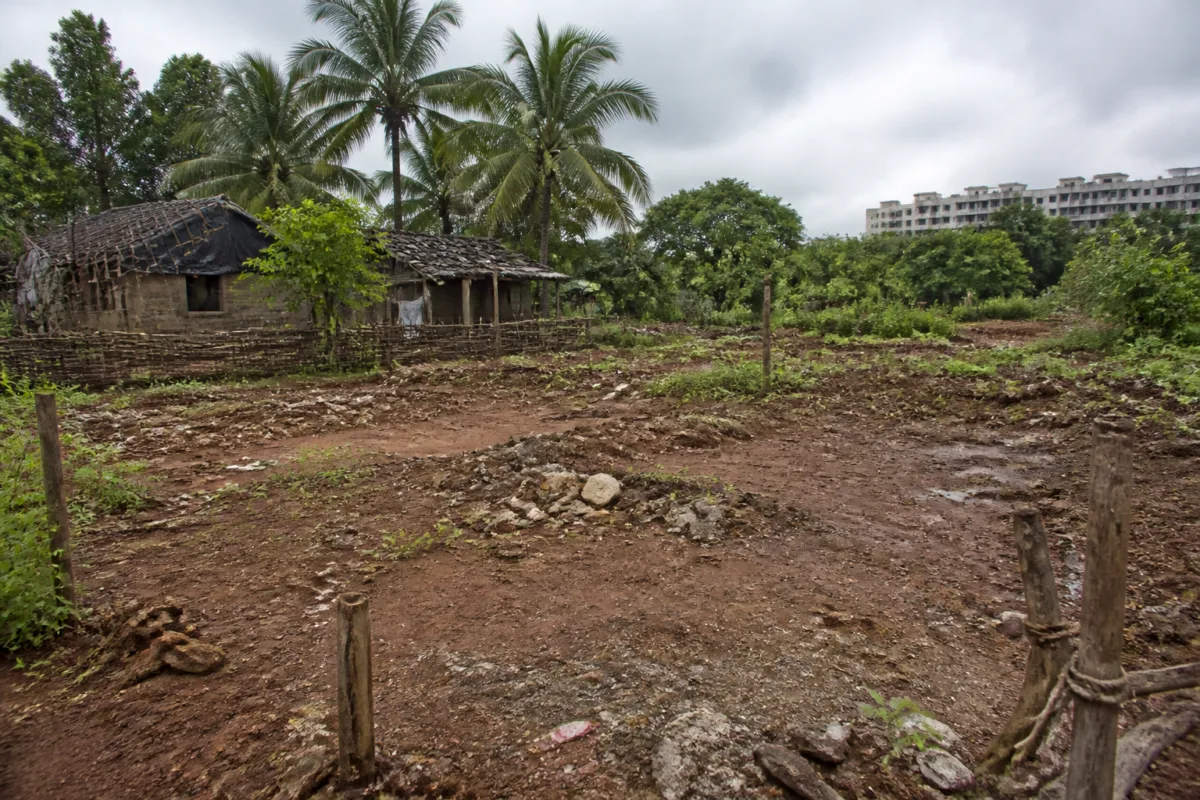
The dispute over the alleged demolition of 20 Katkari tribal homes in Mhatroli village in Raigad’s Alibaug is no longer only a local land disagreement. It has become a test of how eviction allegations involving a vulnerable tribal community are documented, investigated and politically addressed. The latest exchange has placed Maharashtra Assembly Speaker Rahul Narwekar’s denial alongside Sarvahara Jan Andolan’s demand for criminal action under the Scheduled Castes and Scheduled Tribes (Prevention of Atrocities) Act.
According to the report by Times of India – Mumbai, Sarvahara Jan Andolan alleged that 20 Katkari families were forcibly evicted before their homes were demolished in March 2024. At a news conference, the organisation demanded that offences under the SC/ST (Prevention of Atrocities) Act be registered against Narwekar, his wife Sarojini Narwekar and others it alleged were involved.
Narwekar denied that he or members of his family had any role in the incident. He also said that the complaint filed in 2024 did not name Sarojini Narwekar or any member of her family. His response presents the dispute as one that had been settled between the previous owner of the property and the complainants before the current allegations were raised.
The available account therefore establishes two competing positions, but does not independently resolve the central factual questions: whether the homes were demolished after a forced eviction, who carried out or authorised the demolition, what legal status the families had on the land, and whether any offence under the SC/ST Act was committed. Those questions are central because the difference between a private property dispute and an unlawful eviction involving tribal households is not merely procedural. It determines which authorities must act, what evidence must be preserved and what legal safeguards may apply.
Narwekar said that when Sarojini Narwekar purchased the property, there was no claim or encroachment on the land. He further said that the issue had subsequently been settled between the previous owner and the complainants. According to his statement, the complainants voluntarily submitted statements before the tehsildar and concerned police officers saying that the dispute had been resolved and that they had no further claims. He also said they submitted affidavits before a magistrate declaring that they had no interest in or claim over the land.
These documents, as described in the statement, are being used to support the position that the land dispute was resolved. But their existence alone does not answer every question raised by the demolition allegation. A settlement or relinquishment of a land claim may address ownership or possession; it does not, without further examination, establish how residents were removed, whether their homes were lawfully demolished, whether consent was freely given, or whether protections applicable to tribal families were followed. The report does not provide the text of the affidavits, the statements, the original complaint or any demolition order.
That evidentiary gap is important in disputes involving informal or vulnerable settlements. A household’s relationship with land can be recorded through several different kinds of documents, and the absence of a formal title does not by itself explain the legality of an eviction. In this case, however, the supplied material does not identify the families’ documentary status, the ownership records, the authority responsible for the demolition or the procedure followed before the homes were removed. It would therefore be unsafe to treat either the allegation or the denial as a final finding.
The institutional chain described in the report is also significant. The complainants are said to have made statements before a tehsildar and police officers, and affidavits before a magistrate. That places revenue administration, the police and the magistracy within the documentary history of the dispute. Yet the report does not say whether any of these institutions conducted a fact-finding inquiry into the alleged demolition, whether a case was registered, or whether a court has ruled on the competing claims.
Sarvahara Jan Andolan’s demand for action under the SC/ST Act shifts the issue beyond the question of title. The organisation is asking authorities to examine whether the alleged conduct amounted to an offence against members of a protected tribal community. The demand itself is not proof that such an offence occurred. It does, however, make the handling of the complaint part of the public-interest story. The relevant question is not only who owned the land, but whether the authorities assessed the allegations under the legal framework invoked by the organisation.
The political position of the person named in the allegations adds another layer of public accountability. Narwekar is Maharashtra’s Assembly Speaker, while the allegation concerns a property connected by the activists to his family. Narwekar has rejected any family involvement and described the renewed allegations as being raised by entities and individuals with an ulterior motive. That is his stated explanation, not an established finding in the material available for this report.
Narwekar also said there had been no public mention of the issue for more than two and a half years and that the matter had suddenly resurfaced. The timing may form part of the competing arguments, but it does not by itself establish whether the original allegation is true or false. A delayed complaint can raise questions about evidence and motive, while a delay in public attention does not extinguish the need to examine an alleged eviction or demolition. The record of what happened between the 2024 complaint and the latest news conference is not provided.
The case illustrates why urban and peri-urban land conflicts cannot be understood only through property transactions. Mhatroli is identified as a village in Alibaug, but the underlying questions are familiar across expanding settlements: who is recognised as an occupant, how land records are interpreted, what happens when informal homes stand on disputed property, and which institution is responsible when a structure is removed. The human consequence is immediate because a land dispute can also be a housing and livelihood dispute for the families living there.
At the same time, the available evidence does not establish the scale of displacement beyond the reported figure of 20 Katkari families, nor does it describe their present housing conditions. It does not state whether alternative accommodation, compensation or rehabilitation was offered. These omissions limit what can responsibly be concluded about the longer-term impact of the alleged demolition.
The dispute also shows the difference between administrative paperwork and a complete account of displacement. Statements before a tehsildar, police officers or a magistrate may be relevant to the land dispute, but their meaning depends on the circumstances in which they were recorded. The supplied report does not indicate whether the families were represented, whether the documents were disputed, or whether the authorities verified the circumstances surrounding the signatures and affidavits. Those are not assumptions about the documents; they are unresolved questions that matter to the assessment of consent and legal validity.
For the moment, the evidence confirms that activists have demanded SC/ST Act cases, that Narwekar has denied involvement by himself and his family, and that he has cited statements and affidavits as evidence of a settled land dispute. It does not confirm who demolished the homes, whether the demolition was authorised, or whether a competent authority has made a determination under criminal, land or tribal-protection law.
The next meaningful development would be an official record that clarifies the status of the 2024 complaint, the ownership and possession documents, the alleged demolition and any action taken by the police, revenue authorities or courts. Until those records are examined, the dispute remains a contested account of tribal housing loss and land settlement rather than a conclusively established finding against any individual.

