


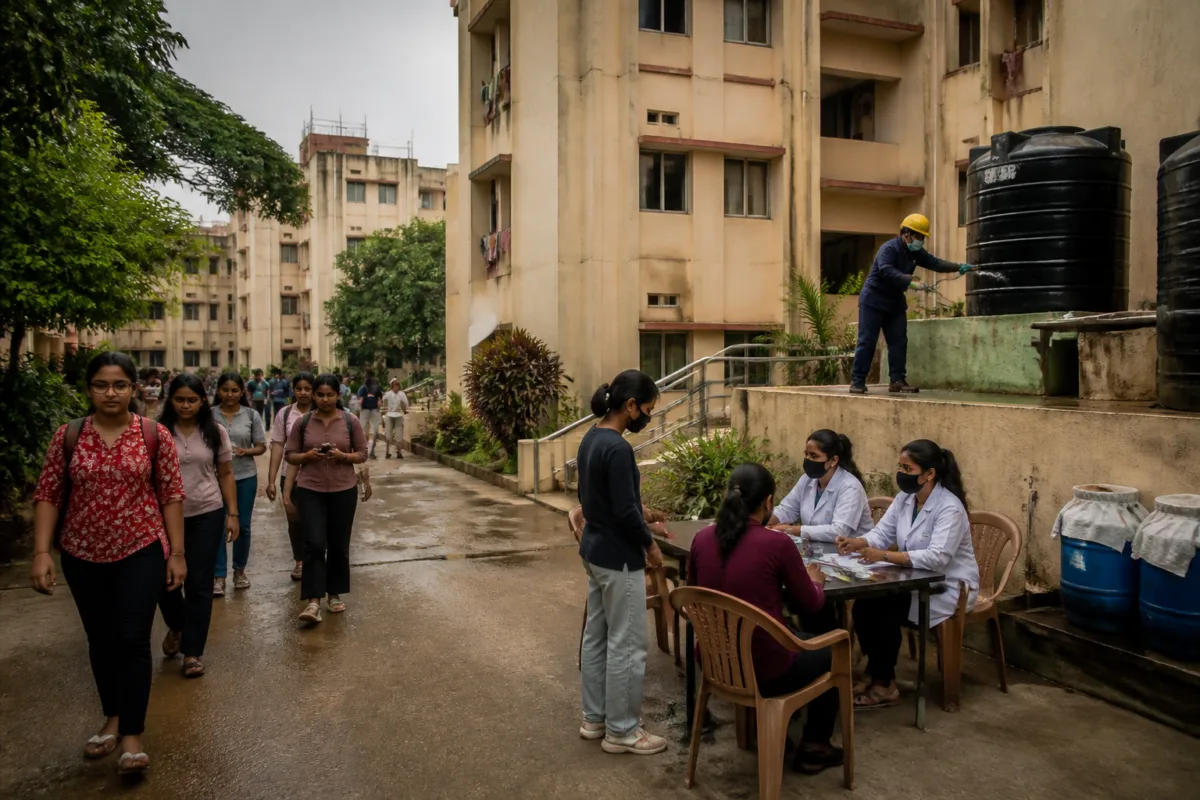
Utkal University in Bhubaneswar screened around 400 students in two girls’ hostels on Wednesday after several jaundice cases were reported on campus, with 12 students testing positive so far. The university has stopped using borewell water for the hostels, cleaned and chlorinated tanks across the campus, and closed eateries and shops selling cooked food as part of its response.
A team of three healthcare providers examined students staying in hostels 6 and 7. The screening included blood-pressure checks and examinations for symptoms associated with jaundice. Students showing symptoms are being identified for further testing, and blood samples will be collected where required, a university official said.
The health checks were initiated after cases were reported among residents of the two hostels. University officials said 12 students had tested positive. Two students who were hospitalised have since been discharged, while those who tested positive are staying in the hostels and taking medication, according to Papesh Kumar Lenka, assistant professor of sociology and media in-charge of the university.
The university has also changed its water-supply arrangements for the affected hostels. Vice-chancellor Chandi Prasad Nanda said the institution had stopped supplying water drawn from the borewell meant for the hostels. Tanks serving all 12 hostels were cleaned and chlorinated, he said, to make the water safer for use.
The measures place water management and food safety at the centre of the campus response. Eateries and shops selling cooked food inside the university have been closed, while students have been advised to boil water before drinking and eat food considered safe and healthy. Officials said the hostels were being monitored thoroughly.
No fresh jaundice cases had been reported since Tuesday, Lenka said. The university’s screening and monitoring process is continuing, with students found to be symptomatic expected to be listed for further examination and testing.
The incident has also brought attention to the role of institutional water systems in managing health risks in high-density residential facilities. The university has not, in the information supplied, established the precise source of the reported cases. Its immediate response has focused on replacing the borewell supply, sanitising storage tanks, restricting cooked-food outlets and checking students for symptoms.
The university’s next steps are to continue health screening and hostel monitoring while students who have tested positive remain under treatment. Officials have asked residents to boil drinking water and follow food-safety precautions during the ongoing response.

