


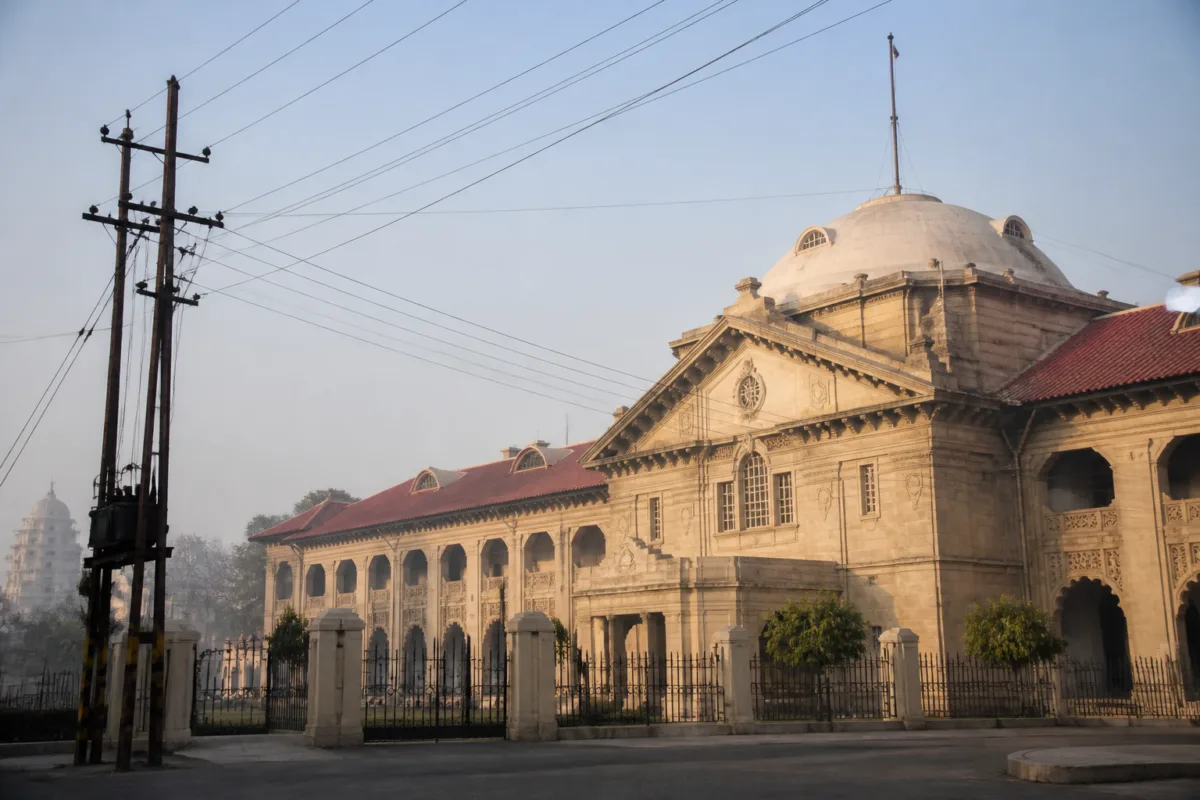
The Allahabad High Court has ruled that the Uttar Pradesh State Human Rights Commission can recommend additional compensation for human-rights violations even when a victim has already received payments under other statutory provisions. The decision allows the Commission to consider further relief independently of earlier compensation.
A Lucknow bench comprising Justice Shekhar B Saraf and Justice Amitabh Kumar Rai dismissed a writ petition filed by Madhyanchal Vidyut Vitran Nigam Ltd against an order of the Uttar Pradesh Human Rights Commission. The Commission had directed the electricity corporation to pay an additional Rs 10 lakh to a victim who suffered electrocution in 2011.
The case concerned payments made at different stages. The corporation had paid Rs 65,000 to the victim’s father in 2017 and Rs 1 lakh to the victim in February 2025. Despite those payments, the Human Rights Commission ordered an additional compensation of Rs 10 lakh.
Madhyanchal Vidyut Vitran Nigam challenged the Commission’s order on two grounds. It argued that the complaint filed before the Commission in 2024 was barred by limitation because the electrocution incident had occurred in 2011. It also contested the Commission’s authority to recommend further compensation after payments had already been made under other legal provisions.
The High Court rejected the limitation argument, holding that non-payment of compensation constituted a continuing violation of human rights. The bench also found that the corporation’s payment of Rs 1 lakh after the complaint had been filed amounted to an acknowledgement under the Limitation Act.
The ruling is significant because it separates compensation recommended under the Protection of Human Rights Act from payments made through other statutory mechanisms. The court held that the Commission’s power to recommend compensation was independent and additional to other legal remedies. Earlier payments, it said, could not by themselves restrict the Commission’s jurisdiction to recommend further relief.
For victims of human-rights violations involving public authorities or essential services, the decision establishes that an initial statutory payout does not automatically close the question of compensation before the Human Rights Commission. In the case before the court, the payments made in 2017 and February 2025 did not prevent the Commission from directing an additional Rs 10 lakh.
The judgment also places continuing obligations at the centre of compensation disputes. By treating non-payment as a continuing violation and the later payment as an acknowledgement, the court rejected a narrow interpretation based only on the date of the original incident. The decision therefore links the timing and adequacy of relief to the Commission’s authority to consider a complaint.
The High Court’s immediate outcome is the dismissal of the electricity corporation’s challenge and the continuation of the Human Rights Commission’s direction for an additional Rs 10 lakh. The ruling clarifies that compensation under the Protection of Human Rights Act can operate alongside, rather than merely replace, payments available under other statutory provisions.

