


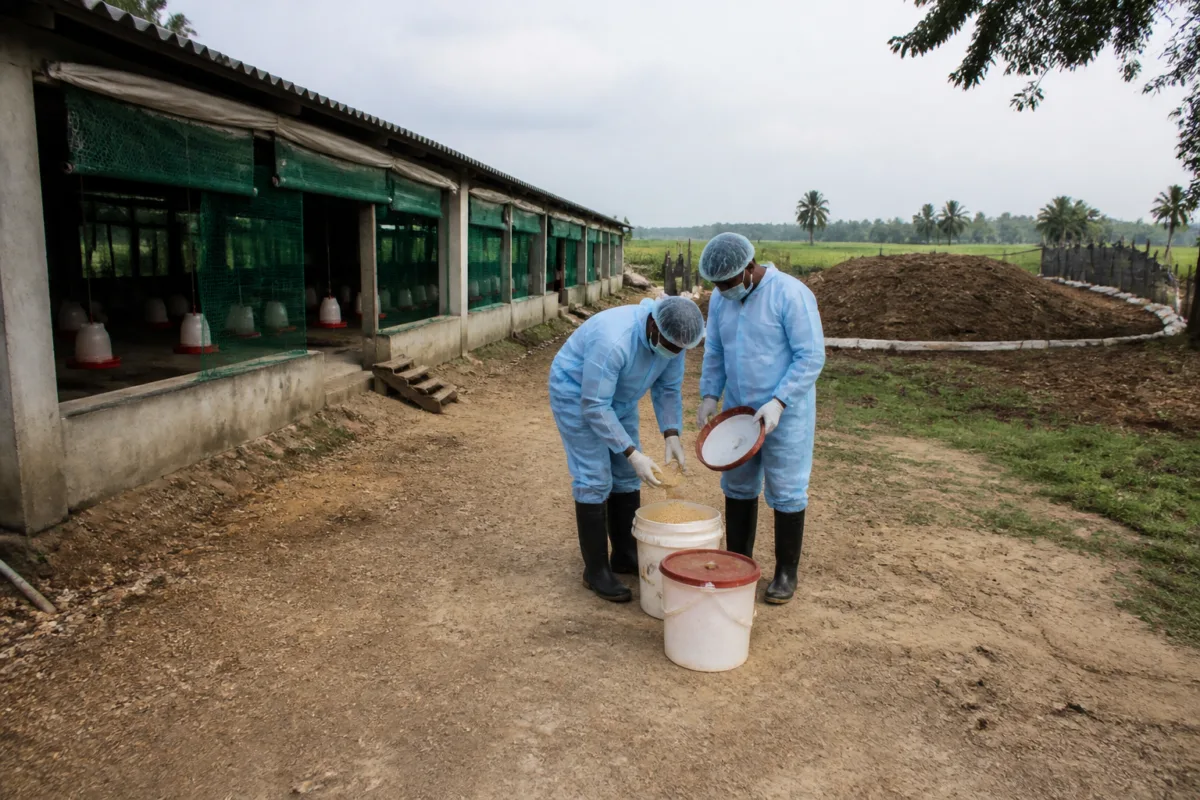
Around 5,600 chickens have died across six poultry farms in Kurinjipadi taluk of Cuddalore district over five days, prompting a three-month restriction on poultry sales and the movement of new chicks in the affected zone. Officials have ruled out Low Pathogenic Avian Influenza, while laboratory tests are being awaited to determine whether toxins in feed caused the deaths.
The deaths were reported in farms across Thimmanampettai, Tiruchopuram and Kurinjipadi. The birds had been raised for distribution during the Diwali festival and were fully matured when they died, leaving farm owners with significant financial losses, according to a release from the animal husbandry department cited by the Times of India.
The issue first came to light at a farm in Thimmanampettai village, under Thyagavalli panchayat, where 200 to 250 broiler chickens died. Officials inspected the farm on October 30 and collected samples of feed and drinking water for testing. Before the results were available, the remaining 3,500 chickens at the farm also died.
Five more farms subsequently reported deaths of their entire poultry stock. Samples collected from the affected farms were sent to the Poultry Disease Diagnostic Laboratory in Namakkal and the Pharmacovigilance Laboratory for Animal Feed and Food Safety in Madhavaram. The animal husbandry department said results from the Madhavaram laboratory were still awaited to establish whether contaminated or toxic feed was responsible.
The department said laboratory tests had ruled out Low Pathogenic Avian Influenza, commonly referred to as bird flu. The available official information does not identify another confirmed cause for the deaths while the feed and food-safety tests remain pending.
All 5,600 dead chickens have been buried in deep pits in accordance with standard operating procedures, according to the department. The disposal measure was taken after the deaths were recorded across the six farms.
As a preventive measure, poultry farm owners in the affected area have been instructed not to sell chickens or bring in or stock new chicks for three months. The department has also advised local poultry operators to enforce biosecurity measures strictly.
The restrictions affect farms that were preparing birds for festive-market distribution and come as authorities continue to await the feed-toxin test results. The next official indication of the cause will depend on the findings from the Pharmacovigilance Laboratory for Animal Feed and Food Safety in Madhavaram.

