


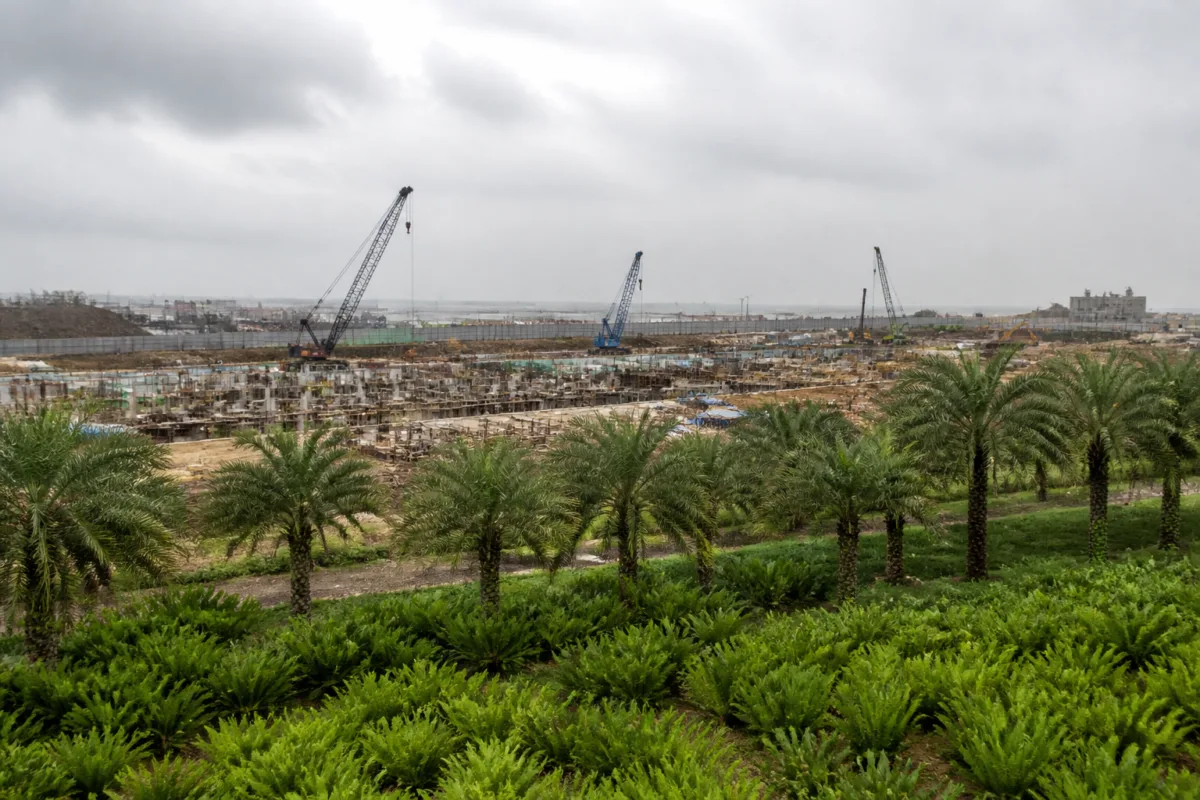
The Manori desalination plant is being built to add water capacity to Mumbai, but the project has also exposed a difficult question for the city: how should essential infrastructure be planned when its current design affects almost every tree within the active construction parcel? Of the 971 trees counted across the 12-hectare ongoing phase, only four are proposed to be retained. Twenty-eight may be cut and 939 are proposed for transplantation within the project site.
The figures, reported by Mid-Day citing Brihanmumbai Municipal Corporation officials, do not represent a final approval. The tree-related proposal is still moving through the civic process and has reached the office of the BMC superintendent of gardens and tree officer for a hearing. Suggestions, objections and recommendations can be submitted during that process before the proposal moves to the municipal secretary and then to the Tree Authority Committee.
That procedural status is important. The immediate issue is not simply whether Mumbai needs a desalination plant. It is whether the project’s land requirements, site plan and tree-management strategy have been adequately examined before the city permits the proposed intervention. The available information shows that the water project has received larger Coastal Regulation Zone and Ministry of Environment, Forest and Climate Change permissions, while tree-related permissions remain pending. The two approval tracks therefore meet at a point where environmental safeguards must be assessed against the project’s infrastructure objectives.
The plant is planned at Manori village in Borivli taluka on land measuring about 29 hectares. The ongoing phase occupies 12 hectares, while the remaining land is intended for expansion. According to the project details reported by Mid-Day, work began on December 15, 2025. The initial phase is designed to achieve a capacity of 200 million litres per day by December 2029, while the expansion to 400 MLD is scheduled for the latter half of 2030.
Those numbers establish the project’s scale. This is not a small civic installation that can be assessed only through the immediate construction footprint. It is a phased water-supply project with a stated long-term capacity of 400 MLD, located on a 29-hectare parcel. The tree proposal, however, currently concerns the 12 hectares being used for the ongoing phase. The BMC official quoted in the report said the count relates only to that active parcel and that the trees there are date palms and ornamental ferns.
The distinction between the full project land and the ongoing phase is central to public understanding. The reported total of 971 trees does not cover the entire 29-hectare site, according to the civic response. It covers the 12 hectares required for the current phase. This means that the present permission process should be read as a decision about a defined construction area, rather than a final accounting of all vegetation connected with the plant’s eventual expansion.
The proposed treatment of the trees also divides the environmental question into two different actions. Twenty-eight trees, including large and old trees, may have to be cut. Another 939 trees, described by officials as mostly younger date palms and ornamental ferns, are proposed to be transplanted within the project boundary. Four trees are proposed to remain in place.
The BMC’s stated rationale is that transplantation within the project perimeter would avoid a change in land and weather conditions, which officials said could improve the chances of survival. The proposal may also attract a direction for compensatory plantation from the Tree Authority. At this stage, the supplied report does not establish how many transplanted trees will survive, what monitoring system will be used, how long the monitoring will continue or what precise compensatory plantation conditions may be imposed.
That absence is not a minor technical detail. A transplantation proposal changes the question from whether trees are removed to whether they remain living, established vegetation after construction. The BMC’s position is that the trees can be moved within the project land. Activists cited in the report question whether the civic agency can execute transplantation effectively, describing the process as expensive and difficult. Neither position, on its own, establishes the eventual outcome. The pending hearing and Tree Authority process are intended to examine the proposal before a final decision.
The institutional design of that process gives the dispute its wider urban significance. The superintendent of gardens and tree officer is expected to conduct the hearing and then send the proposal to the municipal secretary. The Tree Authority Committee, chaired by the municipal commissioner and reported to have 25 members, can suggest changes and additional instructions, approve or reject the proposal. In theory, the sequence creates several points at which the tree count, transplantation plan, project design and mitigation measures can be questioned.
In practice, the quality of the decision will depend on what information is placed before those bodies and made available for public scrutiny. Godfrey Pimenta, trustee of the Watchdog Foundation, said the project proponent should demonstrate that alternative sites and alternative designs had been examined and that the proposed tree loss was unavoidable. He also said the relevant details should be available for public scrutiny. The report does not say whether such an alternatives assessment has been published.
This is the structural issue behind the headline numbers. Major infrastructure projects are often presented as a choice between a public service and an environmental cost. The Manori case suggests that the more precise question is whether the cost has been reduced through planning before the statutory hearing begins. A project may have a legitimate public purpose, but that does not by itself show that its site plan is the least damaging option or that its mitigation proposal is workable.
The available evidence also shows why tree counts can become contested in large urban projects. Pimenta alleged that the BMC had not counted the trees accurately, citing information he said he had heard from local residents. A civic official rejected the allegation as baseless and said the count was limited to the current 12-hectare phase, where the parcel contains date palms and ornamental ferns. The disagreement is therefore about both accuracy and scope: whether the count is correct, and whether readers understand which land it covers.
A clear, publicly accessible record could resolve much of that uncertainty. It would need to distinguish trees proposed for removal from those proposed for transplantation, identify the location of the four trees to be retained, explain the method used for counting, and specify how transplanted trees will be monitored. The supplied report does not indicate that all these details have been released. It does, however, establish that the matter has not yet completed the civic approval route.
The water infrastructure objective remains significant. The project is intended to provide an initial 200 MLD and eventually 400 MLD of desalinated water. The reported schedule places the initial capacity in December 2029 and the expansion in the latter half of 2030. The BMC official quoted by Mid-Day said the civic body was following due process, had complied with requirements and was confident the project would not face setbacks.
That assurance addresses implementation continuity, but the tree process has its own legal and administrative milestones. The proposal is expected to be placed before the Tree Authority at its December meeting, after the hearing and related steps. The committee can alter the proposal, attach further instructions, approve it or reject it. The next phase of the project’s environmental governance will therefore be determined not only by the plant’s water-capacity targets but also by the evidence submitted to the tree authorities.
For Mumbai, the Manori desalination plant is a test of whether infrastructure planning can carry two kinds of public value at once: additional water supply and accountable management of the land used to provide it. The current evidence confirms that 967 of the 971 trees in the active 12-hectare phase may be affected, with 28 proposed for cutting and 939 for transplantation. It does not yet confirm that the tree proposal has been approved, that transplantation will succeed or that alternatives have been fully assessed. Those are the questions that the hearing, public submissions and the Tree Authority’s decision will need to answer.

