


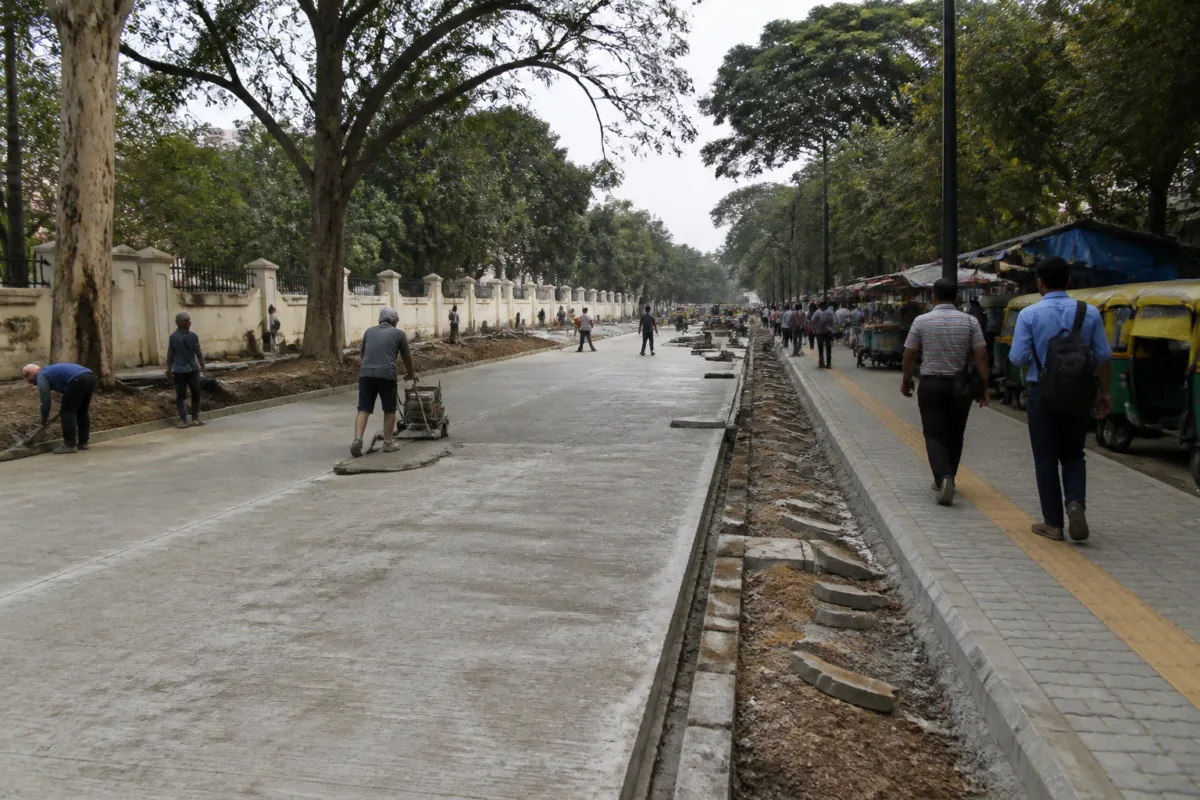
The Greater Bengaluru Authority’s plan to transform Dr MH Ambareesh Road into a public space has received a cautious welcome from residents, who say the makeover will remain incomplete without public toilets, seating, lighting and better cleanliness. The 900-metre stretch between Maurya Circle and Hare Krishna Junction is being white-topped, while footpath and buffer-zone work is under way.
GBA Chief Commissioner Maheshwar Rao visited the road on Monday and directed officials to prepare a comprehensive plan for its redevelopment. The plan includes streetlights, saplings, seating, public toilets and a cycle track. Rao also proposed creating a green corridor near vacant land at Maurya Junction.
Pedestrians and road users said the basic facilities were necessary for the stretch to function as a public space rather than remain a renovated road. They called for two or three toilet blocks along the Race Course compound wall for pedestrians, cab and auto-rickshaw drivers, roadside vendors and other users.
“All these years, the footpath along the Race Course compound wall has become an open urinal. What is the use of developing it without basic amenities? Authorities should install benches on both sides,” pedestrian Naveen said.
Another pedestrian, Jayaram P, said the nearest available toilets were opposite the Race Course and near the Fire and Emergency Services facility on Seshadri Road. He said the lack of facilities forced people to use the footpath, while auto-rickshaw and cab drivers often parked and waited there.
The demand for toilets is directly linked to how the road is used. The stretch is shared by pedestrians, motorists, drivers and roadside vendors, making access to basic public infrastructure a functional requirement rather than an optional addition to the streetscape. Residents said that without such facilities, the footpath could continue to be used for purposes unrelated to walking even after the civil works are completed.
Auto-rickshaw driver Pavan Kumar also urged health officials to improve cleanliness around roadside eateries. He said affordable food drew people to the area, but unhygienic surroundings undermined the benefit of the improved road environment. Kumar expressed concern that Dr Ambareesh Road could become another infrastructure project where the initial works were completed but routine maintenance and essential services were neglected.
The project is therefore moving beyond white-topping and footpath construction to questions about who will provide and maintain the amenities proposed for the corridor. Rao’s directions place public toilets, seating, streetlights, landscaping and cycling infrastructure within the redevelopment plan, while residents are seeking clarity through immediate facilities that serve existing users.
The GBA has not announced a completion date for the comprehensive plan or the proposed amenities in the information available. The next stated step is for officials to prepare the development plan while the white-topping, footpath and buffer-zone works continue along the road.

