


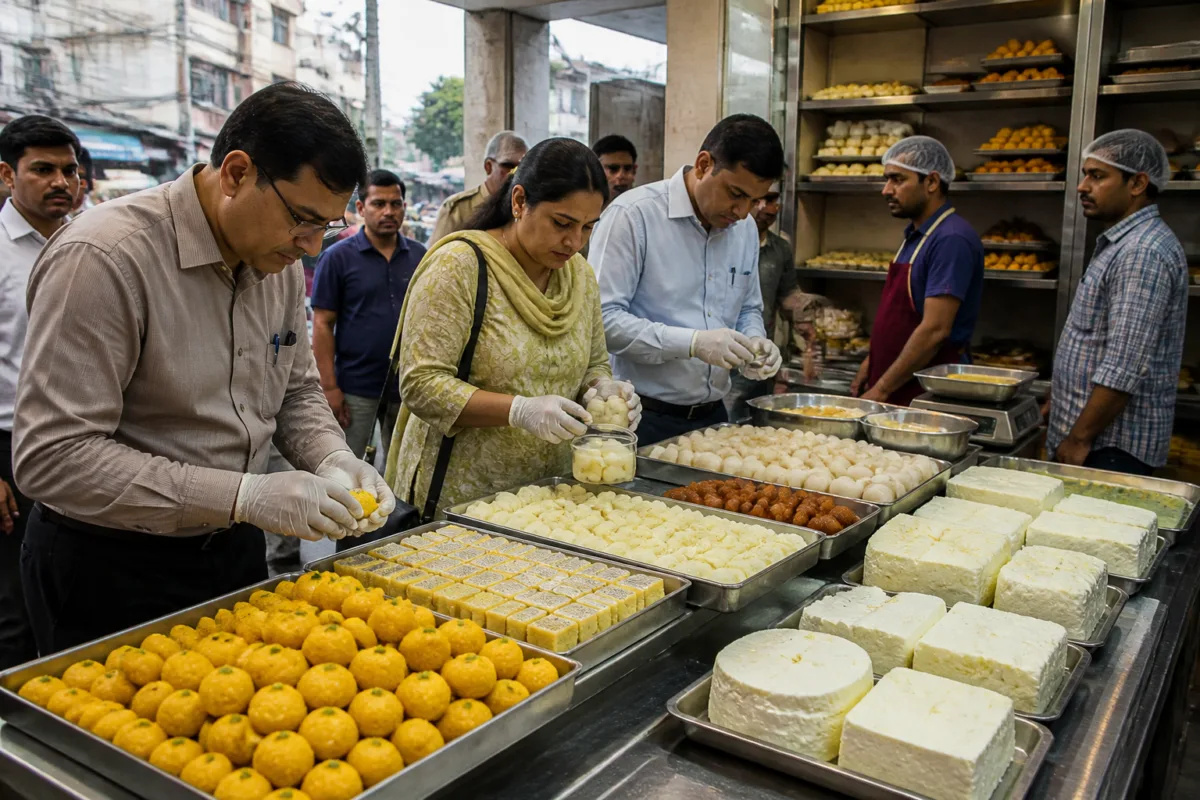
Haryana’s food safety authorities have destroyed around 50,000 kg of adulterated sweets and fake paneer during a statewide inspection drive ahead of Diwali, while 30 food samples have been declared unsafe for human consumption, the state government said.
Health Minister Arti Singh Rao said on Monday that the government would not compromise on public health and had directed the Food and Drug Administration to intensify inspections and take strict action against those involved in food adulteration.
The special drive began on October 1 and has so far led to the collection of 1,288 samples of sweets, khoya, milk, paneer and other food products across Haryana. Of the 861 samples tested, 140 were found to be substandard, while 30 failed safety standards and were classified as unsafe for consumption.
The enforcement operation is being conducted by joint teams of food safety officials and police across the state. Officials are also checking vehicles carrying food products at state borders and along major routes, with particular attention to the use of prohibited colours in sweets.
The action covers both food products and the businesses that manufacture or sell them. The state has directed strict enforcement of the ban on the manufacture and sale of analogue paneer. Sweet shops, restaurants and manufacturers have also been asked to clearly state whether their products are made using desi ghee or edible oil, including on packaging.
The Food and Drug Administration is uploading the names and addresses of shopkeepers and vendors whose samples have failed laboratory tests on its official portal. The disclosure is intended to alert consumers while enforcement proceedings continue.
To reduce delays in testing, food analysis laboratories in Karnal and Chandigarh have been directed to submit reports on priority samples within 48 hours. Five mobile food testing laboratories have also been deployed to conduct tests at the point of inspection.
The scale of the operation places the state’s food safety system at the centre of the seasonal demand surge around Diwali, when production and sales of sweets, dairy products and other festive foods increase sharply. The figures released by the department also distinguish between products that are substandard and those declared unsafe, with the latter category representing a direct safety finding under laboratory testing.
Rao appealed to consumers to report suspected cases of food adulteration through the FoSCoS portal or the designated email address of the Haryana Food and Drug Administration. The department’s inspection drive, laboratory testing and publication of failed-sample details remain the government’s stated next steps.

