


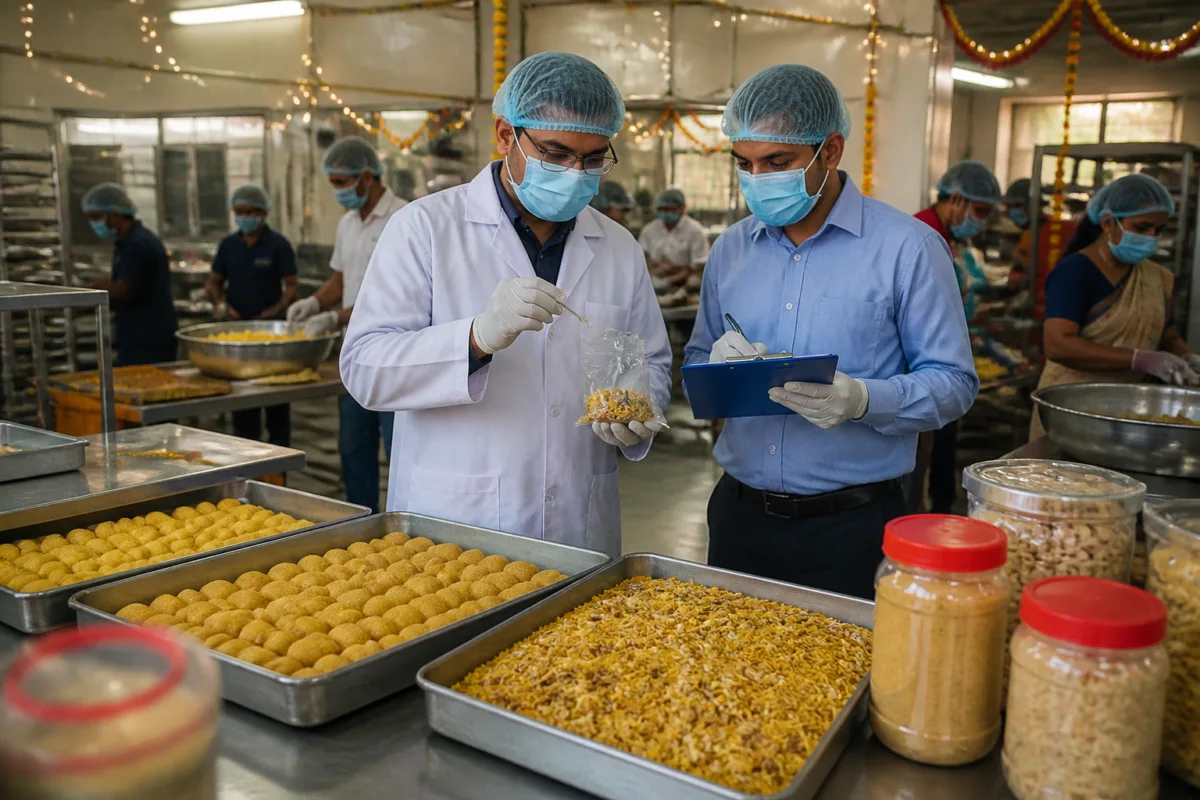
The Maharashtra Food and Drug Administration has intensified inspections of sweet shops, Diwali snack producers and retailers as demand for festive food rises, with checks focusing on ingredients, artificial colours and compliance with food-safety standards.
FDA Commissioner Tukaram Mundhe announced the expanded campaign during the inauguration of the Poona Merchant Chamber’s annual Diwali snack initiative in Pune. The inspection drive covers laddus, chivda, jalebi and other seasonal products, and officials have warned that businesses using substandard ingredients or excessive artificial colouring will face action.
The FDA’s inspections will examine both raw materials and finished products. Particular attention is being given to the quantity of artificial colours used in products such as motichoor laddus and jalebi, where the permitted limit must be followed. Producers have also been advised to consider natural alternatives to artificial colours.
The administration has moved from issuing separate inspection orders for individual festivals to maintaining a year-round inspection order. The campaign is divided into four stages, beginning 21 days before a festival and continuing for 30 days after it. The first stage focuses on manufacturers, distributors and sub-distributors to prevent poor-quality raw materials from entering the market. Inspections then shift towards retailers and establishments selling prepared food.
With eight days remaining before Diwali, the FDA is increasing checks at retail outlets because large-scale production of laddus and other snacks has not yet begun, according to Mundhe. He said the number of inspections had increased several times compared with previous years.
The Poona Merchant Chamber’s annual initiative, which has been running since 1988, produces around 200,000 kilograms of laddus and chivda every year. The products are sold through outlets in several districts on a no-profit, no-loss basis, making them available at affordable prices. The FDA commissioner inspected the production arrangements and praised the organisation for implementing food-safety measures recommended by the administration.
The chamber has conducted medical examinations of workers involved in preparing the snacks and trained around 2,000 workers. Mundhe recommended appointing one technical supervisor for every 25 to 30 workers so that food-safety procedures can be monitored through each stage of production.
FDA laboratory testing of the chamber’s festive products found the samples compliant with prescribed standards. The colour level was reported at about 30 parts per million, compared with the stated permissible limit of 100 parts per million. Mundhe also checked the taste, texture, oil content and smell of laddus and chivda during his visit.
He directed the organisation to safely dispose of decorative laddus kept outdoors for display after noting that they were no longer fit for consumption. He also warned that such products should not be fed to animals.
The administration has separately taken action against stocks of expired dry fruits supplied in the Mumbai and Pune areas. Measures against violators have included sealing establishments and suspending licences. More than 1,000 samples were examined during inspections of edible oils and spices, while around 28,000 quintals of edible oil and between 18,000 and 20,000 quintals of spices were seized across Maharashtra.
The FDA said inspections and sample testing of dry fruits, sweets, dairy products, edible oils and spices would continue. Citizens have been asked to report suspected adulteration through the FDA’s complaint portal, while businesses found violating food-safety rules could face enforcement action.

