


Pune’s recent water shortage was not caused by a single failure. A scheduled weekly supply shutdown was followed by faults at the Parvati water treatment plant, damage to a feeder cable serving the Khadakwasla pumping station, a short circuit on an alternative line and the failure of two transformers. Together, the incidents delayed supply and reduced pressure across large parts of the city for three days.
The sequence, reported by Lokmat – Pune, shows how dependent Pune’s water system is on a chain of linked assets. Water must be drawn from the Khadakwasla system, pumped, treated and distributed through a network that serves both the central peth areas and expanding suburbs. A disruption at any point can affect residents far beyond the location of the original fault.
The immediate problem unfolded after Pune Municipal Corporation introduced a 10 per cent water cut because storage in the Khadakwasla dam was declining. From 15 October, the civic body began shutting water supply across the city every Thursday. The scheduled shutdown on 29 October was therefore part of a conservation measure rather than an unplanned outage.
However, the planned interruption was followed by a series of technical failures. On Friday, a fault in an electrical cable at the Parvati water treatment plant forced the older 350 million litres per day facility to remain shut for about four hours. Treatment and supply operations resumed after the repair, according to the report.
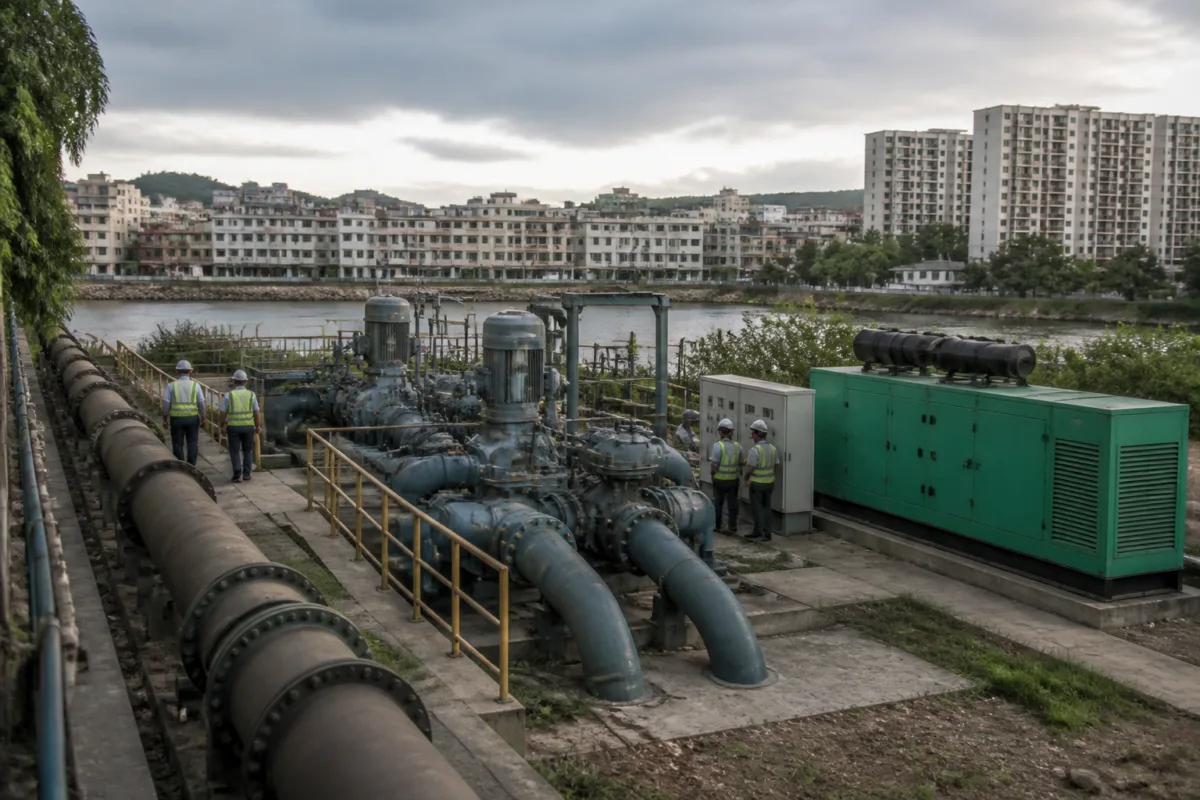
The more extensive disruption occurred on Saturday at the Khadakwasla pumping station. The station’s electricity supply from MSEDCL’s express feeder was damaged during ongoing construction work near Nanded City. An alternative supply was then arranged through the Urban Gram express feeder, but that overhead line also failed after a monkey came into contact with it, causing a short circuit.
An inspection after the short circuit found that two transformers at the pumping station had been damaged. Pumping was continued using generators, but the system could operate at only about 80 per cent capacity. Four of the five pumps supplying water to the Warje water treatment plant were kept running, according to the report.
This sequence matters because it illustrates the difference between nominal water capacity and dependable service capacity. The pumping station did not stop completely, but operating four of five pumps still reduced the system’s ability to maintain normal flows. When supply has already been interrupted by a scheduled cut, even a partial reduction in pumping can translate into delayed deliveries and low pressure in downstream areas.
The affected areas included all the central peth neighbourhoods, the railway station area, Kharadi, Vadgaon Sheri, parts of Bhandarkar Road and Kothrud, Model Colony, Karve Nagar, Shivajinagar and Aundh. The report said several of these areas received water late and at low pressure for three days, including the period immediately before Diwali.
The urban experience of such a disruption is uneven. A delayed supply does not affect all households in the same way. Residents with storage tanks may be able to bridge a short interruption, while households dependent on direct municipal supply can face immediate difficulty. Low pressure can also mean that water reaches some buildings but not others, depending on their elevation, internal pumping arrangements and position within the distribution network. The supplied report does not provide a ward-wise assessment or details of tanker deployment, so the extent of these differences cannot be quantified here.
The incident also brought the electricity-water connection into focus. The pumping station’s operation depends on reliable power, but the reported failures involved more than one layer of the electrical system: damage to the primary feeder during construction, failure of an alternative overhead line, a short circuit and damage to two transformers. This created a compound disruption rather than an isolated equipment fault.
The use of generators helped keep pumping active, but it was not a full substitute for the normal electrical arrangement. The station continued at approximately 80 per cent capacity until alternative transformers could be installed. The operating and maintenance contractor, Vishwaraj Environment Limited, arranged two transformers of 1,200 kVA each on a rental basis because immediate repair of the damaged units was not possible.
By Sunday, one alternative transformer had been commissioned and regular pumping for the affected sections resumed from 8 a.m., according to the report. The second transformer was made operational in the evening. Pune Municipal Corporation’s water supply department chief, Nandkishor Jagtap, said urgent efforts had been made to repair the power faults and that instructions had been issued to extend supply hours in areas where distribution had been disrupted.
The timeline reveals three different kinds of interruption operating together. The first was a planned, citywide conservation measure linked to declining dam storage. The second was a treatment-side electrical failure at Parvati. The third was a pumping-side power disruption at Khadakwasla. Each event had a different immediate cause, but their effects accumulated because they occurred in sequence.
That accumulation is the central infrastructure lesson. A water system is not only a collection of reservoirs, treatment plants and pipelines. It is also an electrical system, a construction interface, a pumping network and an operational response mechanism. The reported damage to the express feeder during construction indicates that utility protection and coordination can directly affect water security. The subsequent failure of the alternative overhead line shows that redundancy is useful only when backup routes and equipment can withstand the conditions in which they are deployed.
The episode also raises questions about how planned cuts are scheduled and communicated when the network is experiencing additional technical stress. The weekly Thursday shutdown was introduced to conserve water, but the following failures extended the interruption beyond the planned day. The source report does not state whether the civic body revised schedules, issued area-specific advisories or made additional contingency arrangements during the disruption. Those details would be necessary to assess the effectiveness of public communication and emergency water distribution.
Pune’s governance structure adds another layer of complexity. The municipal corporation manages water treatment and distribution, while electricity supply and feeder infrastructure involve MSEDCL. The Khadakwasla pumping station is also operated and maintained through a private contractor. The incident therefore required coordination among the civic water department, the electricity utility and the station’s operating and maintenance agency.
The reported response shows that this coordination did occur during the emergency: an alternative feeder was arranged, generators were used, replacement transformers were rented and pumping was restored in stages. But the sequence also demonstrates that responsibility for uninterrupted urban water service is distributed across institutions. For residents, the service failure is experienced as one problem even when the underlying causes lie with separate agencies and contracts.
The available figures help establish the scale of the operational disruption, even though they do not measure the volume of water lost in the network. The Parvati facility’s older treatment plant has a capacity of 350 MLD and was shut for roughly four hours. At Khadakwasla, four of five pumps supplying the Warje treatment plant remained operational, representing around 80 per cent pumping capacity. Two replacement transformers, each rated at 1,200 kVA, were arranged on rent. These figures point to a system that retained partial operation but lost its normal margin of resilience.
What the supplied evidence does not establish is whether Pune’s overall water availability was structurally below demand, how much storage remained in Khadakwasla dam, or how many households experienced a complete loss of supply. It also does not provide data on pressure levels, complaints, tanker movements or the duration of disruption in each neighbourhood. Those gaps matter because citywide announcements can conceal sharply different local conditions.
Still, the incident confirms a broader pattern within urban utilities: reliability depends not only on capacity expansion but also on maintenance, redundancy and coordination. A treatment plant with large nominal capacity cannot compensate for a failed feeder. A pumping station with multiple pumps may still deliver reduced service when one unit is unavailable and the electrical system is damaged. A backup arrangement can limit the impact of a failure, but only if alternative power sources and replacement equipment are available quickly.
For Pune residents, the immediate issue was delayed and low-pressure water supply before Diwali. For the city administration, the more significant test was whether the system could move from conservation mode to emergency recovery without allowing several linked failures to become a prolonged service breakdown. The reported restoration of both alternative transformers by Sunday provides the final operational milestone in this episode. The unresolved questions concern the protection of utilities during construction, the reliability of backup power arrangements and the way future planned cuts will be managed when critical infrastructure is under stress.

