


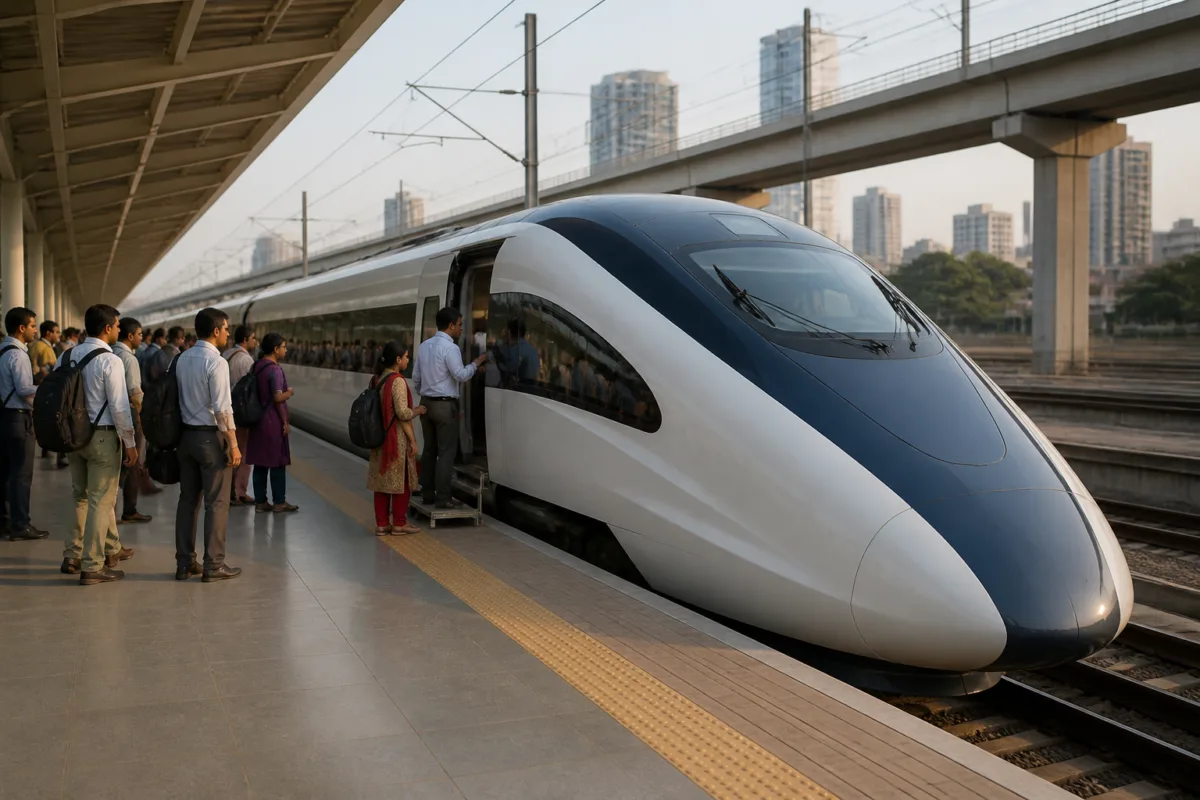
The Mumbai-Ahmedabad Bullet Train project is set to use an indigenous train designed for Indian operating conditions, with a reported testing speed of 280 kmph, an operating speed of 249 kmph and capacity for about 557 passengers. The train is being manufactured at Bharat Earth Movers Limited’s facility in Bengaluru, according to a report by Navbharat Times – Mumbai.
The proposed train will be about 202 metres long and will have eight coaches, comprising four motor cars and four trailer cars. Seven coaches will have standard-class seating, while one will provide executive-class accommodation. Standard-class coaches will use a 3+3 seating arrangement, while executive-class coaches will have 2+2 seating.
The design is intended to combine high-speed operations with facilities aimed at improving passenger comfort. The train is expected to include larger windows, adequate legroom, overhead luggage racks and separate space for larger baggage. Power sockets for mobile phones and laptops, modern bio-digester toilets and a passage connecting the coaches will also be provided, the report said.
Passengers will have access to Wi-Fi-based entertainment, with pre-loaded content available during the journey. Information on LCD screens will be provided in English, Hindi and regional languages. Audio announcements will also be used for important updates, while passengers will be able to communicate with train staff during emergencies.
Accessibility has been incorporated into the reported design. The train floor is planned to be level with the platform to make boarding and alighting easier. Doorways will include step arrangements intended to reduce the gap between the train and platform. Dedicated wheelchair space, accessible toilets and Braille signage are also planned for passengers with disabilities.
The train’s climate-control system will use two HVAC units in each coach to regulate temperature and humidity. Special layers in the coaches and flooring are intended to reduce noise inside the train and make the journey more comfortable in different weather conditions.
The train is expected to operate on a 25-kilovolt, 50-hertz electricity system. Its braking system will be capable of regenerating energy produced when the train slows down, allowing that energy to be reused and potentially reducing electricity consumption during operations.
The front section and coaches are being designed to reduce air pressure at high speed. The report said computer-based airflow studies have been used to shape the train. The design is also intended to manage pressure changes and noise generated when the train passes through tunnels.
The train will initially consist of eight coaches, but the design will allow two such trainsets to be coupled to create a 16-coach formation. This could increase passenger capacity if demand rises after services begin. The reported specifications provide a clearer view of how the Mumbai-Ahmedabad corridor is being linked to domestic high-speed rail manufacturing, although the source report does not provide a confirmed date for the train’s testing or passenger operations.

