


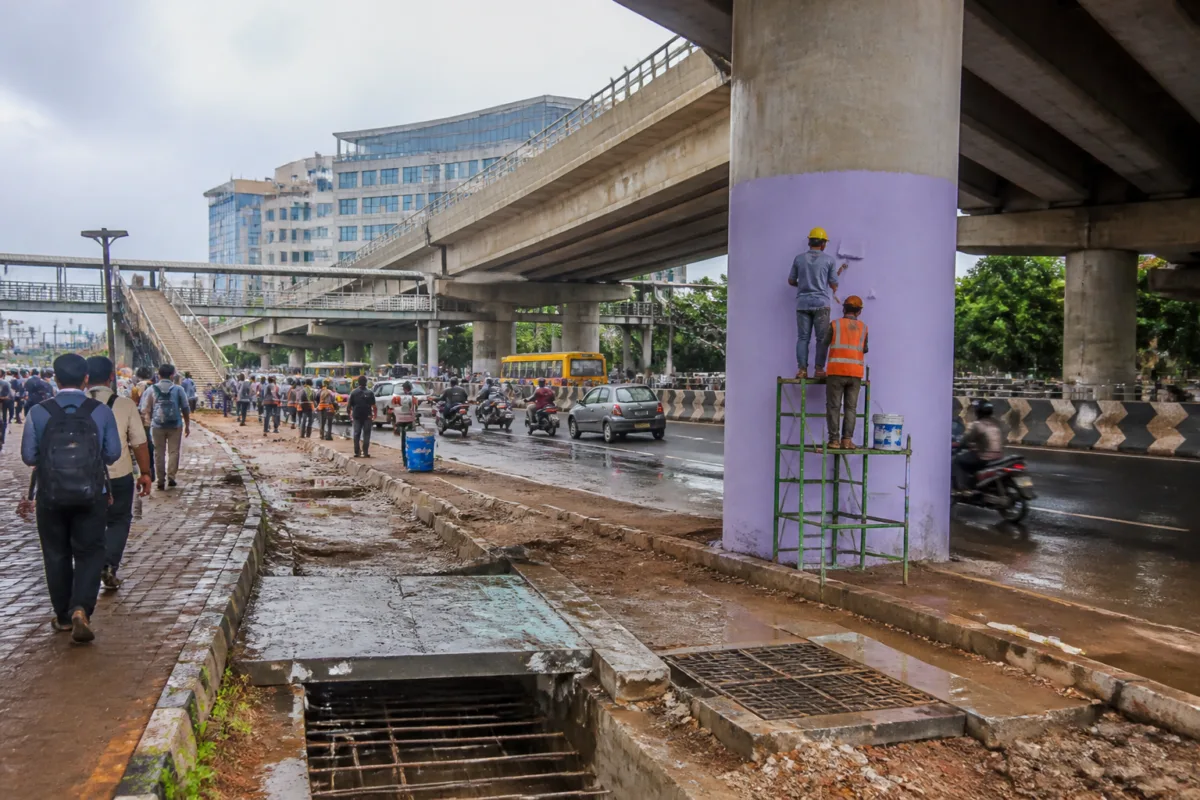
The Silk Board junction in Bengaluru is set for a broad civic makeover covering traffic movement, pedestrian facilities, public spaces and drainage, after Greater Bengaluru Development Minister Krishna Byre Gowda directed officials to prepare a permanent development plan during an inspection on Saturday.
The plan goes beyond managing vehicle congestion at the junction, which brings together the flyover, a Metro line, the Electronic City corridor, the Outer Ring Road and National Highways Authority of India’s elevated road. The government now wants to improve the space around the infrastructure hub and make it more usable for commuters and residents.
Gowda also launched the ‘Ward One’ campaign by initiating the painting of flyover pillars. The campaign is planned across 43 wards under the five municipal corporations of the Greater Bengaluru Authority. The pillar painting marks the beginning of the initiative at Silk Board while officials prepare the wider junction plan.
Under the proposed public-space works, the area beneath the flyover will be cleaned and developed with seating, lighting and recreational facilities. A throwball court is being developed, while facilities for table tennis and other activities are also being examined. Vacant land beside the stormwater drain has been proposed for landscaping, shaded seating and improved maintenance through kerbstones and concrete flooring.
Officials have been asked to examine the construction of a public toilet and improve footpaths to support safer pedestrian movement. The measures are intended to address the part of the junction that is often overlooked when infrastructure projects focus primarily on moving vehicles through the area.
Traffic changes are also being considered. To ease movement from Electronic City towards BTM Layout, the minister directed officials to examine the installation of a steel grid over the stormwater drain to create a free-left turn. A pedestrian walkway alongside the drain is also planned as part of the proposed changes.
Drainage remains a major component of the plan. Gowda directed officials to expedite a 60-metre-long major stormwater drain, including completion of an RCC retaining wall and installation of 30 girders. He also proposed a new drain from Silk Board towards HSR Layout to address waterlogging during heavy rain. The drainage work is to be coordinated with the white-topping project being taken up by B-SMILE.
During the inspection, Gowda questioned Bengaluru Water Supply and Sewerage Board officials after observing sewage flowing into the stormwater drain. He sought effective action against the continued discharge, noting that public funds had already been spent to prevent sewage from entering the drain.
The minister directed the corporation commissioner to earmark funds for the comprehensive development of the junction rather than taking up isolated improvement works. The next steps will depend on the permanent plan prepared by officials, the allocation of funds and coordination among the agencies responsible for roads, drainage, sewerage, public spaces and ongoing infrastructure projects.

