


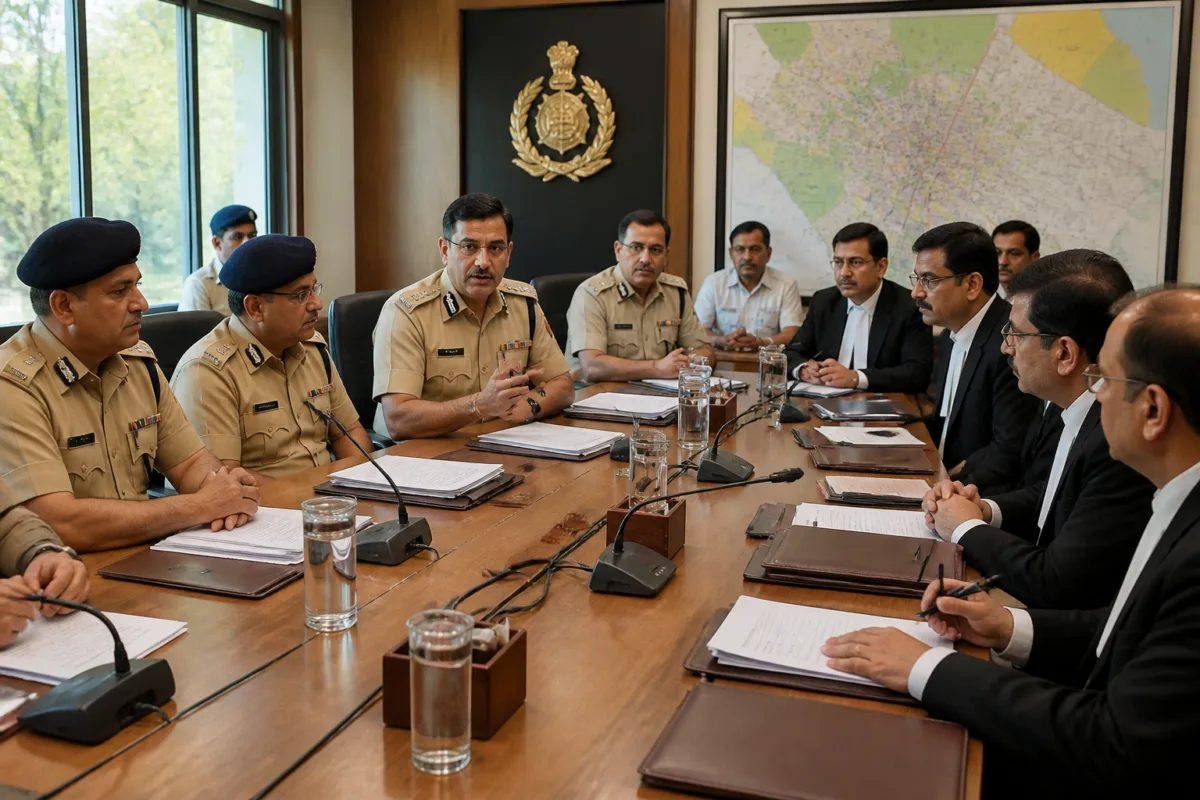
The Delhi Police and representatives of Delhi’s legal fraternity have agreed to establish a joint coordination committee to address grievances and prevent disputes between police personnel and advocates, according to an official statement issued after a meeting held on October 30.
The proposed committee will create an institutional channel for dialogue and consultation between the two sides. Its stated objective is to facilitate the timely resolution of disputes, reduce misunderstandings and support the effective functioning of the criminal justice system.
The meeting was attended by senior Delhi Police officers, representatives of the Bar Council of Delhi, the Coordination Committee of All District Bar Associations and executive committee members of various district court bar associations. The participation of district-level bar bodies places the proposed mechanism across Delhi’s court and police jurisdictions rather than limiting it to a single court complex or police unit.
The police and lawyers also agreed to appoint dedicated nodal officers at the district level and at Police Headquarters. These officers will serve as designated points of contact for communication and the expeditious redressal of issues raised by either side.
Under the arrangement, the police will, as far as practicable, inform the concerned Bar Association when a first information report is registered against a practising advocate. The statement did not specify a separate procedure for cases in which immediate police action is required, but said the information-sharing measure formed part of the decisions taken at the meeting.
The Bar Associations, meanwhile, will provide updated directories of their office-bearers and members to the respective district deputy commissioners of police. The directories will be supplied in both digital and physical formats, allowing police units to identify the relevant representatives and practising advocates while dealing with matters connected to the legal fraternity.
The discussions also covered professional conduct at police stations and court premises. Police officials agreed to extend due professional courtesy to advocates at police stations, while lawyers would similarly respect police personnel within court premises. Both sides emphasised dignity and mutual respect during interactions between their institutions.
The decision comes against the background of the regular operational contact between advocates, police investigators and court officials in criminal cases. Delays or misunderstandings between these groups can affect communication around arrests, investigations, appearances and access to legal processes. The proposed committee is intended to provide a formal route for handling such issues instead of relying only on ad hoc contact between individual officers and lawyers.
The participants described the meeting as cordial and reiterated their shared responsibility to uphold the rule of law, protect citizens’ rights and ensure the effective administration of justice. The next steps are the appointment of nodal officers and the exchange of updated bar association directories with the relevant district police authorities.

