


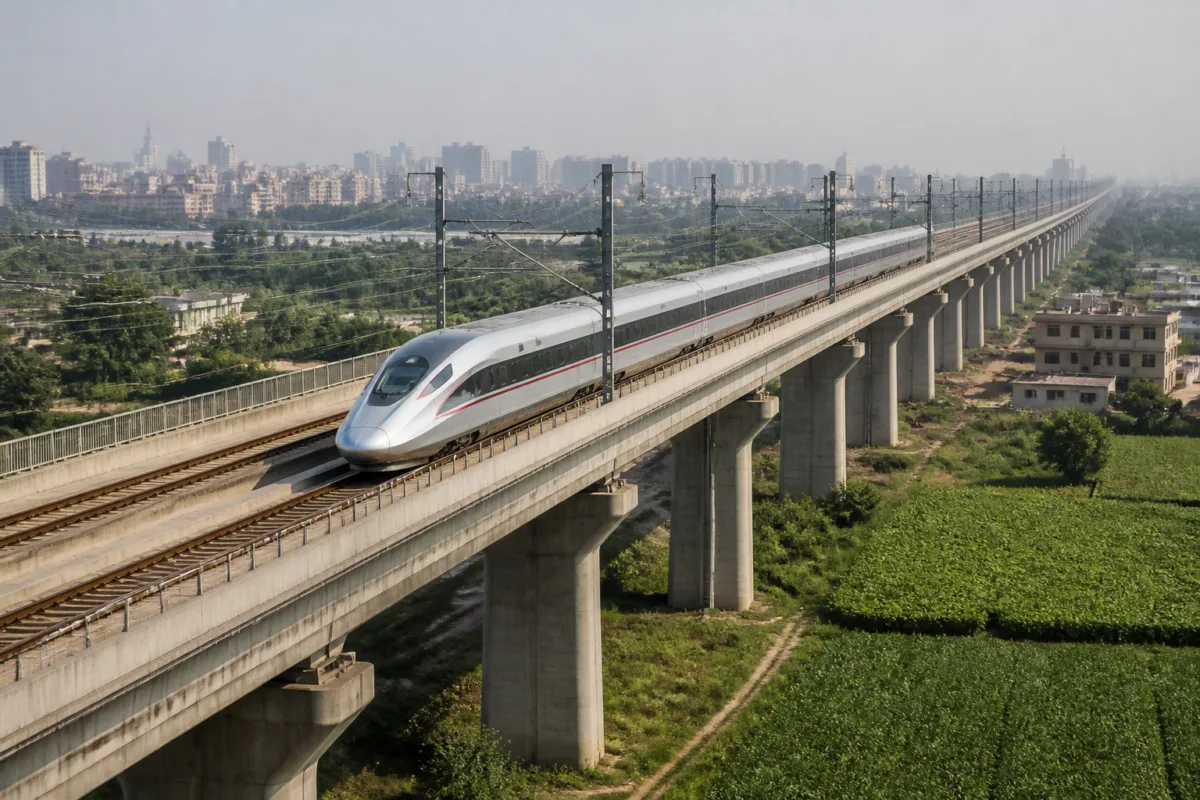
The north bullet train corridor has been approved by Prime Minister Narendra Modi, Railway Minister Ashwini Vaishnaw said on Saturday, with the proposed network set to connect Delhi with Agra, Kanpur, Lucknow, Ayodhya, Varanasi, Prayagraj, Patna, Siliguri and Guwahati.
Vaishnaw made the announcement before flagging off new Vande Bharat Sleeper Express services between Varanasi and New Delhi. According to the minister, the corridor will significantly reduce travel times between major cities across northern and northeastern India.
The proposed journey from Delhi to Agra is expected to take 59 minutes, while travel from Delhi to Kanpur would take 1 hour and 45 minutes. The Delhi-Lucknow journey is expected to take 2 hours and 12 minutes, and the trip from Lucknow to Varanasi would take 1 hour and 21 minutes.
Vaishnaw said the journey between Varanasi and Delhi would take 3 hours and 35 minutes under the proposed corridor. The route described by the minister would extend eastwards from Delhi through Uttar Pradesh and Bihar, then towards Siliguri and Guwahati.
The announcement places the proposed line within a wider effort to expand high-speed rail connectivity beyond the initial bullet train project under construction between Mumbai and Ahmedabad. However, the information released on Saturday did not include the corridor’s total length, station list, project cost, construction schedule or proposed completion date.
Vaishnaw said construction, including pillars and girders, would be carried out in India. He described the project as a “Make in India” initiative and said it would be built by Indian workers, including young people and welders.
“The Prime Minister has approved the north corridor of the bullet train, which will change the lives of many,” Vaishnaw said, according to a report by news agency PTI. He added that the project would benefit young people, middle-income groups and artisans working in small-scale industries.
The proposed connections cover several major urban centres whose existing rail links support substantial passenger movement, pilgrimage travel, education, business and regional employment. The stated travel times would place cities such as Agra, Kanpur, Lucknow and Varanasi within much faster intercity reach of the national capital, although the practical impact will depend on the final alignment, station locations, fares, operating frequency and completion of the infrastructure.
The minister’s statement did not specify which agency would execute the corridor, how it would be financed or whether detailed engineering and land-related processes had begun. These details will be necessary to establish the project’s implementation timeline and its implications for the cities along the route.
The next identifiable milestone is the release of further project details by the railway authorities, including the corridor’s alignment, stations, construction phases, funding structure and schedule.

