


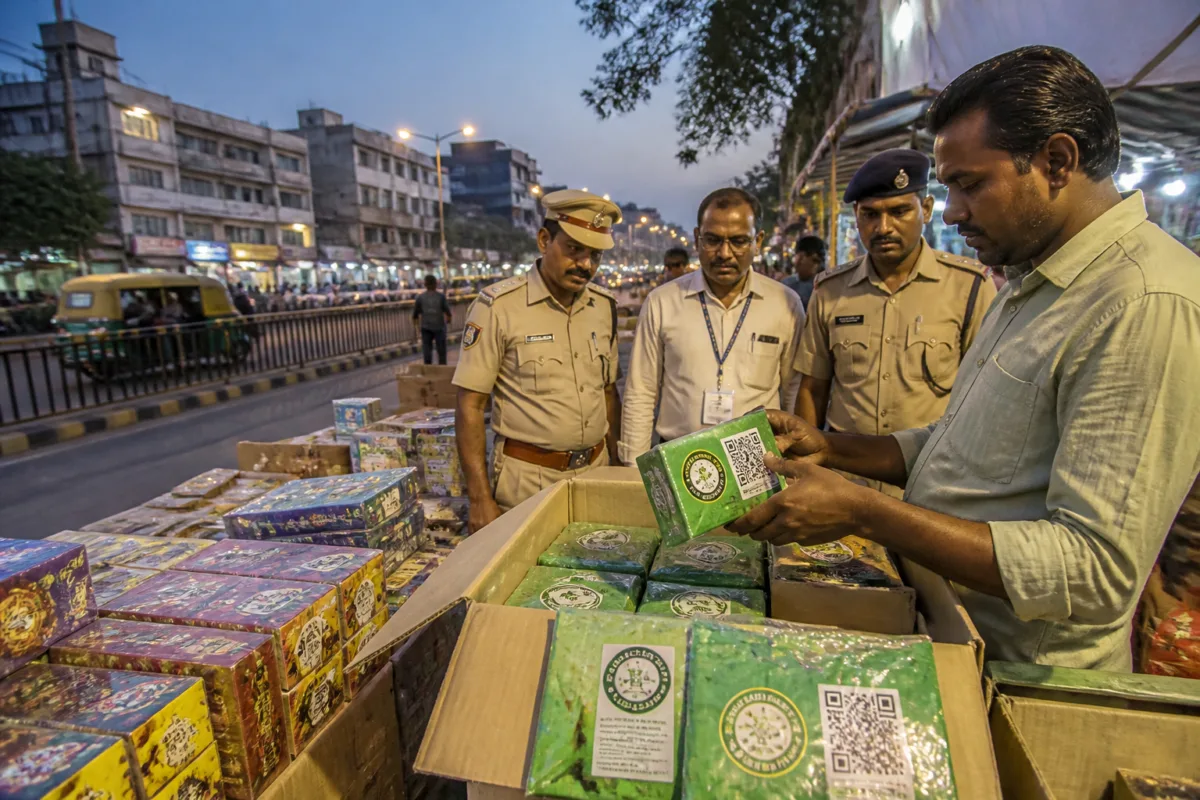
Karnataka has restricted firecracker use during Diwali to 8 pm to 10 pm and ordered that only green crackers be used, with authorities directed to act against the storage and sale of prohibited products across the state.
Environment Minister Ramalinga Reddy instructed the Additional Chief Secretary of the Forest and Environment Department to ensure that firecrackers are not burst during the daytime. The direction follows the timings prescribed by the Karnataka High Court, according to the report by Prajavani.
The state has also specified that only green crackers may be used from November 8 to 10. District administrations, police superintendents and heads of local bodies have been asked to comply with Supreme Court orders governing firecracker use. Officials have been directed to register criminal cases against people involved in storing or selling prohibited firecrackers.
To enforce the restrictions locally, task forces are to be formed with officials, citizens and representatives of organisations. These teams will inspect warehouses operated by firecracker sellers and seize any prohibited products found there. Criminal cases are to be filed against those responsible, the minister said.
The directions extend beyond sales and enforcement. Local bodies and police authorities have been asked to prevent firecracker use near hospitals and educational institutions. The state has also said that animals, birds, children and senior citizens should not be inconvenienced during the festival, although the report does not specify separate distance limits around these locations.
Consumers have been told to check the packaging before buying green crackers. According to the instructions, genuine green-cracker packets carry a designated symbol and a QR code. District environmental officers have been asked to verify these markings, and products without them will not be treated as green crackers.
The state has also directed departments to check the movement of prohibited firecrackers from other states. Commercial tax officials are to inspect state borders through their checkposts and seize prohibited products, while seeking assistance from other departments where required.
Public communication is another part of the enforcement plan. Information on an environmentally responsible Diwali is to be distributed through pamphlets at metro stations, railway stations, bus stations and malls. Authorities have also been asked to create awareness through video and audio messages.
The directions place responsibility on multiple layers of Karnataka’s urban administration: police for enforcement, local bodies for neighbourhood-level action and waste management, environmental officers for product verification, and border officials for checking incoming consignments. Local bodies have separately been instructed to arrange scientific disposal of the solid waste generated during Diwali.
The report does not provide details of the number of inspections planned, the penalties applicable in individual cases or the agencies responsible for publishing compliance data. The immediate implementation milestones are the November 8-10 green-cracker restriction, the 8 pm-10 pm use window and inspections of seller warehouses and state-border consignments.

