


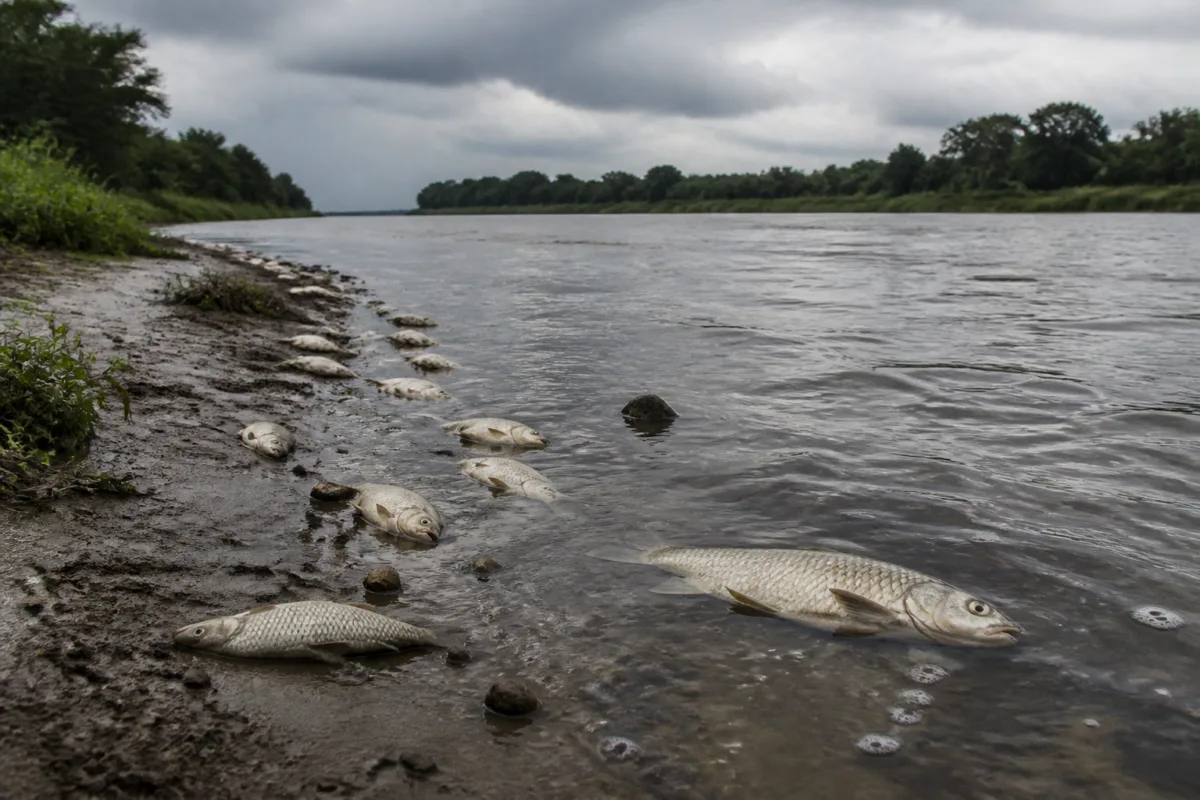
Mass fish deaths in the Sankosh River have triggered an urgent food-safety warning in parts of north Bengal after a large volume of water reportedly flowed downstream from Bhutan following the rupture of a glacial lake. West Bengal Forest Minister Manoj Oraon inspected the affected area and appealed to residents not to collect, sell or eat the dead fish.
The incident has been reported along areas near the Alipurduar–Cooch Behar border, where large numbers of fish were seen floating in the river and lying on its banks. The current reportedly carried dead fish downstream, while local residents were also seen collecting them from the river and its surrounding areas.
According to the report, the glacial lake in Bhutan breached on Thursday night, sending a substantial volume of water into lower-lying areas. The water then entered north Bengal’s river system through the Sankosh. Fish deaths in the river were observed from Friday night, with the river water reportedly turning black before the fish began dying in large numbers.
The cause of the fish deaths has not been established through a laboratory finding in the supplied report. Initial concern has focused on possible chemical contamination in the water after the glacial lake breach. Oraon also said the deaths may have resulted from pesticide exposure or poisoning, but these possibilities were presented as concerns rather than confirmed conclusions.
The minister warned that several tonnes of fish may already have reached local markets. He said the dead fish could pose a danger if they were sold or consumed, and urged residents to exercise caution while buying fish. The appeal applies both to fish collected from the river and to fish being offered for sale in nearby markets.
The report said some residents had already taken fish from the river, including on Friday morning. Officials and local workers have begun collecting the dead fish and burying them on the riverbank. The measure is intended to prevent further collection and consumption of the carcasses, although the report does not provide details of the quantity removed or the agencies conducting testing.
For communities along the Sankosh, the immediate issue is the possible movement of contaminated water and fish across administrative boundaries. The reported sequence links the incident to water flowing from Bhutan into north Bengal, but the available information does not establish whether contamination occurred upstream, during the flood-like flow, or within the river after the water entered the region.
The immediate official instruction remains that residents should not collect, sell or eat the dead fish. Further clarity will depend on testing of the river water and fish, as well as official advice on the condition of fish already present in local markets.

