


The crisis at the Satyajit Ray Film & Television Institute (SRFTI) in Kolkata has moved beyond a dispute over student discipline. It now centres on a basic institutional question: what should an educational campus do when students report repeated attacks, seek protection and demand an explanation, but the administrative response includes academic suspension, hostel eviction, rustication and police deployment?
Parents of several SRFTI students have written to vice-chancellor Santosh Ajmera opposing disciplinary action against students and seeking clarity on the presence of police inside the campus. Their letter, signed by 30 parents and posted on the Instagram account of the SRFTI students’ Union, says six students were rusticated, eight received show-cause notices, academic activities were suspended and students were ordered to vacate hostels after attacks on September 27 and October 4.
The immediate controversy is therefore not limited to whether students violated institutional rules. It concerns the sequence of decisions taken after reported violence, the responsibility of an institute to protect residents, and the consequences of removing students from campus accommodation when some have no home or alternative place to stay in Kolkata.
The parents’ account describes a cycle that began with attacks and was followed by a student protest. According to the letter, students sought security and an inquiry into how outsiders had entered the campus and attacked them twice in one week. They began an academic halt as a mark of protest. The parents say the institute responded not by first resolving those concerns, but by issuing notices, suspending academic activities, ordering hostel evacuation and rusticating students.
That sequence matters because campus housing is not merely an administrative facility. For students who live away from their home cities, it is the physical base from which they attend classes, access institutional resources and participate in campus life. The parents said the October 16 order requiring students to vacate hostels within 24 hours affected students who had no home in the city and no alternative accommodation. They described the order as an attempt to disperse the student body by making it homeless rather than as a disciplinary measure.
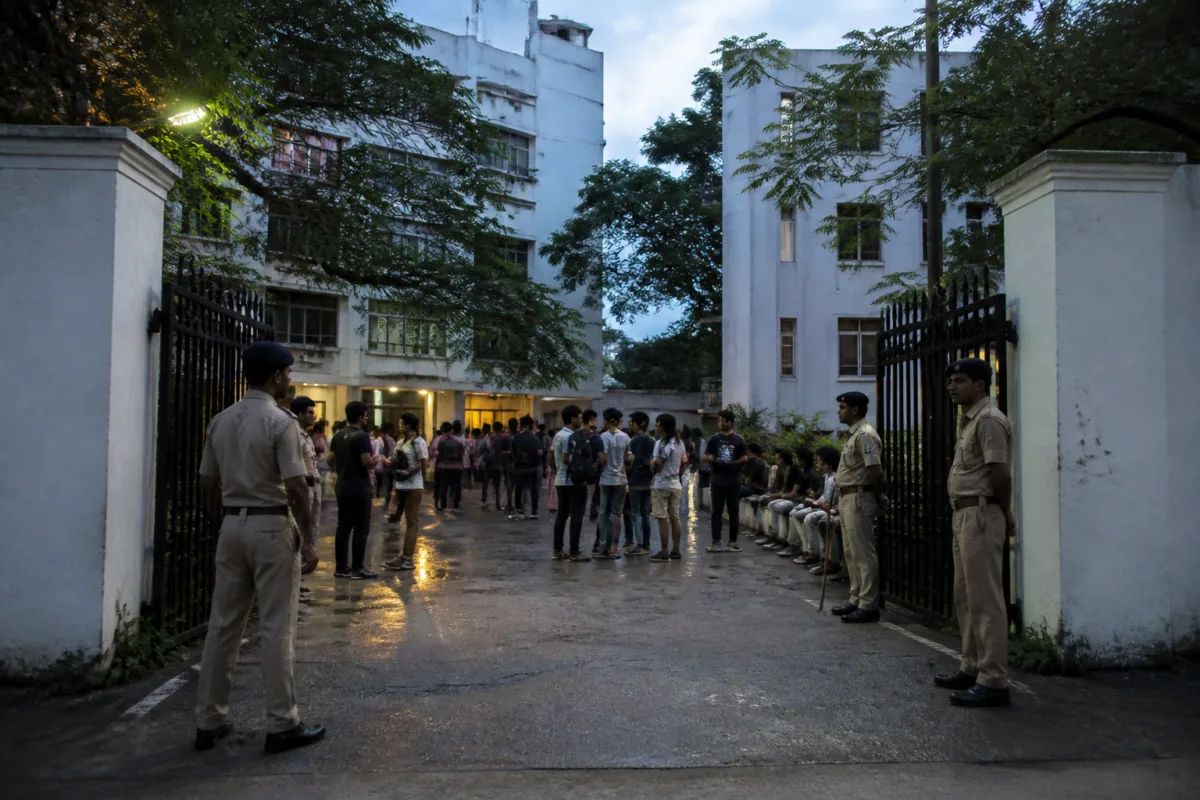
The institute’s response, as reported, presents a different institutional concern. Police personnel were called to the campus on October 27 after students held a torch rally to mark one month since the first reported attack. The registrar said police had remained deployed to ensure the safety of campus residents. The parents, however, said they had not been told why the police were present, who had authorised the deployment or when they would leave.
This difference in explanation reveals a breakdown in communication at the centre of the crisis. The administration describes police deployment as a safety measure. The parents see the presence of police, combined with disciplinary action and hostel orders, as directed against students who had asked for protection. Neither position by itself resolves the institutional question of how a campus should communicate an emergency security decision to the people living there.
The reported attacks are also central to the dispute. Students said they were first attacked on September 27 by people allegedly associated with the Akhil Bharatiya Grahak Panchayat and then on October 4 by supporters of the Hindu Jagran Manch. No one had been arrested at the time of the report, according to the students. The allegations remain attributed claims, but their institutional consequence is clear: students say the absence of arrests and accountability led them to continue their class boycott from September 28.
One parent told the newspaper that students had written to the SRFTI administration on October 3 seeking protection from the Hindu Jagran Manch. The parent alleged that members of the outfit later attacked students by pelting stones and throwing water bottles. The account raises a question that is broader than the immediate campus conflict: whether security arrangements are being assessed before an incident, or only after violence has already taken place.
The answer is particularly important in a residential institution. A campus with hostels combines academic, residential and public-safety responsibilities. The administration must manage access, protect residents, respond to threats and preserve the continuity of education. When outsiders are alleged to have entered and attacked students, the question of access control becomes inseparable from institutional accountability. Students and parents are not only asking who committed the alleged attacks; they are also asking how the attacks became possible.
The reported administrative response has instead shifted attention towards student conduct. Another parent said the vice-chancellor had alleged that students invited trouble by writing provocative graffiti and wall writing targeting the BJP and the RSS. The parent argued that this position diverted attention from the attacks. The report does not independently establish the competing claims, but it shows how the dispute has moved from a security incident to a contest over responsibility and narrative.
That contest can make resolution more difficult. If the administration treats protest activity as the primary problem, students may see disciplinary measures as retaliation for demanding security. If students treat every administrative response as evidence of hostility, the institute may find it harder to restore academic activity. The available account indicates that this mutual distrust has already affected classes, accommodation and the everyday functioning of the campus.
The governance problem is also visible in the division of responsibility. The parents’ letter states that the primary responsibility for student safety rests with the institution and cannot be discharged by inviting police against students, evicting them or sending emails to their parents. The registrar, by contrast, said police had been called to ensure the safety of campus residents. These statements suggest that the institute has not publicly established a shared account of what safety requires, who controls the response and what safeguards apply to students during a period of protest.
Police deployment can address an immediate security concern, but it does not by itself answer the questions raised by the parents. It does not establish how alleged attackers entered the campus, whether access procedures failed, what inquiry has been initiated, or how students can safely resume classes. It also does not settle whether disciplinary proceedings are connected to the reported attacks, the academic halt, or separate alleged violations of institute rules. Those distinctions matter because each involves a different administrative process.
The hostel issue adds another layer. An order to vacate accommodation within 24 hours may have consequences far beyond discipline when students are from outside Kolkata. The parents’ letter specifically says some affected students have no home in the city and no alternative accommodation. In such circumstances, the administration’s decision has a direct bearing on educational access. A student who loses housing may also lose the practical ability to attend classes, remain on campus or participate in an inquiry.
The episode therefore shows how student discipline, housing and campus security can become inseparable in a residential educational institution. A disciplinary order is not only a statement about conduct when it also determines whether students can remain housed. Similarly, a security decision is not only an operational matter when police enter a campus at night and remain there without, according to parents, a clearly communicated mandate or exit plan.
The institute’s institutional framework is still unclear from the supplied account. The report does not establish whether an independent inquiry has been appointed, whether a formal police complaint has progressed, what basis was used for the rustication orders, or whether the hostel eviction order has been withdrawn or reviewed. It also does not state whether the administration has issued a written explanation to students and parents about the police deployment.
That lack of clarity is significant because the vice-chancellor’s response was limited to saying that the concerns raised by parents would be addressed appropriately in due course. The statement acknowledges receipt of the communication but does not specify a timeline, inquiry mechanism, security review or academic restoration plan. For a campus that has experienced reported attacks and a continuing class boycott, the absence of publicly described next steps leaves the dispute unresolved.
The available evidence also shows a gap between the need for immediate protection and the need for institutional accountability. Students want safety and answers about the alleged attacks. The administration has taken measures that it says are intended to protect campus residents, while also pursuing disciplinary action. Parents want the institute to explain why the students are being treated as the central source of disorder when they say the original problem was violence by outsiders.
The larger urban question is how educational campuses function as small residential communities within cities. Their safety depends not only on internal rules but also on their relationship with the surrounding public realm, local policing and external groups. When alleged outsiders enter a campus, the institution becomes responsible for managing a boundary between public access and protected educational space. When that boundary fails, residents need information about the response as much as they need physical security.
SRFTI’s dispute also demonstrates why accommodation decisions should be examined alongside academic and disciplinary decisions. Removing students from hostels can disperse a protest, but it can also displace students who depend on the campus for basic living arrangements. The parents’ objection is built around that consequence. Whether the order was legally or administratively justified is not established in the supplied report, but its impact on students without local housing is clearly identified.
What the evidence confirms is that SRFTI is dealing with a prolonged breakdown involving alleged attacks, a student class boycott, disciplinary proceedings, hostel eviction orders and police deployment. What remains unclear is how the institute investigated the reported violence, why no arrests had taken place according to students, what rules governed the disciplinary action and how the administration intends to restore academic and residential normality.
The next developments to watch are the institute’s formal response to the parents’ letter, any inquiry into the September 27 and October 4 incidents, the status of the rustication and hostel orders, and the conditions under which academic activities can resume. Until those issues are addressed with specific explanations and documented processes, the campus safety dispute will remain an accountability crisis as much as a disciplinary one.

