


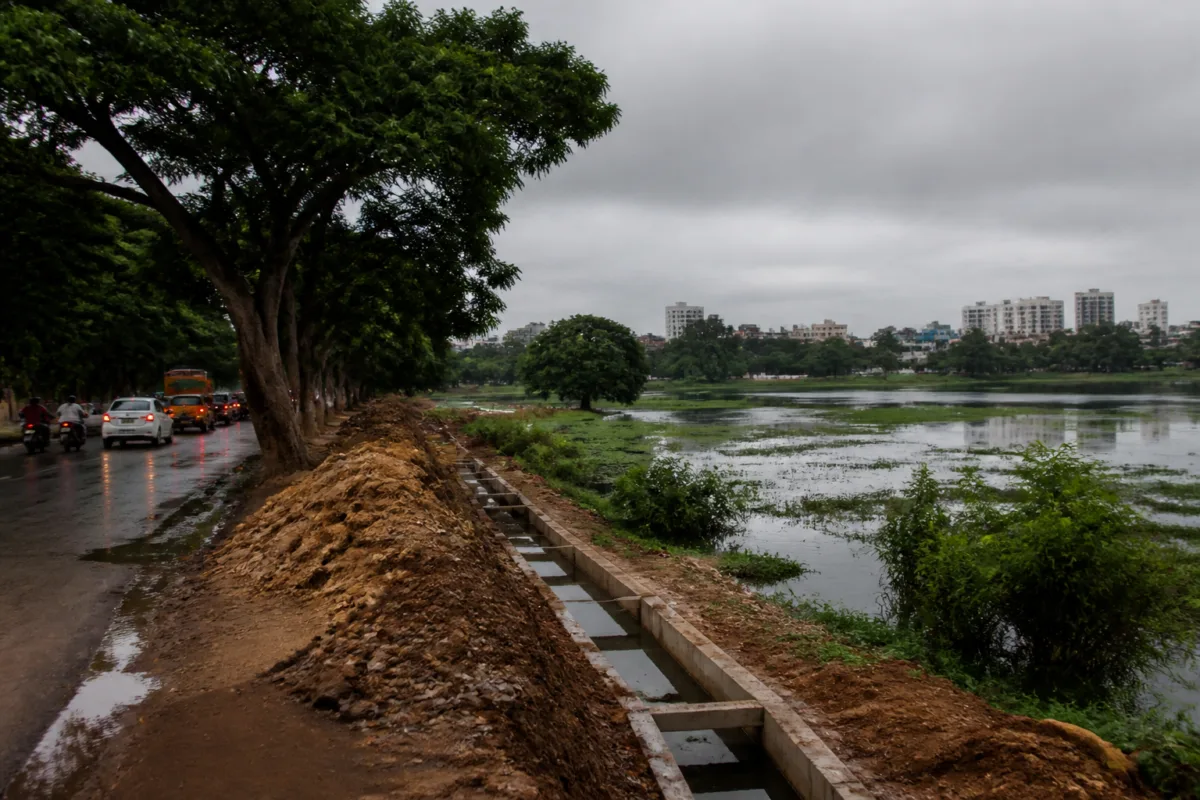
Bengaluru’s proposed road expansion through lake lands and buffer zones is facing opposition from the Federation of Bengaluru Lakes, which has asked the Greater Bengaluru Authority to pause decisions until the project’s ecological and climate impacts are independently assessed.
The citizen group submitted a representation to the GBA’s Climate Action Cell on October 29, objecting to a recent authority notice identifying lake areas that could be acquired for road expansion. The federation said the proposal, along with tunnel roads, underground drainage infrastructure and sewage treatment plants within lake areas, could damage lakes, wetlands, tree cover and natural drainage systems.
The objection comes as the city continues to address traffic congestion and mobility bottlenecks. While acknowledging the need to improve movement across Bengaluru, the Federation of Bengaluru Lakes said mobility improvements should not come at the cost of natural systems that help protect the city from flooding, rising temperatures and water stress.
According to the federation, lakes and wetlands retain stormwater, regulate runoff and support groundwater recharge. Mature trees provide shade, moderate local temperatures and support biodiversity. It said road widening and tunnel infrastructure in ecologically sensitive areas could reduce lake extent, disturb wetlands and require extensive tree felling.
The representation also raises concerns about changes to statutory lake-buffer protection under the Karnataka Tank Conservation and Development Authority Amendment Act, 2025. The federation said the reduced buffer provisions should not be treated as an opportunity to divert additional lake land for roads, tunnels or other infrastructure.
Instead of expanding roads through lake areas, the group has urged the GBA to improve the existing network and complete pending Comprehensive Development Plan roads. It has also called for action on traffic bottlenecks, stricter enforcement of parking regulations, stronger public transport and better last-mile connectivity.
The federation has further sought an independent, network-wide traffic study to establish the causes of congestion and compare proposed road projects with alternatives. These alternatives, it said, should include traffic management, junction improvements and public transport measures rather than relying only on new road capacity.
Among its specific demands are a time-bound audit of existing and planned roads, publication of lake-wise maps showing proposed infrastructure, and independent assessments covering hydrology, flood-storage capacity, groundwater, biodiversity and tree loss. It has also asked the authority to publicly disclose detailed project reports and traffic studies.
The representation places the GBA’s road expansion proposal at the intersection of mobility planning and the protection of Bengaluru’s natural drainage and water systems. The authority’s response to the federation’s demands and the release of project-level assessments will determine how the proposed infrastructure is evaluated before further decisions are taken.

