


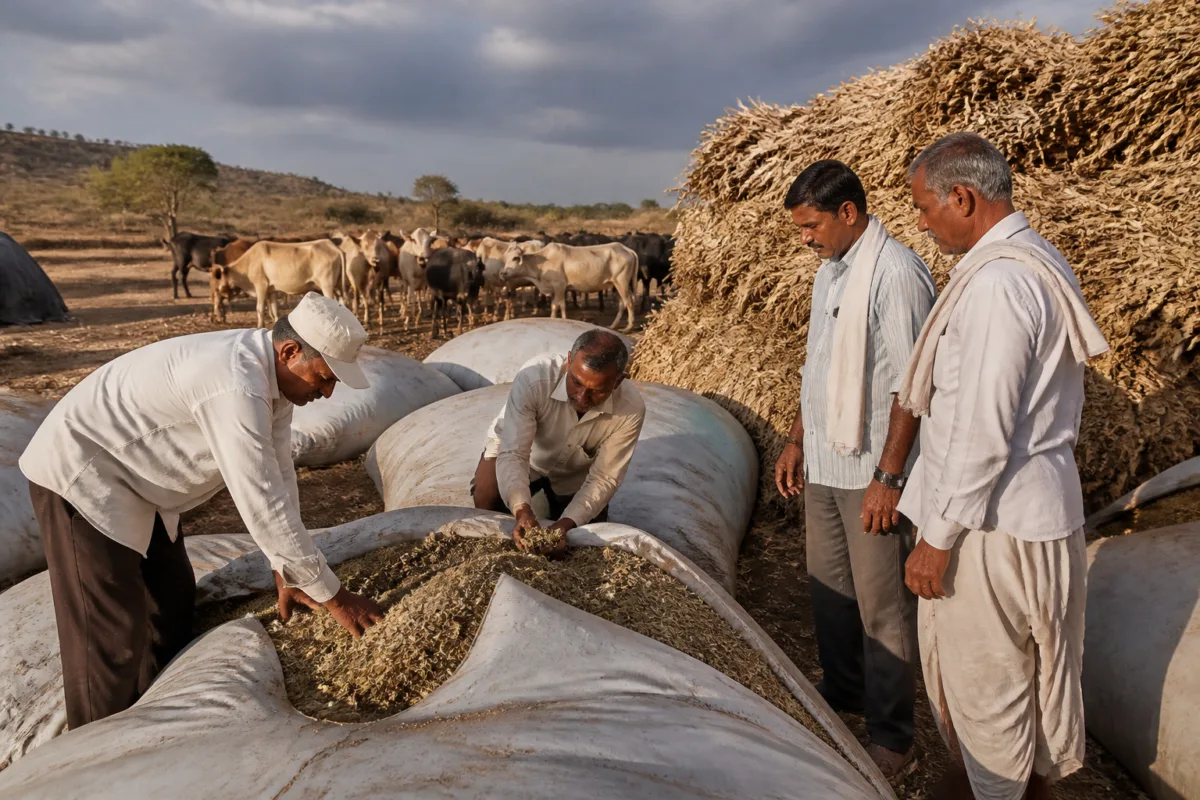
Maharashtra has capped the maximum base price of dry fodder at Rs 12 per kg and silage at Rs 8 per kg during the period of drought declared by the state, Environment and Animal Husbandry Minister Pankaja Munde said on Friday. Transportation costs will be paid separately at rates notified by the Transport Commissioner.
The decision follows a review of the kharif season situation and the declaration of drought in 304 talukas across Maharashtra. It is intended to maintain fodder availability for livestock, protect farmers and cattle owners from shortages, and ensure that animals receive safe and nutritious feed during the scarcity period.
A Cabinet Sub-Committee headed by the Revenue Minister had constituted a study group to examine measures for managing a possible fodder shortage. Munde was a member of the group, which reviewed fodder management practices in Maharashtra and other states, assessed existing availability and potential production, and examined the state’s requirements for the coming months.
The study group’s report was approved at a meeting of the Cabinet Sub-Committee held on Tuesday. District-level drought management executive committees will oversee fodder procurement according to the group’s recommendations and directions issued by the concerned departments.
The revised prices are base procurement prices and will remain applicable for the duration of the drought declared by the Relief and Rehabilitation Department. Transportation charges are not included in the caps and will be paid according to rates notified from time to time by the Transport Commissioner.
The government has also specified quality requirements for the fodder procured under the arrangement. Dry fodder must have a maximum moisture content of 15 per cent and must be clean, free of soil contamination, insects and fungus, and without a sour or musty smell. Fodder made from jowar and bajra will receive preference.
Silage must be stored in airtight conditions and be free of fungus. Its moisture content must be between 62 and 70 per cent, with a pH value ranging from 3.5 to 4.4 and a minimum crude protein content of 7 per cent. Other parameters will follow the standards specified under Bureau of Indian Standards code IS 19562:2026.
Munde said livestock was an important source of livelihood for farmers and that ensuring fodder availability during drought was a government priority. She said the measures were not limited to fixing procurement prices but also sought to ensure proper planning, strict implementation at district level and the supply of good-quality, safe fodder to farmers and livestock owners.
District drought management committees will implement the procurement process, while the price caps and related arrangements will remain in force for the period covered by the state’s drought declaration.

