


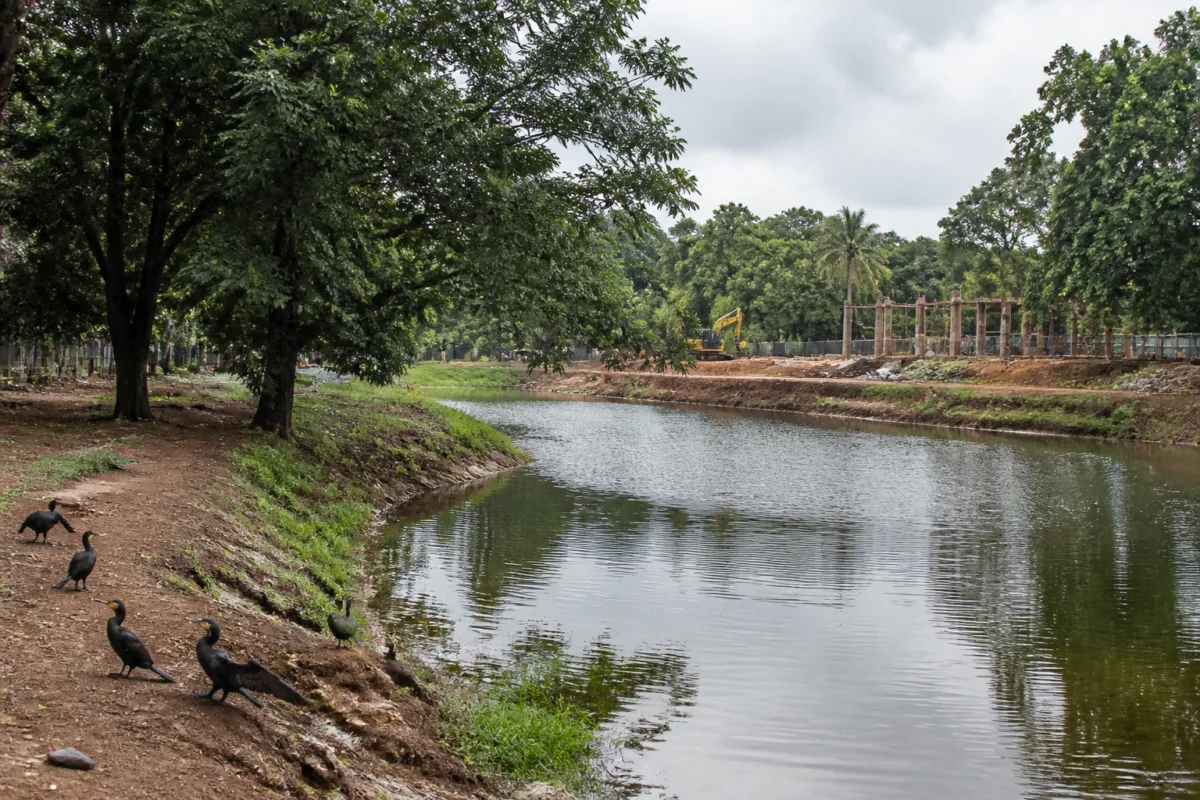
The National Green Tribunal’s interim halt on construction and tree felling at Jubilee Park in Baripada has turned a local urban development project into a wider test of how Indian municipalities manage land that is simultaneously used for public amenities, contains water bodies and may carry forest and biodiversity protections. The order does not decide whether illegal tree felling occurred. It does, however, show that the tribunal found enough material for a prima facie case and considered the risk of irreparable loss serious enough to require immediate protection.
The dispute concerns a proposed Rs 28-crore project being executed by the National Federation of Farmers’ Procurement, Processing and Retailing Cooperatives of India Ltd, or NACOF, under a Baripada municipality work order. The plan includes landscaping, boating facilities, an island, electrical installations and amenities for children. The nearly nine-acre site, spread across four plots, is locally known as Jubilee Park and Pakhi Vihar. The land includes forest land, water bodies and wasteland, and the petition states that the area serves as a habitat for thousands of birds.
The NGT’s east zone bench, comprising Justice Arun Kumar Tyagi and expert members A Senthil Vel and Ishwar Singh, ordered an immediate halt to further construction, tree felling and related activities on the disputed land unless prior approval is obtained from the Centre. The tribunal invoked the precautionary principle under Section 20 of the National Green Tribunal Act, 2010, and listed the matter for final hearing on January 5.
The order also placed direct responsibility on local enforcement authorities. The district magistrate and collector of Mayurbhanj, the divisional forest officer of Baripada and the Mayurbhanj superintendent of police were directed to take all requisite steps to ensure that the tribunal’s order was not violated. This is important because the case is not limited to the legality of a project design. It also concerns whether different arms of the local administration adequately identify and protect statutory restrictions before work begins.
The petition was filed by Kendrapada-based RTI activist Pratap Chandra Mohanty. He alleged that more than 100 trees had been illegally felled for the project, beginning on April 2, without mandatory forest clearance or permission from the divisional forest officer. According to the petition, chainsaws were used to cut trees and earth-movers were deployed to clear the stumps. The petition also raised alleged violations of the Biological Diversity Act, 2002.
Those allegations have been contested. In an affidavit before the tribunal, the divisional forest officer stated that no illegal felling on a notified or classified forest plot had been established. The officer also said a field inquiry found no tree felling on the forest land. The NGT therefore has not made a final finding that the alleged tree cutting took place or that the project violated forest law. Its interim reasoning is narrower but consequential: the materials on record established a prima facie case, and the balance of convenience favoured protection because the potential loss could not easily be reversed.
That distinction is central to understanding the case. An interim environmental order does not establish liability. It preserves the physical condition of a site while the tribunal examines competing claims. In a landscape where trees, water bodies and public infrastructure occupy the same project area, construction can change the evidence itself. Tree removal, earthwork and alterations to drainage or water bodies may make it difficult to assess what existed before the project began. The precautionary principle allows the adjudicating authority to prevent that irreversible change while the legal and factual questions remain unresolved.
## Jubilee Park forest land and the limits of project-led urbanisation
The proposed amenities are typical of the way smaller cities seek to upgrade public spaces. Landscaping, boating, children’s facilities, lighting and an island can make a park more attractive and create a visible urban asset. But the Jubilee Park case shows that a public-use project is not automatically an environmentally permissible project. The intended use of the site does not remove the need to establish the land’s legal status, obtain applicable approvals and understand the ecological functions already operating there.
The site’s reported composition complicates the idea of a vacant development parcel. Nearly nine acres across four plots include forest land, water bodies and wasteland. The presence of these different land types means that a single municipal work order may intersect with multiple regulatory responsibilities. Construction decisions may involve the municipality, the forest department, the district administration, the police and the project executing agency. The NGT’s directions to several authorities reflect that administrative overlap.
The case also raises a basic sequencing question: should environmental and land-status verification precede the award and execution of an urban improvement project, or should those issues be resolved after work has begun? The petitioner says tree felling began without mandatory clearance or DFO permission. The DFO disputes the claim of illegal felling on forest land. The tribunal’s intervention indicates that the documentation and field findings were not sufficient, at the interim stage, to remove the possibility of ecological harm.
For municipalities, the institutional lesson is that project preparation is not only about design, cost and execution. It also requires a documented account of the land on which the project will be built. Where a site contains trees, water bodies or habitat, the project file must be able to establish which permissions apply and which agency is responsible for confirming compliance. The supplied material does not state whether such a consolidated clearance process was completed before work began. That remains one of the questions in the case.
## The evidence before the tribunal
The available evidence contains two sharply different accounts. The petitioner alleges the removal of more than 100 trees, the use of chainsaws and earth-movers, and the absence of mandatory approvals. The DFO’s affidavit states that no illegal felling on a notified or classified forest plot had been established and that a field inquiry found no tree felling on the forest land. The NGT did not resolve that conflict in its interim order. Instead, it found that the petitioner had made out a prima facie case requiring protection of the site.
The tribunal’s concern is therefore not based only on the number of trees alleged to have been removed. It is also linked to the character of the land and the consequences of allowing work to continue while the dispute remains pending. The order refers to the possibility of irreparable loss. In practical terms, the concern is that continued construction or tree felling could permanently alter a site whose forest and ecological status is still being examined.
The reported bird habitat adds another layer to the dispute. The site is locally known as Pakhi Vihar and is said to support thousands of birds. The source material does not provide an ecological survey, a species inventory or an independent assessment of the habitat. Those details cannot be treated as established environmental findings. They do, however, explain why the petition links the project to biodiversity concerns and why the Biological Diversity Act has been raised before the tribunal.
The Rs 28-crore value of the project also illustrates the administrative stakes. A project of that scale involves public expenditure and a chain of contracts and approvals. Once construction begins, stopping work can create costs for the executing agency and the municipality. Yet the tribunal’s order makes clear that financial or implementation momentum cannot by itself justify continuing activity on land where statutory compliance is disputed.
## What the order means for urban governance
The NGT’s direction places the immediate burden of compliance on district and local enforcement institutions. The district magistrate and collector, forest officer and superintendent of police have all been named. This makes the order operational rather than purely declaratory: the authorities must prevent further activity that falls within the restraint and ensure that the project does not proceed without the required central approval.
The dispute also demonstrates why environmental governance in smaller cities cannot be treated as separate from urban planning. Parks and recreational projects are often presented as improvements to quality of life, but their location determines whether they protect or damage existing ecological systems. A park containing water bodies and forest land may provide public recreation while also performing drainage, habitat and landscape functions. The supplied report does not quantify those functions, but it establishes that the site is not simply an empty urban plot.
The matter now depends on the documentary and field evidence that will be considered at the final hearing. Key questions include the legal classification of the four plots, whether central forest approval was required, whether any tree felling occurred and where it occurred, what permissions were obtained before work began, and how the proposed facilities would affect the water bodies and habitat described in the petition.
The Jubilee Park case ultimately exposes a gap between the physical form of an urban project and the administrative conditions that govern it. A landscaping or recreation plan may appear low-impact in its final presentation, but its construction can involve clearing, earthwork, electrical installations and changes to water edges. The tribunal’s interim order confirms that these interventions must be examined through the applicable environmental framework before the project is allowed to proceed.
For now, the evidence confirms only that the NGT has halted further construction, tree felling and related activities pending compliance with the relevant approval requirement and further orders. It has not finally ruled on the alleged illegal felling or biodiversity violations. The next significant milestone is the final hearing listed for January 5, when the tribunal is expected to examine the competing claims and the supporting records in greater detail.

