


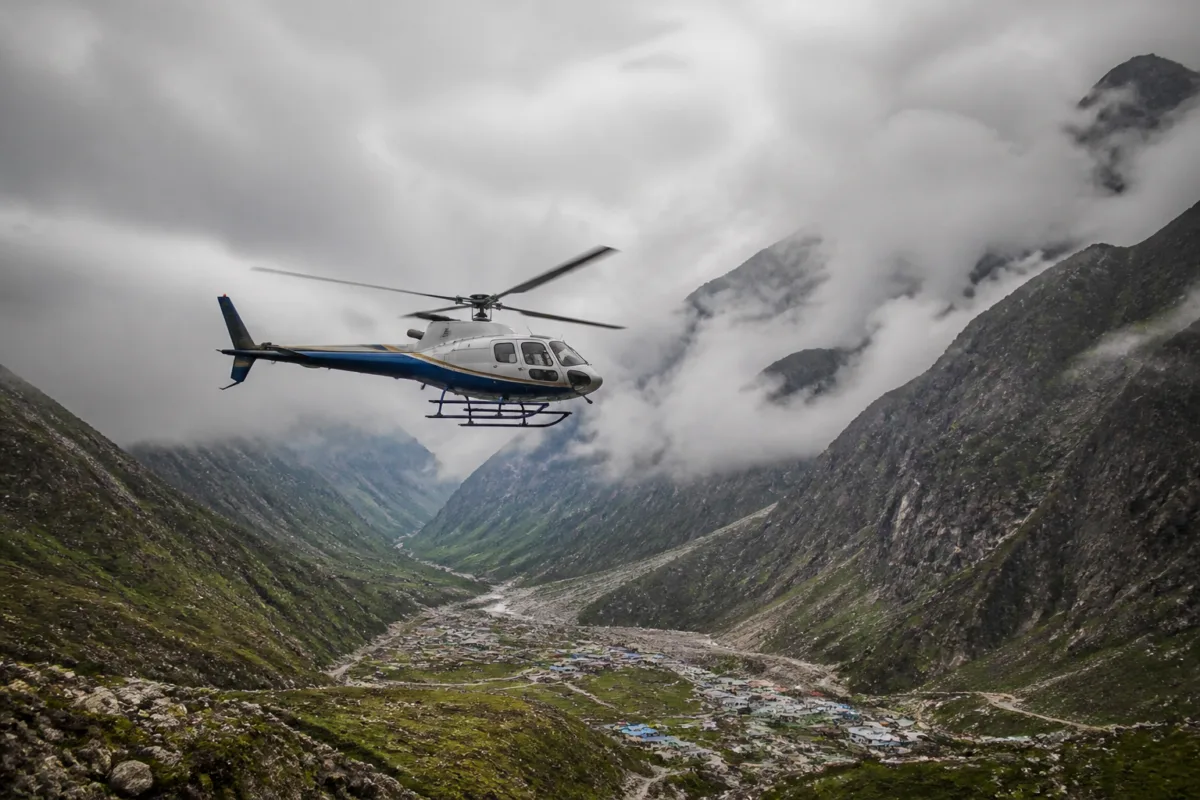
The Char Dham helicopter safety record is becoming a serious infrastructure and public-safety concern, with an Aircraft Accident Investigation Bureau analysis recording eight accidents and one serious incident in the pilgrimage region between 2015 and 2025. The pattern is particularly troubling because at least one accident or serious incident has been recorded every year since 2022, while 2025 saw four accidents, the highest annual total in the period, including two fatal crashes.
The latest concern followed a helicopter accident in Uttarakhand reported on Friday. The supplied report does not provide details of that incident, including the aircraft, location, casualties or the stage of the official investigation. Its importance here is therefore not as a standalone incident narrative, but as the latest trigger for a review of the safety conditions surrounding helicopter operations on the Char Dham routes.
The figures attributed to the AAIB describe a pattern rather than an isolated failure. Between 2015 and 2021, the report records three incidents in the region: an accident at Badrinath on June 10, 2017, in which an engineer died, and an accident near Garud Chatti in Kedarnath on October 18, 2022, in which the pilot and six other people were killed. The report’s broader count places 2022 onwards as a period of sustained recurrence, with no year free of at least one accident or serious incident.
The four accidents specifically identified for 2025 underline the severity of the recent trend. On May 8, a helicopter crash at Gangnani killed six people. On June 15, a helicopter returning from Kedarnath crashed at Gaurikund, killing seven people, including the pilot. The source identifies 2025 as the worst year in the decade-long period, with two fatal accidents among the four recorded that year.
These numbers matter because helicopter services on the Char Dham routes are not operating in an ordinary aviation environment. The region combines high elevations, narrow valleys, rapidly changing weather, strong winds and periods of poor visibility. Each factor can affect route planning, aircraft handling, communication, landing decisions and the ability to respond when conditions deteriorate. The report describes these geographic and weather conditions as making helicopter operations particularly challenging.
That geography does not by itself explain the accident pattern. It does, however, establish why safety systems need to be more demanding in mountain operations than in routine flights over relatively open terrain. Accurate weather information, experienced pilots, regular technical inspections and strict compliance with operating rules are identified in the report as essential safeguards. The repeated incidents raise the question of whether those safeguards are being applied consistently across the Char Dham aviation network.
The institutional issue is as important as the accident count. The AAIB analysis provides the historical signal, but a safety response requires the operating system to be examined at several levels. That includes aircraft maintenance, pilot experience, weather assessment, route authorisation, landing-site management, operator procedures and monitoring during the pilgrimage season. The source does not establish which of these factors contributed to the individual accidents. It does establish that the frequency of incidents warrants a review of safety standards, surveillance arrangements and operational processes.
This distinction is essential. A rise in accidents does not automatically prove that one particular operator, pilot decision or regulatory failure caused the trend. The supplied report does not assign responsibility for the incidents, and it would be inaccurate to do so without investigation findings. What the available evidence supports is a narrower but important conclusion: the cumulative record is strong enough to justify a systematic examination of how helicopter services are authorised, supervised and operated in the region.
The pattern also exposes the tension between pilgrimage access and mountain risk. Helicopter services allow devotees to reach difficult destinations more quickly and reduce the physical burden of travel for some passengers. The report notes that pilgrims increasingly depend on these services during the Char Dham journey. That dependence makes aviation safety part of the wider pilgrimage infrastructure, alongside roads, accommodation, medical support and crowd management.
When a service becomes integrated into a high-volume pilgrimage system, safety cannot be treated only as an operator-level matter. The network involves passengers, pilots, aviation companies, local administration and agencies responsible for regulating or investigating aviation activity. A disruption or crash affects not only those on board but also public confidence in the transport system serving the pilgrimage economy. The source does not provide passenger-volume data or details of the number of operators, so the scale of that dependence cannot be quantified from the available material. Its existence, however, is clearly stated.
The chronology since 2022 provides the strongest evidence for a change in the risk conversation. Earlier incidents could be viewed as separate events spread across a decade. A record of at least one accident or serious incident every year from 2022 onwards is different: it points to persistent exposure rather than a single cluster that has already passed. The four accidents recorded in 2025 intensify that concern, particularly because two were fatal.
The data also shows why annual totals should be read alongside the nature of the incidents. Nine events over ten years may appear limited when reduced to an average, but aviation safety cannot be assessed through averages alone. A single fatal crash can have severe consequences, and the concentration of four accidents in one year changes the significance of the overall record. The two fatal incidents in 2025 and the seven deaths at Gaurikund demonstrate that the human cost is not captured by the event count alone.
At the same time, the supplied report does not provide the full AAIB dataset, the names of all affected operators, the number of flights conducted, the number of passengers carried, accident-cause findings or the enforcement actions that followed each event. Without those details, it is not possible to calculate an accident rate, compare operators or determine whether the increase reflects more flights, weaker controls, unusually severe weather or other factors. Those are important gaps for any policy review.
The immediate policy question is therefore not whether helicopter services should be judged by one headline figure. It is whether the authorities and operators have a sufficiently transparent process for learning from every accident and serious incident. A credible review would need to connect investigation findings with operating rules, technical checks, weather protocols, pilot qualification requirements and oversight during the pilgrimage season. The report calls for such a review but does not state that a new review, suspension or regulatory change has already been ordered.
This is where the Char Dham helicopter record becomes an urban and infrastructure story, even though the flights operate in a mountain region. Pilgrimage transport is a networked public system. Its safety depends on the interaction between mobility demand, difficult geography, private or contracted operations, public oversight and the ability of institutions to act on evidence. When one part of that system repeatedly fails, the issue extends beyond individual travel decisions.
The central evidence currently confirms three points. The Char Dham region recorded eight helicopter accidents and one serious incident between 2015 and 2025, according to the AAIB analysis cited by the report. At least one accident or serious incident occurred every year from 2022 onwards. And 2025 recorded four accidents, including two fatal crashes, making it the worst year in the period covered. The details of the latest Friday accident and the causes of the historical incidents remain outside the information supplied.
The next stage should therefore be evidence-led: establish the findings of the relevant investigations, identify whether common operational or environmental factors recur, and clarify what corrective action has been taken after each event. Until that information is available, the record cannot support a single explanation. It does support a clear institutional requirement: helicopter safety on the Char Dham routes needs sustained scrutiny rather than a response limited to the latest crash.

