


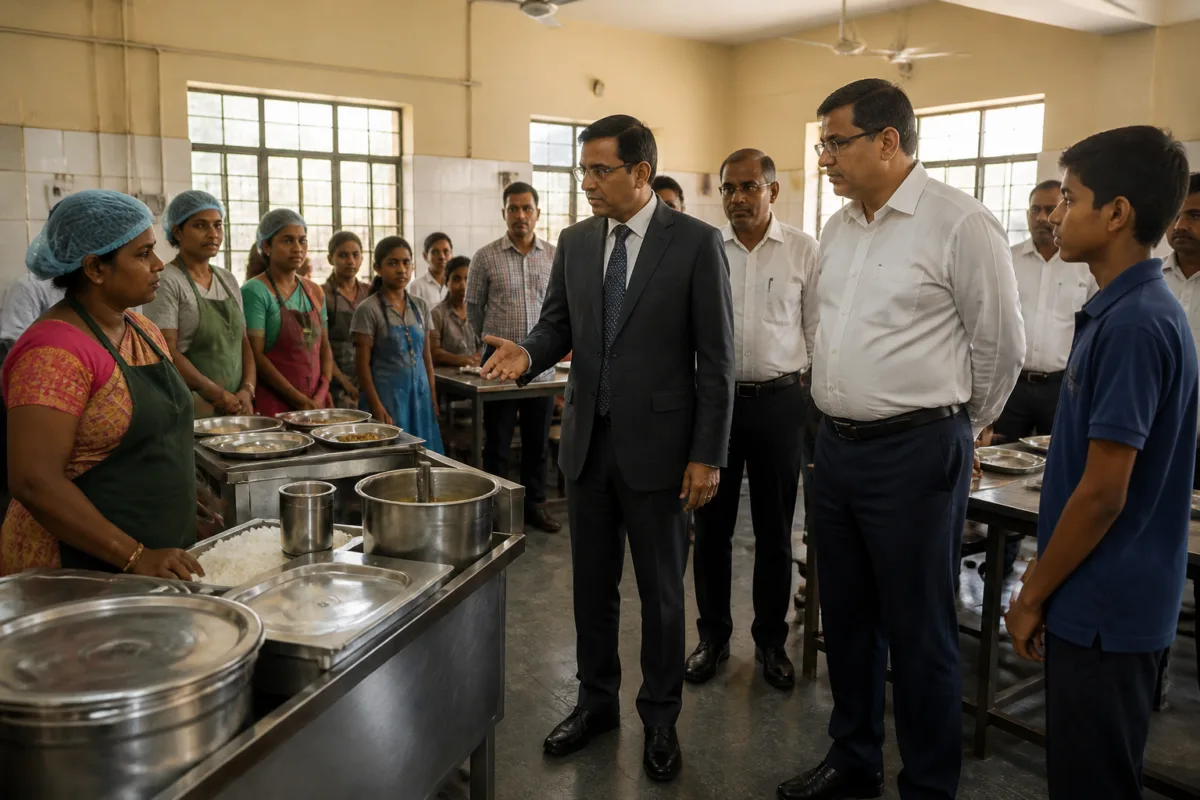
Food-quality and hygiene concerns at a government post-matric hostel for Scheduled Tribe students in Challakere came under scrutiny after Additional Civil Judge K.S. Sangamitra inspected the facility and questioned staff over complaints that worms had been found in meals served to students.
The inspection took place during the judge’s visit to the hostel as part of a legal-awareness programme organised under the Bachpan campaign, which addresses protection of children from sexual offences and legal assistance for victims of substance abuse. During the visit, the judge spoke with students and sought details about food quality, cleanliness and the hostel’s basic infrastructure.
Students reportedly expressed dissatisfaction with the meals and brought their concerns to the judge’s attention. They also alleged that kitchen staff consumed gutka and pan masala, raising additional questions about hygiene and discipline in the facility. The report did not specify how often the alleged contamination occurred or whether any student had fallen ill.
After hearing the students, Sangamitra questioned the hostel warden and kitchen staff about the conditions. She asked why lapses were occurring in the provision of quality food despite government spending on students’ education and accommodation. She also questioned whether staff would serve similar food to children in their own homes, according to the report.
The judge asked the hostel warden why problems had not been brought to the attention of senior officials and questioned the conduct of the kitchen staff. She instructed the staff to give priority to cleanliness, discipline and food quality, and warned that negligence concerning students’ health would not be acceptable.
The inspection highlights the responsibility of hostel-level administrators in monitoring food preparation and reporting failures to higher authorities. Government residential hostels are intended to support students who depend on publicly funded accommodation and meals while pursuing education. In such facilities, food safety and everyday maintenance are part of the basic welfare obligation rather than an optional service.
Sangamitra also advised students not to be afraid to report problems to the concerned authorities or the judiciary. They were informed that telephone numbers of the lawyers’ association had been provided to help them communicate their grievances without fear.
Legal aid facilitator Geetanjali and panel advocates Shilpa D. and Srinivas were present during the visit. The report did not state whether departmental action, a food inspection or a formal inquiry had been ordered after the judge’s observations.

