


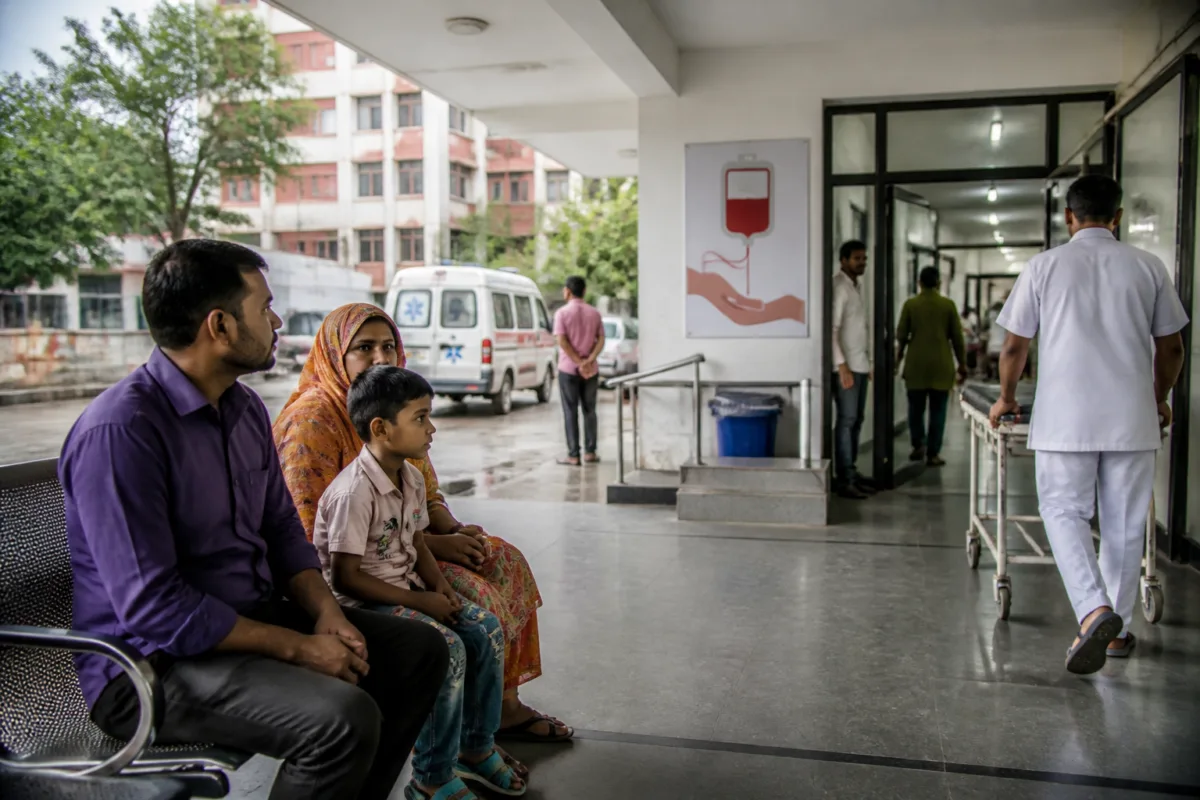
A thalassaemia patient in Dhanbad has been unable to arrange A-positive blood for about 10 days despite requiring regular transfusions, highlighting the gap between the stated availability of free blood services and access at Shri Nirmal Mahto Medical College and Hospital (SNMMCH).
Jitendra Saw, 34, a resident of the New Delhi locality in Dhansar, said his latest transfusion was due around 10 days ago. He said he visited SNMMCH several times but was told that blood was unavailable. He later approached several private hospitals but was unable to obtain the required blood.
Saw was admitted to SNMMCH again on Wednesday, according to the report, but had not received the transfusion at the time of publication. He earns a living by driving a toto and said the search for blood had prevented him from concentrating on his work and supporting his family.
“Instead of concentrating on my work and supporting my family, I have been forced to spend time searching for blood for my treatment,” Saw said.
Thalassaemia is an inherited blood disorder that can require patients to undergo regular blood transfusions. For such patients, delays in accessing compatible blood can disrupt a continuing treatment schedule and place additional pressure on families who must repeatedly coordinate with hospitals and blood banks.
The case has raised questions about the functioning of blood availability and replacement arrangements at the public hospital. The report did not establish whether the delay resulted from a shortage of A-positive units, an administrative issue, a documentation problem or another cause.
Civil surgeon Dr Sanjeev Kumar Prasad said he was unaware of Saw’s situation. He said thalassaemia patients could obtain blood free of cost and without replacement at the SNMMCH blood bank. Other patients, he said, were required to arrange replacement donors.
Prasad said he would inquire into the matter if Saw had been denied blood. His statement indicates that thalassaemia patients are covered by a different access arrangement from other patients at the blood bank, but the report does not clarify how that policy was applied in Saw’s case or why he remained without a transfusion for 10 days.
Attempts were made to contact Dr D K Gindouria, superintendent of SNMMCH, for a response, but he could not be reached. The hospital’s explanation for the reported delay and the immediate steps taken in Saw’s case were therefore not available.
The civil surgeon’s proposed inquiry is the next official step identified in the report. It is expected to examine whether Saw was denied blood despite the stated free and replacement-free provision for thalassaemia patients.

