


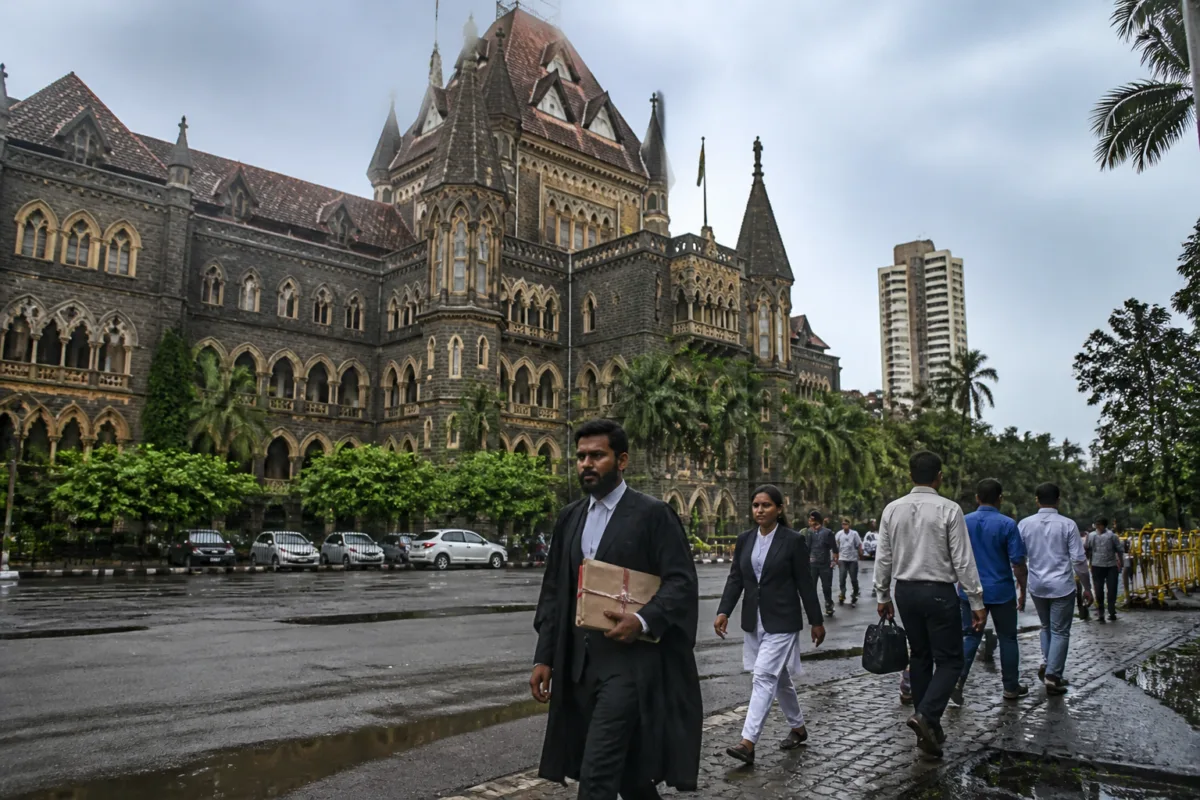
The Bombay High Court’s action in a long-running property dispute shows how a civil eviction case can evolve into a question of court authority, physical possession and enforcement. After the court found that members of a tenant family had allegedly re-entered premises after an eviction decree was executed, it appointed a Court Receiver to supervise the handover and authorised police assistance if possession was not delivered by the court’s deadline.
The immediate incident involved Minder Gurmit Singh Thukral, who, according to the Indian Express report, attempted to throw her purse towards Justice Madhav J Jamdar after an order went against her family. The judge described the conduct as wholly inappropriate and said it amounted to contempt of court. Minder apologised, but the court stressed that decorum had to be maintained and directed all respondents to remain present at the next hearing.
The purse-throwing incident is the most visible part of the case. The underlying dispute began in 2009, when property owner Onkar Singh Kalra filed an eviction suit in the Small Causes Court against Tarlok Singh Thukral, described in the proceedings as a “gratuitous licensee” and tenant. The case therefore concerns not only behaviour inside a courtroom but also the more difficult stage of property litigation: making a final order effective on the ground.
The Small Causes Court ruled in Kalra’s favour on July 6, 2018. The Thukrals then pursued further legal challenges. A civil court dismissed their appeal on October 4, 2021, while the High Court rejected their Civil Revision Application on July 23, 2024. Although the High Court granted eight weeks to vacate the premises, the tenants filed a review petition, which was later dismissed.
The legal process continued while the original litigant, Tarlok Singh Thukral, died. His sons, Jaspal and Gurmit Singh, were brought on record as legal heirs. The eviction decree was eventually executed in April 2025. The High Court subsequently noted that Tarlok’s legal heirs and their family, including Gurmit, his wife Minder and their children, had illegally re-entered the property. That alleged re-entry led the property owners’ legal heirs to file a contempt petition.
This sequence matters because an eviction decree does not end the institutional work of a property dispute if possession is not securely transferred. The court’s order, as reported, identifies a chain linking the original civil case, appellate and review proceedings, execution of the decree, alleged re-entry and contempt action. Each stage involves a different question: who has the legal right to occupy the premises, whether that right has been conclusively decided, whether the order has been executed, and whether subsequent conduct interferes with the administration of justice.
The High Court’s response was to move the dispute from a contested handover to a supervised process. The respondents stated that they would hand over possession on October 29. The court appointed a Court Receiver to oversee that handover and directed that, if physical possession was not delivered by 7 pm on Thursday, the receiver could take physical possession with police assistance.
The appointment of a Court Receiver is significant in practical terms because it creates an official mechanism for implementing possession. Rather than leaving the parties to negotiate or confront each other at the property, the receiver becomes responsible for overseeing the transfer under the court’s authority. The reported direction also sets a clear operational consequence for non-compliance: police assistance may be used when the deadline expires.
The case illustrates the difference between legal entitlement and physical control of property. The reported court history indicates that the eviction claim had survived several stages of challenge before execution took place. Yet the owners’ legal heirs still had to approach the High Court after the alleged re-entry. This does not establish that every delayed or contested possession case follows the same pattern, but it demonstrates how enforcement can become a second phase of litigation after the substantive dispute has been decided.
It also shows why property disputes can remain active for years even after a court has issued a final-looking order. The case began in 2009, the eviction ruling came in 2018, an appeal was dismissed in 2021, the High Court rejected a revision application in 2024, and execution occurred in 2025. The reported contempt proceedings therefore sit at the end of a litigation timeline that spans more than a decade.
The available account does not establish the size, use or location of the property beyond its being the subject of the possession dispute. It also does not provide the value of the premises, the precise circumstances of the alleged re-entry or the detailed terms of the eviction decree. Those limits are important. The public record supplied in the report supports an account of the procedural sequence and the court’s directions, but not broader conclusions about the parties’ motives or the condition of the property.
The institutional roles in the matter are nevertheless clear. The Small Causes Court handled the original eviction suit. A civil court dealt with the appeal. The High Court considered the revision application, review petition and later contempt proceedings. The Court Receiver was appointed to supervise the physical transfer, while the police could assist if the court’s possession direction was not followed.
That division of responsibility is central to the functioning of urban property law. Ownership and tenancy disputes are decided through courts, but their consequences are experienced at a specific address. A decree must be executed; possession must be recorded and transferred; and competing claims must be prevented from producing a fresh confrontation. In this case, the High Court’s reported directions were designed to place those practical steps under institutional supervision.
The court’s treatment of the courtroom incident adds another layer. Justice Jamdar said the attempted purse-throwing amounted to contempt and indicated that contempt proceedings and costs could follow. The court also required the respondents to remain present on October 30. The reported order therefore connects courtroom conduct with the wider possession dispute, treating behaviour during the hearing as a possible interference with the administration of justice rather than as an isolated disruption.
For urban property cases, the larger question is not simply whether a litigant wins an eviction order. It is whether the legal system can convert that order into secure, peaceful and documented possession. The report provides one example in which repeated litigation, the death of an original party, the substitution of legal heirs, execution of the decree and alleged re-entry all extended the dispute beyond the initial judgment.
What the available evidence confirms is that the Bombay High Court had moved from adjudicating the dispute to supervising compliance. The court set a handover deadline, appointed a receiver and specified the circumstances in which police assistance could be used. It also recorded its displeasure at the reported courtroom conduct and required the respondents to appear again. The next material developments are therefore the scheduled possession handover and the October 30 hearing, which will show whether the court-supervised process was completed or further directions were required.

