


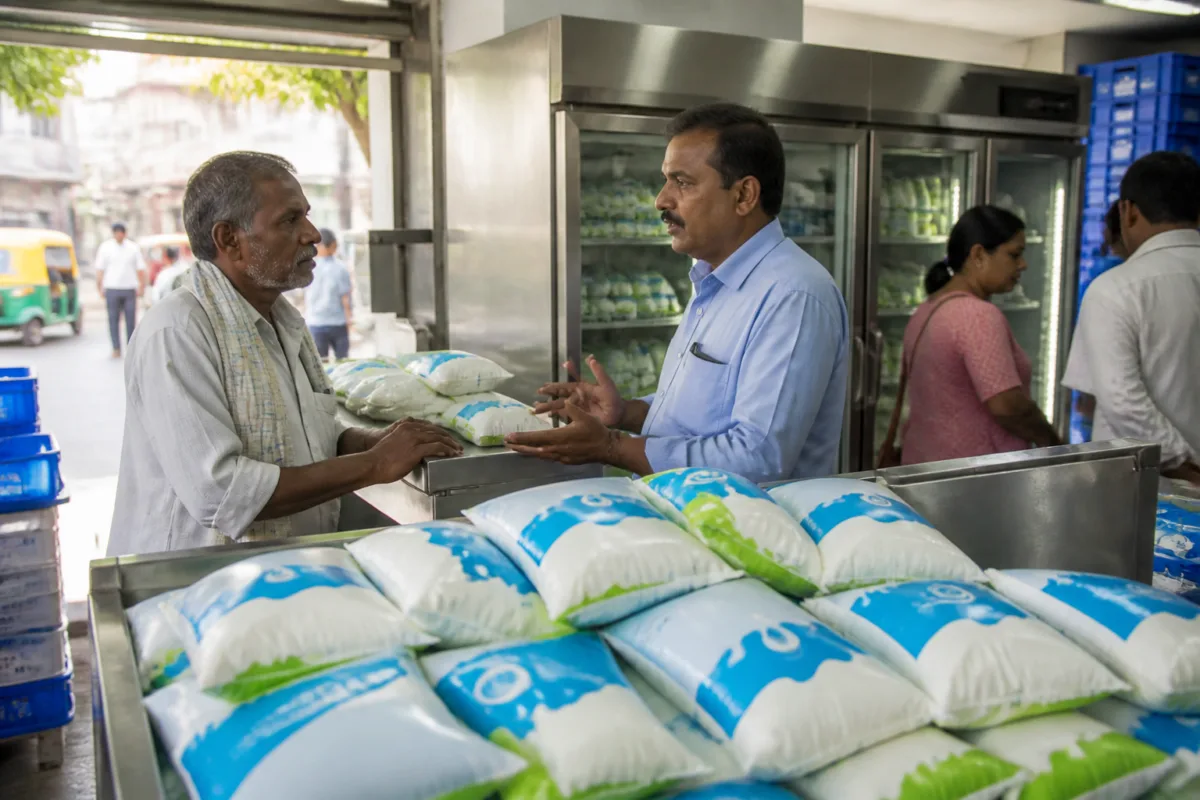
Karnataka’s Cabinet has approved an ₹8-per-litre increase in the price of Nandini milk, with ₹7 of the additional amount earmarked for milk producers and ₹1 for the Karnataka Milk Federation (KMF), minister Krishna Byre Gowda said after the meeting chaired by Chief Minister D.K. Shivakumar.
The decision was taken at a Cabinet meeting on Thursday, a day after the Karnataka Legislative Council election process ended. The price revision had been approved by the Cabinet earlier this month but was not implemented because the model code of conduct for the Legislative Council elections was in force.
The increase will affect consumers purchasing Nandini milk across Karnataka, while the largest share of the additional revenue is intended to improve the return received by dairy farmers. The report did not specify the date from which the revised retail price would come into effect.
The state’s cooperative milk producers’ federations had sought an increase of between ₹8 and ₹10 per litre in both the procurement and sale prices of Nandini milk. Representatives of the federations submitted their request to Shivakumar last month, citing rising costs across the dairy supply chain.
Following the request, the Chief Minister asked officials to prepare a comprehensive assessment. The review included the increase in cattle-feed prices over the past decade, the cost of producing a litre of milk, the quantity of milk produced in each district, the volume sold outside the cooperative network, the quantity procured by the federation and procurement and retail prices in neighbouring states.
The Cabinet decision places the KMF and the state’s milk producers’ cooperatives at the centre of the price revision. Under the announced allocation, ₹7 from every additional litre sold will go to producers, while ₹1 will be retained by the federation. The source report did not provide the existing retail price, the revised final price, or details of how the producer payment will be distributed across district-level cooperatives.
Milk pricing in Karnataka links household food costs with the financial sustainability of the cooperative dairy system. Any change in the retail price therefore has two immediate dimensions: the additional amount paid by consumers and the share transferred to farmers who supply milk to the cooperative network. The Cabinet’s decision follows an official review focused on both sides of that system.
The next operational step is the implementation of the approved revision by the relevant milk federations and authorities. The government has not, in the supplied report, announced a separate public schedule for the revised Nandini prices.

